
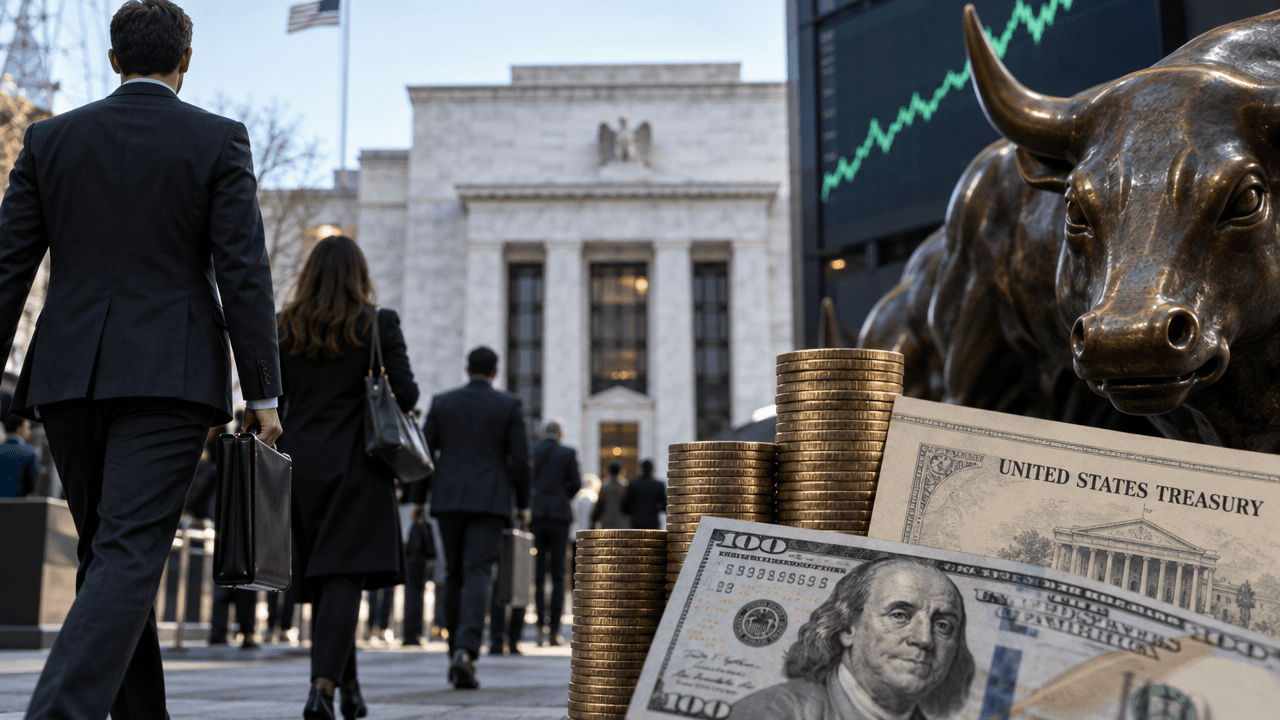
A stronger-than-expected U.S. employment report has changed the tone across financial markets. Employers added 165,000 nonfarm jobs in October, far exceeding forecasts near 59,000, while the unemployment rate declined to 4.1% from 4.2%. [1][2] The figures pointed to a labor market with more momentum than investors had anticipated—and immediately reshaped expectations for the Federal Reserve’s next policy decision.
Treasury yields moved higher, the dollar gained support, and traders increased the implied probability of a December interest-rate hike to roughly 80%. The two-year Treasury yield, which is particularly sensitive to expectations for Federal Reserve policy, moved toward 4.52%. [2][3] For traders, the report was a reminder that economic data—not just central-bank speeches—can rapidly change market pricing.
Why The Jobs Report Matters
Payroll growth is one of the clearest measures of economic resilience. When companies continue hiring at a solid pace, households generally have more income to spend, businesses may be more willing to invest, and recession concerns can ease. October’s 165,000 increase suggested that employers were still expanding their workforce despite restrictive financial conditions.
The result was especially significant because economists had expected a much smaller gain. A report that beats expectations by such a wide margin can have an outsized market impact, even if the absolute number of jobs added is not historically exceptional.
The decline in unemployment added to the report’s strength. A fall from 4.2% to 4.1% indicated that labor-market conditions had not deteriorated as quickly as some investors feared. The combination of stronger payroll growth and a lower unemployment rate gave markets a reason to reassess the possibility that the economy could tolerate higher interest rates.
Why Treasury Yields Rose
Bond yields reflect the return investors demand to hold government debt, but they also incorporate expectations for inflation, growth, and central-bank policy. When traders anticipate that the Federal Reserve may keep rates higher—or raise them further—shorter-term Treasury yields typically respond first.
The two-year note is closely linked to the expected path of the federal funds rate. Following the jobs release, its yield rose toward 4.52%, with reports showing an increase of approximately five basis points. [1][3] The move reflected a straightforward repricing: a stronger economy gives the Fed more flexibility to maintain restrictive policy if inflation remains above target.
Longer-term yields also moved higher, with the 10-year Treasury yield approaching 4.88% and the 30-year yield reaching approximately 5.29% in early market reactions. [1][9] Longer maturities are influenced by future growth and inflation expectations as well as near-term Fed decisions. Their response suggested that investors were considering not only one possible rate hike, but also the broader implications of a resilient economy.
Rate-hike Expectations Take Center Stage
Before the report, markets were already weighing whether the Federal Reserve would raise rates at its December meeting. The employment data strengthened that possibility. Fed funds futures indicated more than an 80% chance of a quarter-point increase after the report, compared with roughly two-thirds the previous day, according to CME FedWatch data reported by CNBC. [2]
This shift does not guarantee a rate hike. Market-implied probabilities change constantly and represent trading expectations rather than official Federal Reserve guidance. Policymakers will also examine inflation, wage growth, consumer spending, financial conditions, and other labor-market measures before making a decision.
Still, the report affected the policy debate in an important way. A weakening labor market would give the Fed a stronger reason to pause or reduce rates. A labor market that remains firm gives policymakers more room to prioritize inflation control. The latest figures moved the balance toward the second scenario.
Implications For The Dollar And Other Markets
Higher U.S. interest-rate expectations can support the dollar because they may increase the relative return available from dollar-denominated assets. Currency traders responded positively to the jobs data as the prospect of higher U.S. rates improved the dollar’s appeal.
Equities face a more complicated reaction. Strong employment can support corporate revenues by sustaining consumer demand, but higher bond yields raise borrowing costs and can reduce the present value investors assign to future corporate earnings. Growth-oriented and high-duration stocks are often particularly sensitive to these changes.
For commodities, a stronger dollar can create pressure because many commodities are priced in U.S. dollars. Gold may also face headwinds when real yields rise, although geopolitical risk, inflation concerns, and demand for safe-haven assets can offset that effect.
Practical Takeaways For Traders
First, compare economic data with expectations, not just previous readings. The October payroll number mattered because it significantly exceeded forecasts.
Second, monitor the two-year Treasury yield when assessing near-term Fed expectations. A sharp move in the two-year note can signal that traders are rapidly repricing the policy outlook.
Third, avoid treating an implied rate probability as a certainty. The market can change its view after inflation data, central-bank communication, or a revision to the employment report.
Finally, consider cross-market confirmation. A durable shift in rate expectations is more convincing when Treasury yields, the dollar, and interest-rate futures move in the same direction.
Conclusion
October’s payrolls report delivered a clear message: the U.S. labor market remained stronger than markets had expected. The 165,000 job increase and 4.1% unemployment rate lifted Treasury yields and pushed the implied probability of a December Fed hike toward 80%. [2][5]
For traders, the central lesson is that economic resilience can be a market-moving force. Strong growth may support the dollar and risk sentiment in some areas, but it can also keep borrowing costs elevated and place pressure on rate-sensitive assets. The next phase will depend on whether future inflation and employment data confirm this strength—or show that October was only a temporary acceleration.