
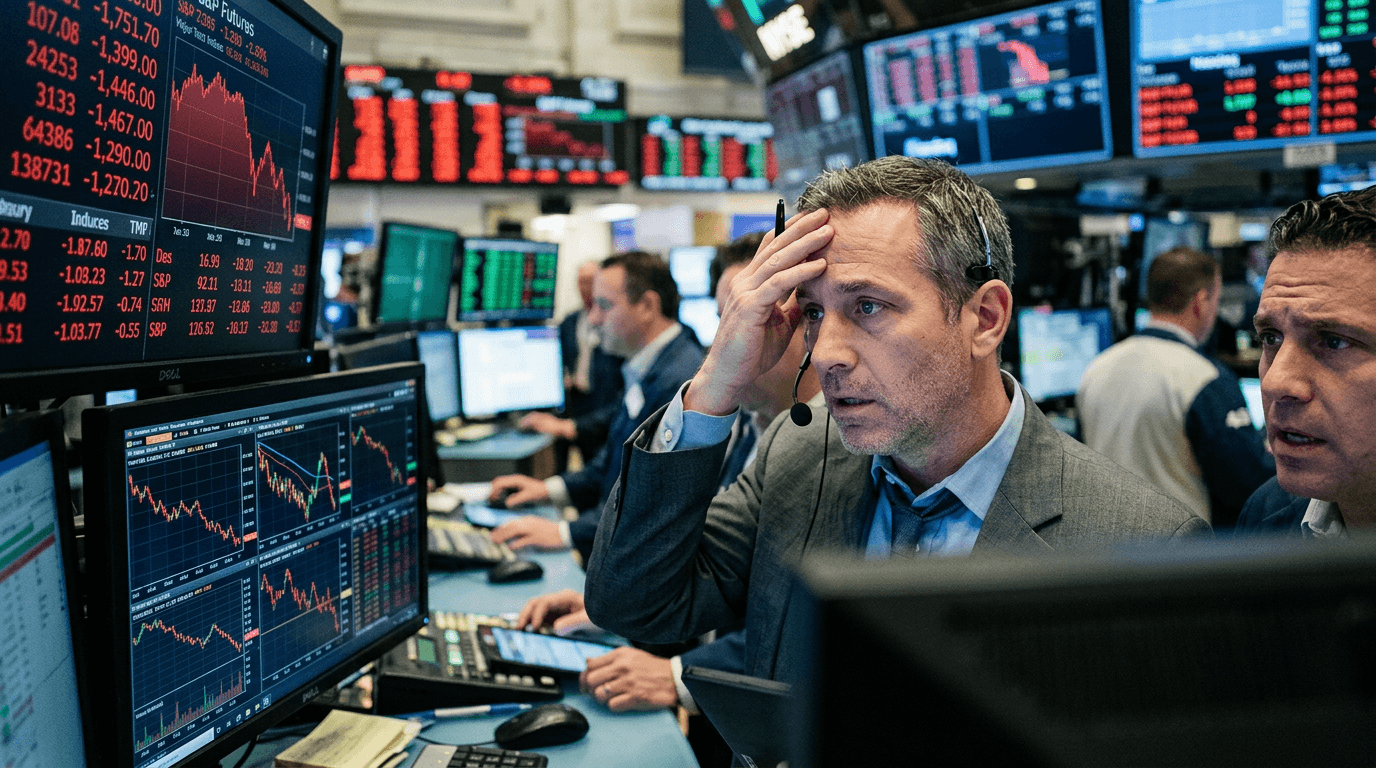
U.S. equity futures are starting the day on the back foot as a sharp tech selloff collides with renewed worries about higher-for-longer interest rates.[7][8] The tone is distinctly risk-off: index futures are softer, bond yields are elevated, and the dollar is firming as investors reassess how much they are willing to pay for growth at a time when the cost of capital is rising.[1][3][8]
WHAT’S PRESSURING U.S. FUTURES TODAY
The immediate pressure on futures is coming from weakness in large-cap technology and AI-linked names that have led the market higher for months.[4][7] After a series of disappointing forecasts and valuation concerns around chipmakers and AI infrastructure plays, investors have started taking profits and rotating out of high-fliers.[4][5][7] In recent sessions, the S&P 500 tech sector has dropped multiple percentage points intraday before partially recovering, a reminder of how crowded the trade had become.[7][10]
At the same time, macro data have pushed U.S. Treasury yields higher, forcing markets to reprice the path of Federal Reserve policy.[1][4][7] Stronger jobs and still-sticky inflation figures have revived talk that rate cuts could be delayed—or in some scenarios that an additional hike later in the year cannot be ruled out.[1][3][7][8] Futures implied probabilities now reflect a meaningful chance that borrowing costs stay elevated for longer, keeping pressure on long-duration assets like high-growth tech.[1][3]
Why A Tech Selloff Hits Index Futures So Hard
When tech sells off, index futures rarely escape, and the reason is simple: sector weight and sentiment. Technology, communication services, and AI-related semiconductors together account for a substantial share of the Nasdaq 100 and a significant chunk of the S&P 500’s market capitalization.[7][10] A 3–5% move in a handful of mega-cap names can move the entire index, dragging futures lower even if other sectors are more resilient.
There is also a narrative component. The multi-year bull case for U.S. equities has increasingly been built around transformative AI and digital infrastructure spending.[4][7][8] Reports questioning the pace and profitability of future AI investment, cautious guidance from key suppliers, and calls for stricter regulation all chip away at that story.[4][5][7] As the narrative weakens, hedging activity in index futures tends to pick up: portfolio managers use futures to quickly reduce exposure or protect gains when they fear the tech leadership might be reversing.
For traders in a simulated finance environment, this is a textbook example of sector concentration risk. A futures contract that appears “diversified” is still heavily influenced by a few dominant growth names. Watching sector performance and single-stock volatility is essential to understanding why index futures move the way they do on days like this.
Rate Concerns: The Other Half Of The Story
Valuation compression in tech is not happening in a vacuum; it is being driven in part by rate dynamics. Higher Treasury yields increase the discount rate used to value future cash flows, which disproportionately affects growth companies whose earnings are expected to materialize many years out.[1][4][8] When the 10-year note trades in the mid-4% range and moves sharply higher in a short period, the math embedded in discounted cash flow models changes fast.[1]
Derivatives markets show traders adjusting expectations for the Fed’s path. In recent weeks, probability estimates have shifted toward at least one additional rate increase or a slower pace of easing, reflecting concern that inflation might remain above target longer than hoped.[1][3][7][8] Oil prices and broader commodity strength have added to those worries, raising questions about second-round effects on inflation.[8]
For futures traders, this rate backdrop matters in three ways:
1) Index level: Higher yields weigh on equity futures, especially growth-heavy benchmarks. 2) Cross-asset pricing: Equity, rate, and FX futures increasingly move together as macro drives risk sentiment. 3) Volatility regime: Shifts in Fed expectations can increase implied volatility in both equity and rate markets, impacting margin requirements and risk management.
From Futures To Yields, Dollar, And Volatility
The current risk-off tone is not confined to stock futures. Bond markets, FX, and volatility measures are all responding, creating a feedback loop that can amplify moves.[1][3][4][8]
Higher Treasury yields are attracting flows into dollar assets, supporting the U.S. currency against peers.[1][8] A stronger dollar tends to tighten global financial conditions, which can further pressure risk assets, particularly in emerging markets and in sectors sensitive to global demand. Meanwhile, options-based volatility gauges for equity indexes have been ticking higher, signaling increased demand for downside protection.[1][4][5]
This interconnectedness is exactly why headlines about “futures pressured by tech selloff and rate concerns” are genuinely market-moving. Weakness in heavily weighted tech names drags index futures, higher yields challenge valuations, and the dollar’s strength sends a signal about global risk appetite. For traders—whether live or in a SimFi environment—that means price action should be analyzed across multiple markets, not just the equity screen.
Practical Takeaways For Traders And Simfi Users
There are several actionable lessons in this type of session:
Focus on leadership, not just levels When the sectors that led the prior rally—like AI chips and megacap platforms—start to lag or see sharp reversals, futures may be flashing an early warning rather than a minor wobble.[4][5][7] Track sector rotation and breadth indicators to distinguish profit-taking from a more structural shift in leadership.
Tie futures moves to macro catalysts Link intraday futures swings to releases like employment data, inflation prints, and Fed commentary.[1][2][7][8] If tech is selling off at the same time yields spike on a surprise data point, the cause is likely macro rather than stock-specific, and the move may have more persistence.
Respect the rate sensitivity of growth High-growth, long-duration assets are most exposed when the market questions the path of interest rates.[1][4][8] In simulation, experiment with scenarios where yields rise 50–100 basis points and observe how index futures and sector exposures behave. This builds intuition that is valuable when real markets turn volatile.
Use simulated environments to stress-test strategy Platforms like E8 Markets allow traders to test how their approaches perform in risk-off regimes without capital at risk. Recreate conditions of elevated yields, a tech drawdown, and a stronger dollar, then evaluate:
- How does your P&L respond to sector-specific shocks?
- Are you overly dependent on a single leadership theme like AI?
- Does your risk management adjust quickly enough when volatility picks up?
By simulating these conditions and reviewing outcomes, traders can refine position sizing, hedging tactics, and diversification before they need those skills in live markets.
Conclusion
U.S. market futures under pressure from a tech selloff and rate concerns are more than just a daily headline—they encapsulate key dynamics driving modern markets.[7][8] Concentrated leadership in technology, heightened sensitivity to the interest-rate path, and strong cross-asset linkages mean that weakness in one corner of the market can quickly ripple into futures, yields, and the dollar.[1][3][4][8] For traders and SimFi participants alike, the opportunity lies in understanding these connections, stress-testing strategies, and staying disciplined as narratives around AI, inflation, and central bank policy continue to evolve.