
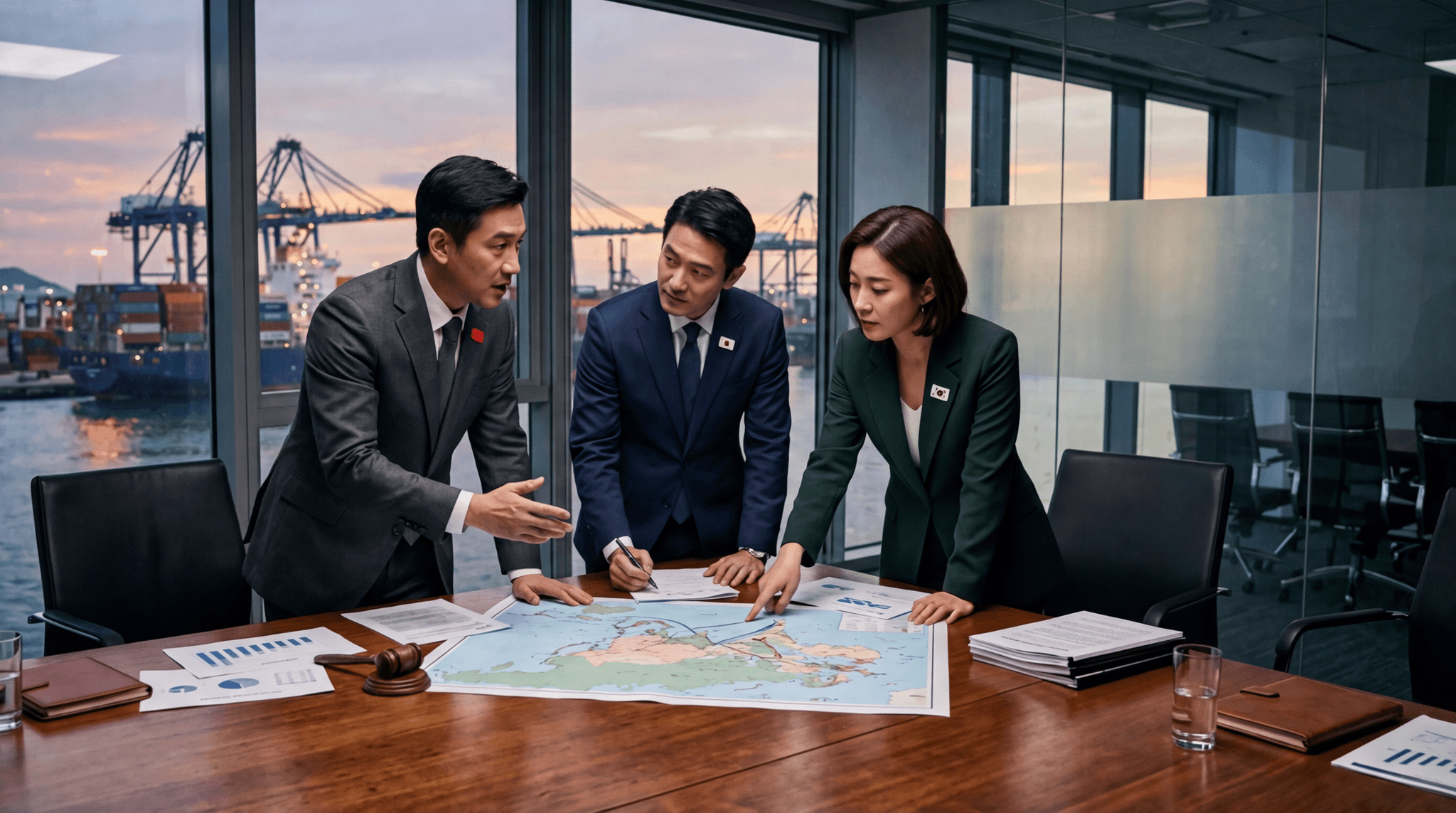
A Unified Front Against Trade Pressures
In an era marked by escalating geopolitical tensions and looming US tariff policies, China, Japan, and South Korea are taking a proactive stance to safeguard their mutual interests. This trio has unveiled plans to collectively tackle anticipated US tariffs, signaling a pivotal shift in regional economic dynamics. More than a defensive maneuver, this strategy could fundamentally reshape Asia-Pacific economic alliances amidst rising protectionism.
On March 31, following their first economic dialogue in half a decade, the three nations reached a consensus on fortifying supply chain cooperation and addressing critical economic issues. This timely initiative comes just ahead of US President Donald Trump's anticipated tariff announcements on April 2, dubbed "Liberation Day," when new tariffs on global trading partners are expected.
Decoding the Joint Economic Strategy
The essence of their joint strategy lies in fostering practical economic cooperation rather than engaging in tariff retaliation. Japan and South Korea are set to import semiconductor raw materials from China, while China eyes advanced chip products from its neighbors. This symbiotic partnership illustrates a meticulous approach to preserving regional supply chain stability amidst substantial trade uncertainties.
The commitment from all three countries to bolster their supply chains and engage in meaningful dialogue on export controls underscores a genuine economic interdependence. This coordinated effort is not mere political theater; it is a strategic alignment serving their collective interests more effectively than isolated responses.
Semiconductors: The Heart of Cooperation
The semiconductor industry has emerged as a focal point for this trilateral alliance. As one of Asia's most lucrative sectors, Japan and South Korea excel in advanced chip manufacturing, while China plays a vital role in raw material supply. By consolidating their efforts in this domain, these nations are effectively insulating themselves against potential supply chain disruptions from heightened tariffs or trade restrictions.
This collaboration is particularly strategic given the Trump administration's push for a unified stance against China. Rather than yielding to US pressure, these nations are opting for deeper integration with each other. This pivot not only defies American trade tactics but also promotes deeper Asian economic integration.
Reviving the Free Trade Agreement
A major outcome of the March 30 dialogue is the revival of high-level negotiations for a trilateral free trade agreement (FTA) among South Korea, Japan, and China. Trade ministers have committed to "closely cooperate for comprehensive and high-level" discussions aimed at bolstering both regional and global trade.
A successful trilateral FTA would establish one of the largest free trade zones globally, with a combined GDP surpassing $20 trillion. Such an agreement would streamline tariffs, reduce non-tariff barriers, and facilitate the free movement of capital, technology, and talent across the region. For traders and investors, this development heralds significant opportunities in cross-border investments, supply chain optimization, and currency trading within Asian markets.
Implications for Traders and Investors
The cooperative venture between China, Japan, and South Korea is already influencing currency and commodity markets. The USD has strengthened against commodity currencies, with the Australian Dollar and New Zealand Dollar declining as risk sentiment shifts. Traders should closely monitor the evolution of these relationships as tariff specifics unfold.
This tripartite collaboration signals that Asian economies are leveraging regional integration as a countermeasure to US trade protectionism. This stance could bolster Asian equity markets and regional currencies in the medium term, even amid short-term volatility. For SimFi traders, this presents diverse trading scenarios to explore, including currency pairs involving the Japanese Yen, Chinese Yuan, and South Korean Won; sector-specific opportunities in semiconductors and technology; and broader regional asset movements.
Key Insights for Market Participants
The collective response from China, Japan, and South Korea illustrates that major economies are not merely reacting to the new trade climate but are actively redefining their regional relationships. This development carries several implications:
First, anticipate deeper economic integration across East Asia, independent of US tariff outcomes. Second, pay close attention to semiconductor supply chains, as this sector is poised for significant investment and strategic positioning. Third, watch for progress in trilateral FTA negotiations, which could drastically reshape regional trade dynamics. Lastly, recognize that these shifts present both hedging opportunities and strategic trading positions for those attuned to the underlying geopolitical and economic drivers.
In the weeks ahead, the seriousness of Trump's tariff plans and the efficacy of this trilateral partnership will become clearer. For traders and investors, this juncture marks a pivotal moment in the future configuration of global trade relationships.