
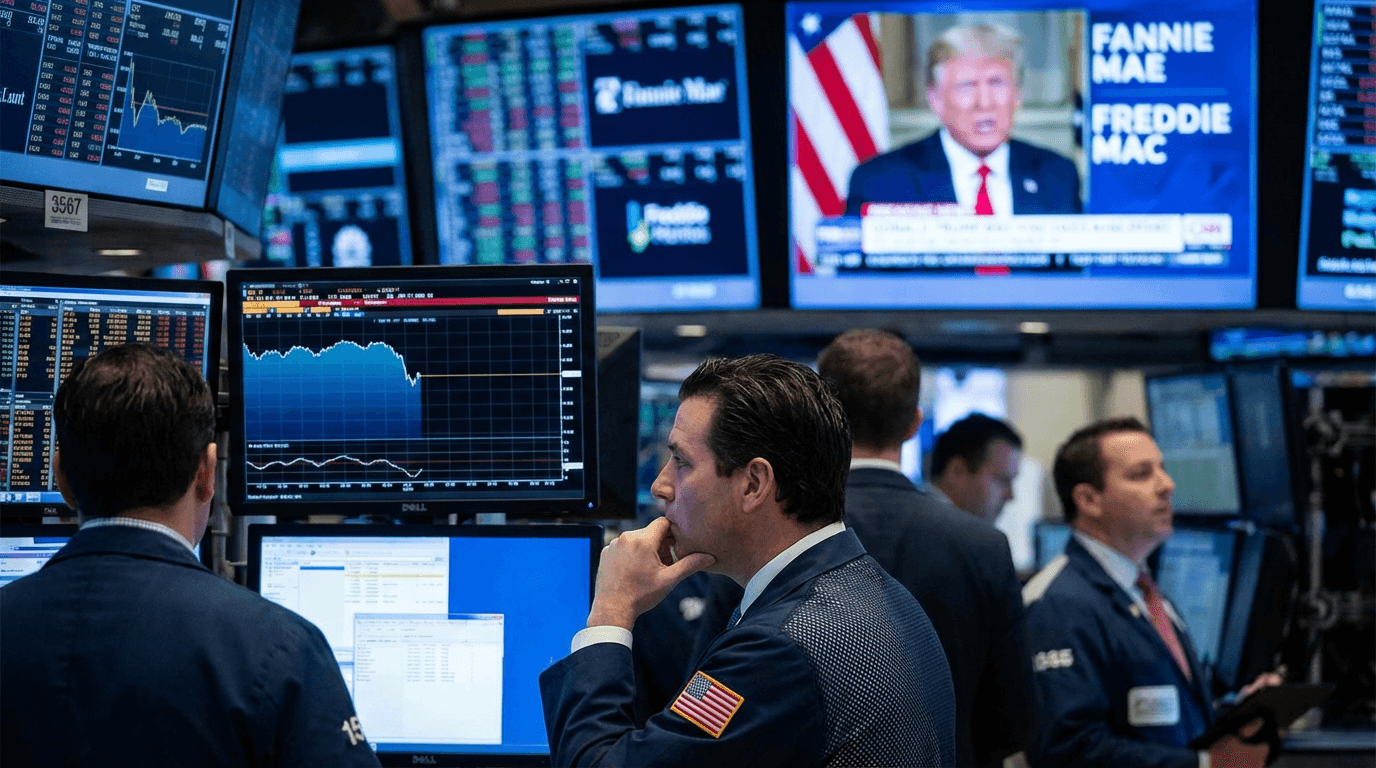
President Trump's January 8 announcement directing Fannie Mae and Freddie Mac to purchase $200 billion in mortgage-backed securities (MBS) marks a significant attempt to stimulate the housing market and lower borrowing costs for American homebuyers.[1] This move represents a departure from conventional fiscal policy, as the administration seeks to deploy government resources without requiring congressional approval. While the initiative aims to inject additional demand into the mortgage market, the actual impact on mortgage rates and housing affordability remains limited and potentially temporary, raising important questions about its effectiveness and long-term implications.
UNDERSTANDING THE $200 BILLION MBS PURCHASE PROGRAM
Mortgage-backed securities form the backbone of how American mortgages function in the modern financial system.[5] When a homebuyer takes out a 30-year fixed-rate mortgage, the lending bank typically sells that loan to government-sponsored enterprises like Fannie Mae or Freddie Mac rather than holding it on its balance sheet for decades.[5] These companies package thousands of mortgages into bonds called mortgage-backed securities, which are then sold to investors in capital markets.[5] By directing Fannie Mae and Freddie Mac to purchase $200 billion of these securities, the Trump administration is essentially asking these GSEs to buy back their own products, increasing demand in a market that has faced limited support since the Federal Reserve withdrew from large-scale MBS purchases in 2022.[1]
The reasoning behind this strategy is straightforward: increased demand for mortgage-backed securities should theoretically lower yields on these bonds, which translates into lower mortgage rates for consumers.[5] According to market analysts, the $200 billion program could potentially lower mortgage rates by as much as 25 basis points, or 0.25 percentage point.[4] On the announcement day, mortgage rates did indeed fall nearly 0.2%, ending the day at 5.99%.[1] However, this represents just a modest movement in an expensive market, as approximately $9 trillion in agency mortgage bonds are currently outstanding, meaning the $200 billion purchase would amount to just over 2% of the total market.[4]
Limited Market Impact And Temporary Effects
While the initial market reaction appeared positive, several factors suggest the impact may be both smaller and shorter-lived than policymakers hope.[5] The Mortgage Bankers Association reported that applications to refinance mortgages jumped 40% following the announcement, particularly as borrowers noticed rates starting with "5" instead of "6".[5] However, this spike in refinancing interest may not reflect a sustained housing market recovery. Several headwinds continue to push longer-term interest rates higher, including elevated government debt levels and broader market concerns about inflation.[5]
The temporary nature of the stimulus became apparent when current FHFA Director Bill Pulte clarified that the purchases would be capped at $200 billion, refusing to authorize further expansion of the program.[4] According to Jim Parrott, a nonresident fellow at the Urban Institute, this limitation means mortgage spreads will likely widen once the spending stops, as the benefits "will only impact the cost of a mortgage as long as investors believe the extra demand will be there."[4] Furthermore, some lending institutions reported minimal rate changes. Chris Duncan, chief lending officer at La Salle State Bank in Illinois, noted that his bank's 30-year mortgage rate had only declined an eighth of a percentage point since the start of the year, while rates on 15-year loans remained flat and 10-year rates actually increased.[5]
Unconventional Policy Approach And Congressional Bypass
What makes this initiative particularly noteworthy is the Trump administration's method of implementation. Rather than seeking congressional authorization for a traditional fiscal stimulus package, the administration is deploying existing government balance sheets to pursue policy objectives without legislative approval.[3] This approach reflects the president's stated desire to increase spending while minimizing congressional involvement and larger deficits.[3] Critics have characterized this strategy as unconventional at best, with some comparing it to circumventing democratic processes.[3] Portfolio managers and analysts have expressed concerns about the executive branch becoming "quite inventive in utilizing available funds without congressional oversight."[3]
The administration is pursuing multiple funding mechanisms beyond the MBS purchases, including using Treasury's Exchange Stabilization Fund for currency swaps and accessing undisclosed capital pools.[3] While administration officials defend these moves as fulfilling an electoral mandate to address affordability and dismantle the "dysfunctional status quo," the approach raises questions about precedent and fiscal sustainability.[3]
Supply And Broader Housing Affordability
Importantly, the National Association of Realtors emphasized in its advocacy that rate reduction efforts must be accompanied by efforts to expand housing supply.[1] The $200 billion MBS program addresses only one side of the housing affordability equation. Without corresponding increases in new home construction and available inventory, lower mortgage rates alone may provide limited relief to prospective homebuyers. The fundamental shortage of affordable housing across many American markets means that even lower interest rates cannot fully resolve the affordability crisis without significant increases in housing supply.
Key Takeaways For Investors And Homebuyers
The Trump administration's $200 billion MBS purchase directive represents an attempt to stimulate housing demand through demand-side intervention, but its effectiveness remains constrained by market size, temporary duration, and underlying supply constraints. Borrowers should monitor actual rate movements from their lenders rather than assuming broad market changes, as individual lending decisions may lag behind or diverge from announced initiatives. Investors should anticipate continued policy creativity from the administration but also recognize that conventional market forces—inflation expectations, government debt levels, and Federal Reserve policy—will continue to exert significant pressure on long-term interest rates regardless of GSE purchase programs.