
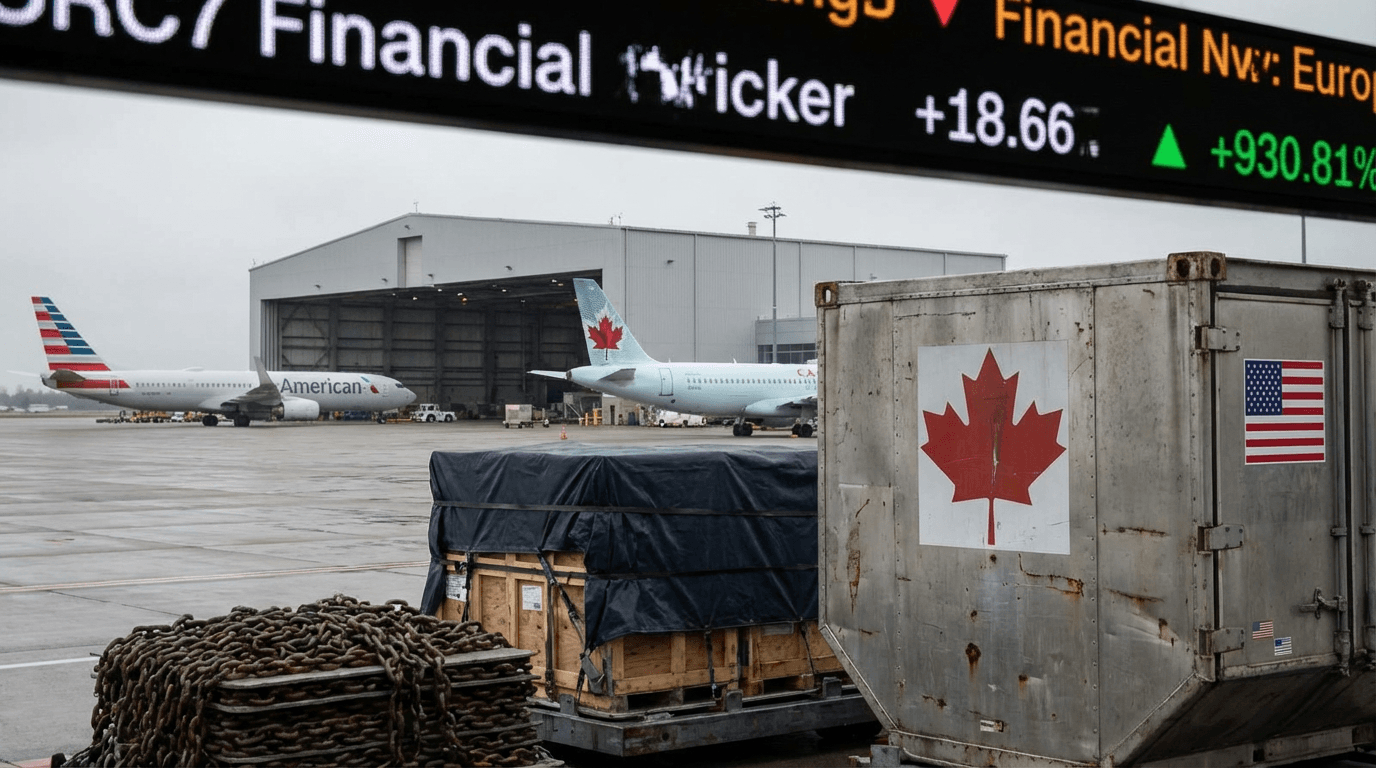
The escalating trade tensions between the United States and Canada have taken a dramatic turn, with President Trump now setting his sights on the aviation sector. On January 30, 2026, Trump announced plans to threaten 50% tariffs on all Canadian-made aircraft exported to the United States, marking a significant expansion of his trade war beyond the automotive industry. This latest move targets Bombardier, Canada's flagship aircraft manufacturer, and introduces new dynamics into an already volatile geopolitical and economic landscape that traders and investors need to understand.
The Specifics Of Trump's Aviation Threat
Trump's announcement centers on a dispute over aviation certification standards. According to his statement posted on Truth Social, the administration plans to decertify Bombardier Global Express aircraft and all other Canadian-made aircraft until U.S. aviation company Gulfstream achieves full certification in Canada. The ultimatum is clear: if the situation is not immediately corrected, Canada will face a 50% tariff on any and all aircraft sold into the United States. This represents one of the most aggressive trade actions against the aviation industry in recent memory and demonstrates Trump's willingness to use tariff threats across multiple economic sectors simultaneously.
The decision stems from Trump's assertion that current aviation certification practices have unfairly blocked U.S. jet sales in Canada. Whether this claim reflects genuine market barriers or represents a negotiating tactic remains subject to debate among trade experts. However, the implications for the aviation supply chain are substantial and immediate.
Market Implications For Traders And Investors
The announcement creates immediate uncertainty across multiple sectors. Bombardier, as Canada's leading aircraft manufacturer, faces direct pressure from potential tariff implementation. The company's commercial viability in its largest market—the United States—could be significantly impacted, which would likely be reflected in stock performance and credit spreads. Traders should monitor Bombardier's financial instruments closely for volatility spikes.
Beyond Bombardier, this threat reverberates through the broader aerospace and defense industry. Component suppliers, logistics providers, and related manufacturers across both countries could experience supply chain disruptions. The tariff would increase costs for U.S. buyers of Canadian aircraft, potentially shifting demand toward domestic manufacturers like Gulfstream or other U.S.-based competitors. This could create trading opportunities in aerospace stocks, particularly those with exposure to protected domestic markets.
The automotive sector, already battered by earlier trade disputes, faces additional pressure as this aviation threat signals ongoing protectionist momentum. Investors holding Canadian equities should brace for broader market volatility, as the Canadian dollar and Canadian-listed stocks often react adversely to escalating U.S. trade tensions.
Historical Context And Escalation Patterns
This tariff threat follows a well-established pattern in Trump's approach to trade policy. The administration has previously used tariff threats as negotiating leverage, and the aviation sector has not been immune to these tactics in the past. However, the 50% rate is notably aggressive—higher than many previous threats—suggesting either serious intent or an attempt to establish a strong opening position for negotiations.
The expansion from automotive to aviation represents a strategic widening of pressure points. By targeting multiple sectors simultaneously, the administration increases leverage while fragmenting opposition to its trade policies. Canada's economy, being heavily integrated with the U.S., faces cumulative pressure that could intensify negotiations or economic friction.
What Traders Should Watch
Several key developments will determine how this situation unfolds and affects markets. First, monitor Canada's official response. If Canadian officials move quickly to address certification concerns or negotiate terms, the threat may remain unrealized. Conversely, if negotiations stall, implementation becomes more likely, triggering immediate market reactions.
Second, track Gulfstream's certification status in Canada. Any progress here could de-escalate the threat. Third, watch for broader trade developments—this may signal additional threats against other Canadian industries or Mexican sectors, as hinted at in Trump's recent statements regarding oil and Cuba.
Finally, pay attention to currency markets. Trade tensions typically strengthen the U.S. dollar against the Canadian dollar as investors move capital toward the larger, protected U.S. market. Options traders should consider volatility implications, while equity traders should prepare for sector-specific rotation.
Strategic Takeaways For Investors
The 50% tariff threat on Canadian aircraft represents more than an isolated trade dispute—it signals a broader protectionist agenda affecting multiple sectors. Investors should diversify exposure to trade-sensitive sectors, monitor geopolitical developments closely, and remain prepared for policy changes that could rapidly alter market valuations.
For active traders, this environment presents both risks and opportunities. Understanding the mechanics of these trade policies and their likely market impact enables better positioning ahead of official announcements or policy implementations. As trade tensions continue evolving, staying informed and agile remains essential for navigating this complex landscape.