
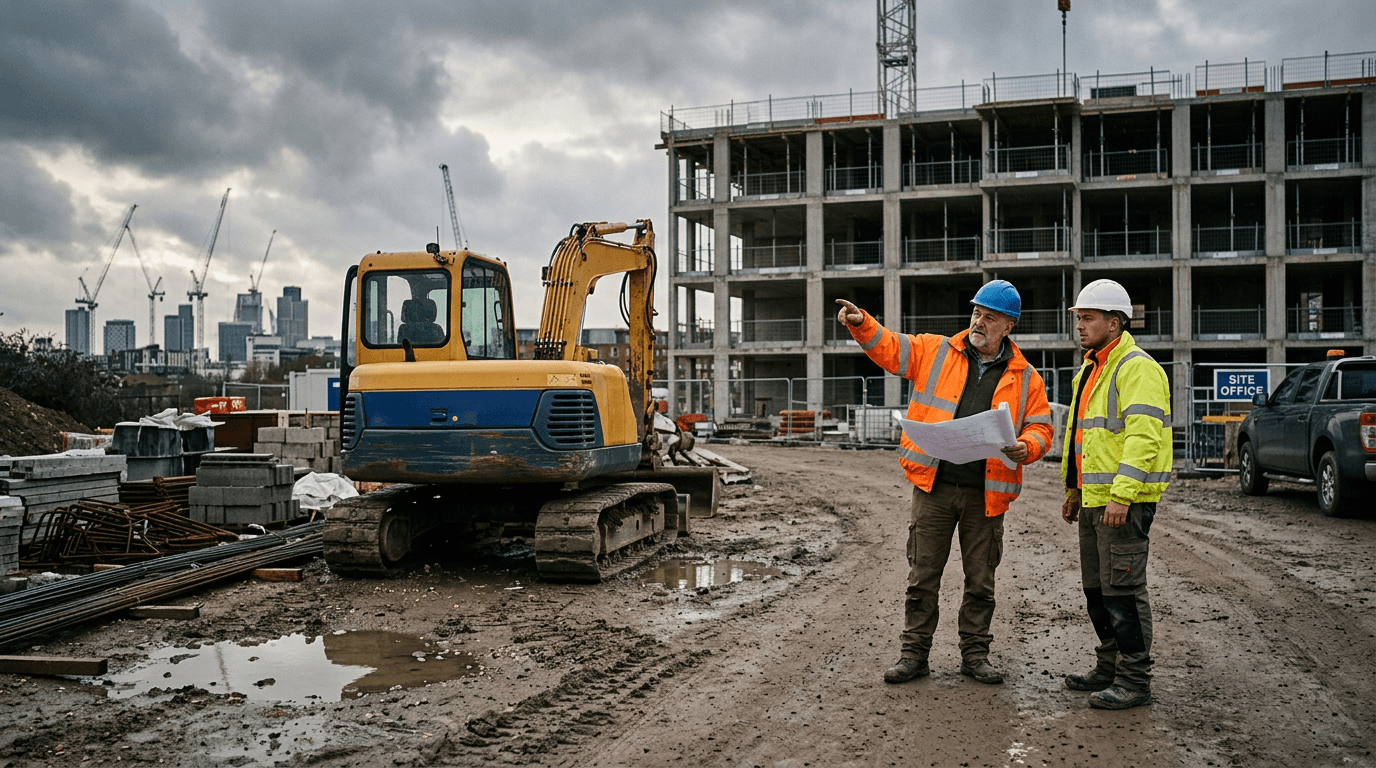
The UK construction sector has entered a critical phase, with fourteen consecutive months of contraction painting a troubling picture of economic weakness that extends far beyond the building industry itself. The persistent downturn signals underlying structural challenges within the economy, from elevated borrowing costs to persistent supply chain pressures and skills shortages. Understanding the depth and implications of this contraction is essential for industry professionals, investors, and policymakers seeking to navigate an increasingly uncertain landscape.
The latest data underscores the severity of the situation facing Britain's construction industry. Output fell by 1.1% in the three months to November 2025, marking the steepest decline since early 2023.[2] When examined on a monthly basis, construction activity declined by 1.3% in November 2025, following downwardly revised decreases of 1.2% in October.[2] The S&P Global UK Construction PMI, a key barometer of sector health, remained firmly in contraction territory throughout late 2025 and into early 2026, with December recording a five-and-a-half-year low of 40.1.[4] While the index rebounded to 46.4 in January 2026, this still signaled continued contraction, representing the longest sustained period of weakness since the global financial crisis.[3]
The Human Cost Of Contraction
The economic pain from this prolonged downturn extends deeply into the construction workforce and business ecosystem. Over the past twelve months, the sector recorded 3,950 insolvencies, the highest of any UK industry and accounting for 17% of all company failures nationwide.[3] Beyond formal insolvencies, levels of financial distress remain alarmingly high, with more than 102,000 companies classified as being in "significant" distress during Q2 2025, a 14% increase year on year.[3] Nearly 7,000 businesses were identified as being in "critical" distress, indicating an elevated risk of insolvency.[3]
Specialist trades have felt the greatest impact, particularly plumbing, heating and air-conditioning contractors, electrical and finishing trades, and design and development services.[3] These are precisely the small and medium-sized enterprises that form the backbone of Britain's construction supply chain, and their struggles have cascading effects throughout the industry. Employment continues to decline at a marked pace, with firms cutting staff in response to sustained weakness in order books.[4]
Sectoral Divergence In The Downturn
The contraction has not impacted all construction segments equally. Private housing repair and maintenance fell by 3.7% in the three months to November 2025, representing particular weakness in a market segment vital to many SMEs.[2][3] House building remains the poorest-performing area overall, though signs of stabilization have begun to emerge, with the rate of decline easing to its slowest pace in three months by January 2026.[4]
Civil engineering activity contracted sharply in early 2026, while commercial construction showed the smallest decline since May 2025, as some firms cited improved post-Budget clarity and a modest recovery in investment sentiment.[4] Infrastructure projects and repair and maintenance linked to post-Grenfell regulations have provided some bright spots, offering firms limited opportunities for revenue generation.[2]
The Underlying Pressures Driving Contraction
Several interconnected factors have created the perfect storm for construction sector weakness. Building costs rose by 4.5% from the same quarter a year ago, with forecasts suggesting approximately 15% total increases over the next five years.[1] Labour supply constraints persist as a major concern, with shortages of college places for skills training and apprenticeships becoming a longer-term structural issue.[1]
Planning delays have systematically slowed activity across the sector, while budget uncertainty created hesitation ahead of the Autumn Budget announcement, with many clients postponing decisions.[2] The Construction Products Association downwardly revised its 2026 construction output forecast from 2.8% in October 2025 to just 1.7% in January 2026, citing rising risk aversion across the industry and geopolitical developments as key contributors to stagnation.[1]
Early Signs Of Stabilization
Despite the bleak picture, subtle signs of stabilization have emerged. The PMI rebound from December's multi-year low of 40.1 to 46.4 in January, while still in contraction territory, exceeded market expectations and represented the strongest reading since June 2025.[4] Total new orders fell at the slowest rate in three months, suggesting early signs of stabilization in demand.[4] Construction insolvencies fell to 297 cases in November 2025, down from 362 in October, providing modest encouragement.[3]
The Bank of England's December base rate cut to 3.75%, with expectations for further reductions to around 3.25% by year-end, should eventually provide relief for interest-rate-sensitive construction activity.[1] Half the UK Tender Price Index panel believes there is an increased pipeline of work expected over the next year, though this has not yet translated into tangible output increases.[1]
Implications For The Road Ahead
The UK construction sector faces a delicate balancing act as it enters the coming months. While the contraction has undoubtedly been severe and sustained, the gradual easing of monetary policy and improving business sentiment suggest the worst may be passing. However, structural challenges around skills, planning, and cost inflation will require sustained attention. Industry professionals must prepare for a gradual recovery rather than a sharp rebound, positioning their businesses to capitalize on opportunities as they emerge.