
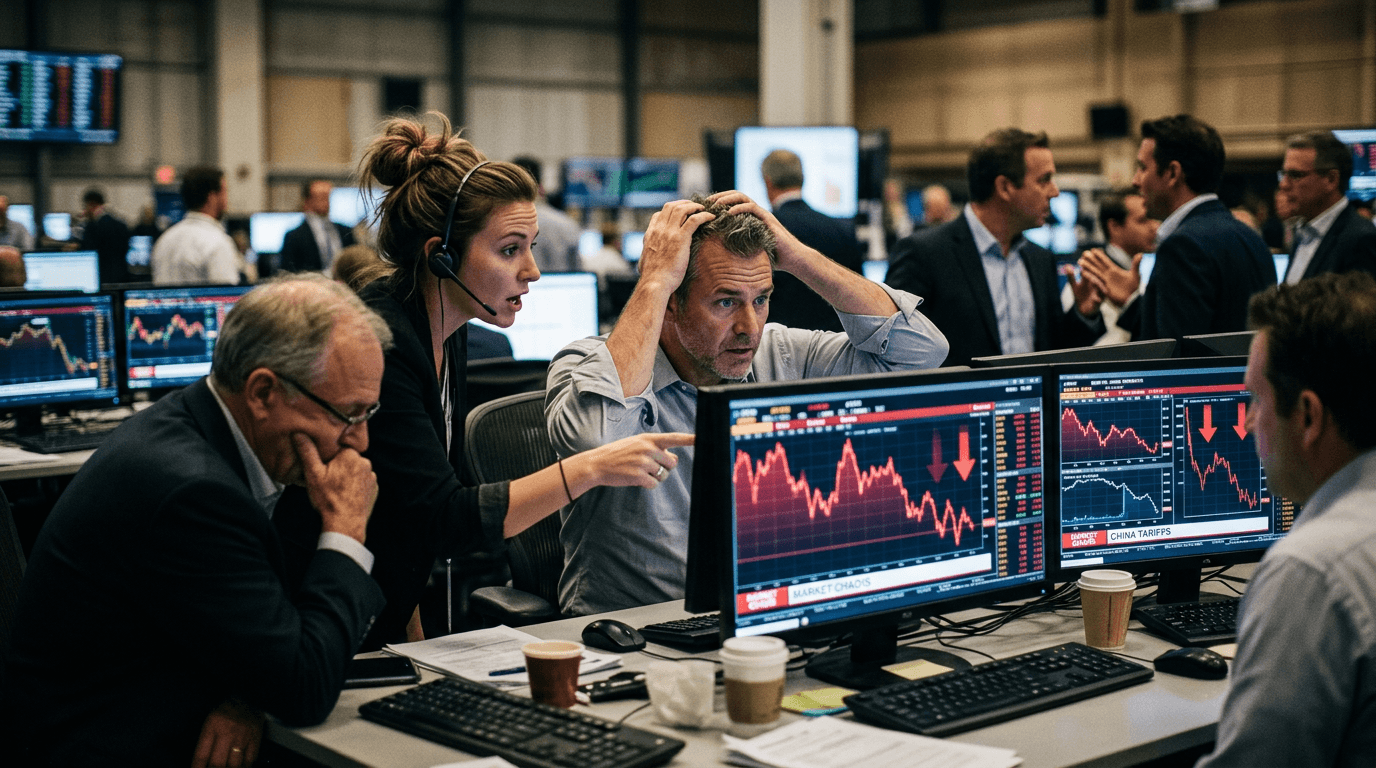
The US-China trade war reached a critical inflection point in April 2025 when the Trump administration escalated tariff rates to unprecedented levels, transforming the global trade landscape and triggering widespread market volatility. What began as strategic trade negotiations evolved into tit-for-tat tariff warfare that sent shockwaves through currency markets, equities, and commodities. For traders and investors monitoring these developments, understanding the mechanics of this tariff escalation and its market implications became essential for navigating increased volatility and positioning capital effectively.
Understanding The 145 Percent Tariff Rate
On April 9, 2025, the White House announced a significant revision to its tariff strategy, implementing a combined 145% tariff rate on Chinese imports. This figure resulted from adding a 125% reciprocal tariff on top of the existing 20% base duty that had been previously imposed. The escalation emerged after China failed to meet the Trump administration's April 8 deadline to repeal a 34% retaliatory tariff it had placed on US goods. What started as a "discounted" 34% reciprocal tariff rate evolved into the 84% rate, and ultimately the 125% rate, as neither side backed down from its position. The combined 145% rate represented an unprecedented peacetime trade barrier between the world's two largest economies, covering all Chinese goods entering the United States and several product-specific duties on top of the base rate. For context, the average US tariff on Chinese exports reached 127.2% in early May 2025 before later being adjusted downward following negotiations.
China's Swift And Strategic Retaliation
China responded with calculated precision to the American tariff escalation. On April 11, just two days after the US implemented its 145% rate, China announced it would raise its retaliatory tariff on American goods from 84% to 125%, effective April 12. This matching of rates sent a clear signal of parity and resolve. Notably, China's State Council Tariff Commission announced that it would not respond to further tariff increases from the US side, indicating that Chinese exporters faced a ceiling on their ability to absorb additional tariff costs. With US exports to China becoming economically unviable under the elevated duty rates, China strategically signaled an end to the escalation cycle while preserving its negotiating position. The Foreign Ministry maintained a diplomatic tone, expressing willingness to engage in dialogue while simultaneously preparing to "fight to the end" if tensions continued to escalate. China's fiscal and monetary stimulus initiatives provided additional cushioning for its economy, offering more policy flexibility than the United States possessed at that juncture.
Market Turmoil And Capital Flows
The tariff escalation triggered significant turbulence across global financial markets. Currency markets experienced notable volatility, particularly in USD/CNY (dollar-yuan) trading as investors reassessed the fundamental economic outlook for both countries. The dollar initially weakened as traders factored in the deflationary impact of tariff-driven supply chain disruptions and potential recession risks. Equity futures markets sold off sharply as multinational corporations faced margin compression concerns and supply chain reorganization costs. Forex trading volumes surged as hedging demand intensified, with volatility indexes reaching elevated levels not seen since previous crisis periods. Commodities tied to US-China trade flows, particularly semiconductors, industrial metals, and manufactured goods, experienced pronounced price swings. The broader market reaction reflected genuine uncertainty about the duration and ultimate resolution of the trade dispute, creating fertile ground for tactical trading opportunities but also elevated risk for unhedged positions.
Implications For Traders And Investors
For active market participants, the 145% tariff environment created both challenges and opportunities. Traders needed to reassess exposure to Chinese equities and dollar-denominated assets, as the tariff regime directly impacted corporate earnings forecasts and currency valuations. Supply chain disruptions meant that companies reliant on Chinese manufacturing or components faced material margin pressure, requiring fundamental reanalysis of previously held positions. The increased volatility created opportunities for options traders to capitalize on elevated implied volatility, while systematic traders found algorithmic opportunities in cross-asset correlations that emerged during the dislocation. Currency traders particularly benefited from increased USD/CNY volatility and the associated risk premium embedded in emerging market positions. Risk management became paramount, as traditional correlation structures broke down and markets priced in multiple scenarios ranging from continued escalation to negotiated resolution.
A Path Toward De-escalation
While the 145% rate represented an escalation peak, subsequent negotiations eventually led to more moderate arrangements. After a 90-day pause agreement reached through talks in Geneva, both sides agreed to significant reductions in their tariff rates, with the US cutting its rate from 145% to 30% and China reducing its rate from 125% to 10%. This eventual rollback demonstrated that even in high-tension trade environments, negotiation pathways remained viable, though the interim period of elevated tariffs created material market dislocation.
Takeaways For Market Participants
The 145% tariff episode underscores several critical lessons for traders and investors. Trade policy remains a first-order driver of market volatility, capable of triggering significant repricing across asset classes. Elevated tariff regimes create asymmetric risk profiles that require scenario planning and tactical positioning adjustments. Currency markets, particularly emerging market crosses, deserve heightened monitoring during trade policy developments. Finally, even extreme tariff levels eventually prove negotiable, suggesting that traders should maintain exposure to tactical recovery opportunities alongside hedging for downside scenarios.