
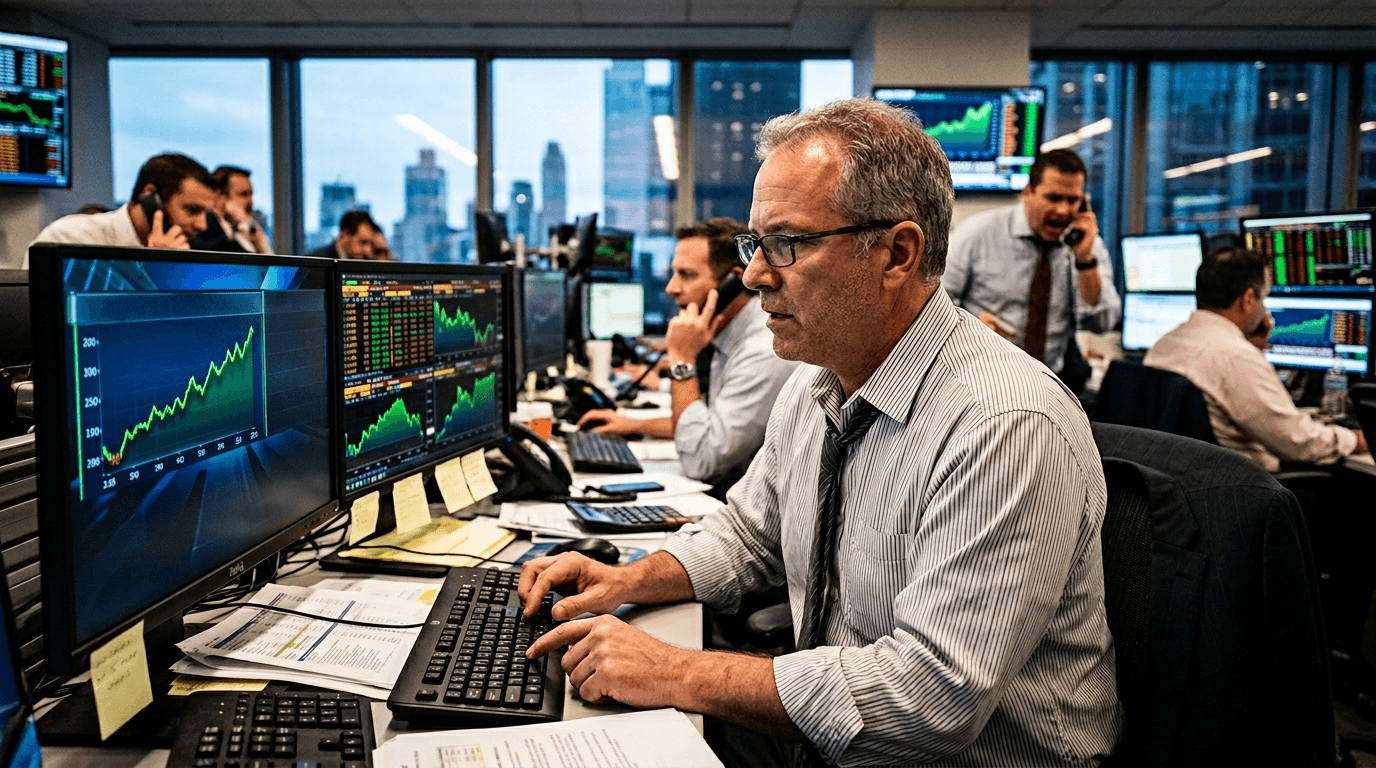
The U.S. Dollar has recently gained strength against most major currencies during the New York trading sessions, reversing earlier weaknesses as the market re-evaluates geopolitical risks and safe-haven positioning.[1] This rally highlights the rapid shifts in sentiment that can occur in the forex market, particularly when macroeconomic uncertainties align with technical trading dynamics. For traders aiming to leverage these movements, understanding the drivers behind the dollar's strength and the currency pairs most affected by New York session volatility is crucial for crafting an effective trading strategy.
The dominance of the dollar in global forex markets is immense. As the world's primary reserve currency, involved in nearly 90 percent of all forex transactions, any fluctuations in USD value during American market hours have far-reaching effects across global markets.[1] When the dollar strengthens during the New York session—which runs from 8:00 AM to 5:00 PM EST and often serves as the most volatile trading window of the forex day—it signals broad changes in capital flows and risk appetite that extend beyond currency markets.
Geopolitical Tensions Fuel Safe-haven Demand
Recent geopolitical developments, notably the stalled U.S.-Iran peace talks and escalating regional tensions, have significantly altered market risk sentiment.[1] During times of increased uncertainty, investors naturally gravitate towards assets perceived as stable and secure. The U.S. Dollar, underpinned by the world's largest economy and deepest financial markets, stands out as the primary beneficiary of this flight to safety.
As geopolitical risks rise, capital that formerly flowed into growth-oriented or higher-yielding assets shifts towards dollar-denominated instruments.[1] This shift creates a self-reinforcing cycle: increased demand for USD leads to currency appreciation, which in turn attracts more safe-haven-seeking capital. Traders who identify these periods of rising geopolitical risk can position themselves ahead of these expected flows, capturing significant moves in major currency pairs.
Major Currency Pairs Show Divergent Responses
The recent USD strength has influenced all major currency pairs involving the dollar, though with varying degrees of intensity. EUR/USD, the world's most traded currency pair, typically sees daily ranges of 50 to 90 pips during the London session, but these ranges expand to 60 to 100 pips during the New York overlap as dollar strength increases.[1] This expansion reflects heightened participation of U.S. institutional traders and the convergence of both European and American market hours.
GBP/USD has seen particularly significant movements, often experiencing daily fluctuations of 70 to 110 pips during the New York session, indicative of its high volatility and exceptional liquidity during these peak hours.[1] For swing traders and intraday scalpers alike, these large pip ranges offer ample opportunities to profit from directional moves or exploit mean-reversion patterns.
USD/JPY has gained substantial ground as interest rate differentials between the United States and Japan have widened in favor of the dollar, while USD/CAD has also strengthened as traders reassess growth and monetary policy expectations.[1] USD/CAD typically exhibits daily ranges of 40 to 70 pips during the New York session, with the geographic proximity of U.S. and Canadian markets creating natural trading synergies and smooth capital flows.
Trading Strategies For New York Session Success
The New York session's distinct characteristics require specialized trading strategies. Understanding how developments in U.S. equity markets influence forex pricing is essential. When U.S. indices open with strong risk-on momentum, capital typically shifts out of safe-haven currencies like the Japanese yen and Swiss franc and into higher-yielding or risk-sensitive pairs.[2] Conversely, sharp equity sell-offs often bolster the USD or increase safe-haven demand, creating predictable correlations traders can exploit.
Monitoring S&P 500 futures and Nasdaq opening strength helps forex traders anticipate directional bias before it fully manifests in currency pair movements.[2] This proactive approach allows traders to establish positions ahead of the more apparent moves that follow equity market developments.
Economic data releases remain critical catalysts during the New York session. Quarterly GDP reports, employment figures, and Federal Reserve communications can trigger sharp forex moves when they surprise markets.[2] Traders should keep a calendar of key U.S. economic releases and position accordingly, understanding that stronger-than-expected data typically strengthens the dollar while disappointing figures often weaken it.
Key Takeaways For Traders
Focus on currency pairs with heavy USD involvement for cleaner, more directional moves. EUR/USD and GBP/USD provide exceptional liquidity and tight spreads during overlap hours, making them ideal for both day traders seeking quick opportunities and swing traders looking for sustained moves.[3][4]
Remember that the New York session doesn't operate in isolation. Movements in U.S. stock markets, bond yields, and other financial instruments directly influence forex trading during these hours.[1] By recognizing these interconnections and understanding the fundamental drivers of dollar strength, traders can anticipate broader market shifts and position themselves accordingly.
The current dollar strength reflects fundamental market dynamics including U.S. economic leadership, currency dominance, and genuine safe-haven demand driven by geopolitical uncertainty.[1] Rather than viewing this as temporary volatility, recognize it as a response to genuine shifts in global risk appetite—shifts that create lasting trading opportunities for those prepared to act.