
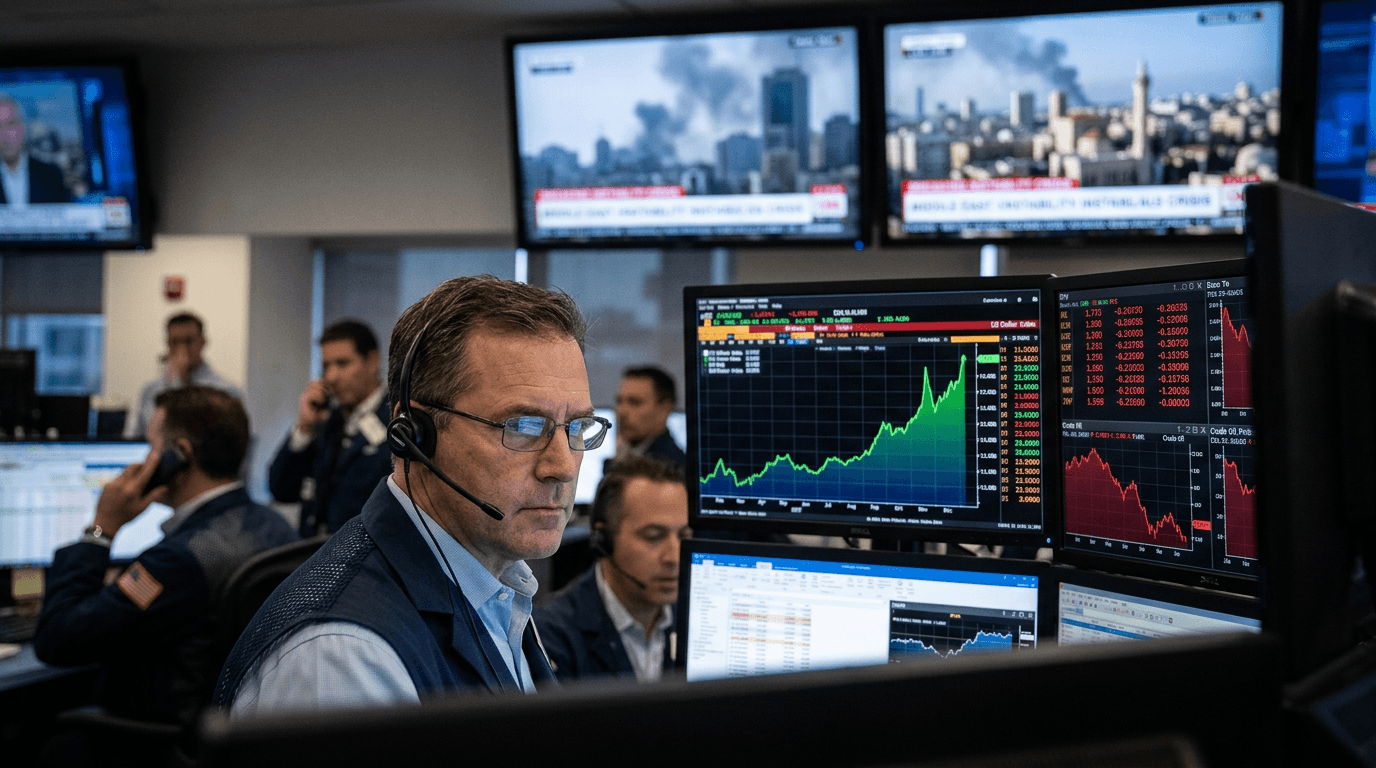
The US Dollar Index recently reached a notable 9.5-month high, climbing to about 100.4 by mid-March 2026. This milestone in currency markets is driven by two significant forces: escalating geopolitical tensions in the Middle East and evolving expectations for Federal Reserve policy. This rally transcends mere technical strength, signaling a fundamental reassessment of safe-haven demand and inflation risks that are poised to influence forex markets, commodity prices, and broader portfolio strategies in the coming months.
A Perfect Storm: Geopolitics And Monetary Policy Align
The dollar's remarkable rise is fueled by the convergence of typically independent market drivers, both reinforcing the greenback. The onset of a full-scale war over Iran has triggered a classic flight-to-safety response, prompting investors to channel capital into the US Dollar as a trusted safe-haven asset. Concurrently, the conflict's impact on global energy supplies has compelled the Federal Reserve to maintain its stance on interest rates, deviating from prior expectations of aggressive rate cuts in 2026. This unique scenario provides the dollar with support from both risk-off flows and sustained interest rate expectations, catching many market participants by surprise.
The CME FedWatch tool underscores this shift: the market now anticipates only a single 0.25% rate cut for the entirety of 2026, postponed until September. This marks a stark tightening of Fed expectations compared to forecasts just weeks earlier, prior to the escalation of the Middle East conflict. Elevated US interest rates compared to other major economies naturally draw foreign capital seeking better yields, bolstering the dollar through traditional rate differential mechanics.
The Strait Of Hormuz And The Energy Crisis
The geopolitical facets of this rally are critical. The conflict has halted approximately 70% of traffic through the Strait of Hormuz, a pivotal global energy chokepoint. This disruption has driven crude oil prices skyward, with West Texas Intermediate crude surpassing $90 per barrel, nearly doubling from just weeks prior. While strategic petroleum reserves offer some respite, the energy market acknowledges the real supply constraints posed by a prolonged Middle East conflict.
This situation extends beyond oil markets. European economies, heavily reliant on energy imports, face accelerating inflation and deteriorating growth prospects. Consequently, the Euro has weakened against the dollar as investors reevaluate the Eurozone's economic outlook. Despite Japan's traditional safe-haven status, the Japanese Yen's strength is limited due to the conflict's immediate impact on energy-importing developed economies. The Canadian Dollar is also under pressure, given North America's energy exposure.
Inflation Concerns Trump Recession Fears
Perhaps the most crucial factor bolstering the dollar is the reversal of inflation narratives. Earlier in 2026, markets largely anticipated a disinflationary environment that would eventually pressure the Fed into aggressive rate cuts. However, rising oil prices directly challenge this scenario. Energy costs permeate entire supply chains, potentially reigniting inflation in transportation, manufacturing, and consumer goods. For central bankers cautious of excessive rate cuts, surging crude prices present a formidable barrier to policy easing.
US wage data supports this cautious stance. Average hourly earnings exceeded expectations with a 0.4% month-on-month increase against a forecast of 0.3%, indicating persistent domestic inflation pressures. Coupled with crude oil nearing $90 per barrel, the Fed faces a genuine dilemma: fostering growth through rate cuts or maintaining restrictive policy to combat inflation. In this context, the market's focus on a "higher for longer" rates scenario underpins dollar strength.
Near-term Outlook: March Through May
Currency forecasts from major institutions present a consistent picture for the near term. The period from March to May 2026 offers a robust window for dollar bullishness, with technical support expected within the 98-102 range for the DXY. As long as the Middle East conflict persists and oil prices remain elevated, the fundamental backdrop for dollar strength remains strong. Trading Economics' global macro models suggest the dollar will trade around 100.26 by the end of Q1 2026, confirming the current technical strength.
However, traders should heed important caveats. Some analysts caution that the dollar's rally has created a consolidation zone where the currency has become "comfortable," indicating mean reversion risks. Market participants should remain vigilant for signs of conflict de-escalation; a resolution in the Middle East could swiftly trigger safe-haven outflows and potentially accelerate Fed rate cuts, posing a significant challenge to dollar strength.
Portfolio Positioning Implications
For traders and portfolio managers, the current landscape presents distinct opportunities and risks. Long USD positions remain supported by structural factors through at least May 2026, especially against currencies from energy-importing developed economies like the Euro. Nevertheless, the current price action also reflects substantial positioning, and any geopolitical surprise could prompt a rapid reversal. Effective risk management is crucial, even when fundamentals appear supportive.
Looking beyond May, institutional forecasts become decidedly more bearish for the dollar. Consensus expectations foresee the DXY drifting toward the low-to-mid 90s through summer and autumn 2026, as conflict resolution presumably reopens the Fed's easing window. This scenario creates a defined temporal opportunity: the dollar strength narrative has a time limit. Traders planning for longer-term dollar weakness should seek better entry points later in the year rather than counteracting the current tide of safe-haven flows and hawkish Fed repricing.
The US Dollar's surge to nine-month highs reflects genuine structural shifts in both geopolitical risk premiums and monetary policy expectations. While the near-term environment supports continued strength, the longer-term trajectory hinges on Middle East conflict dynamics and inflation outcomes. Market participants who overlook either factor do so at their own risk.