
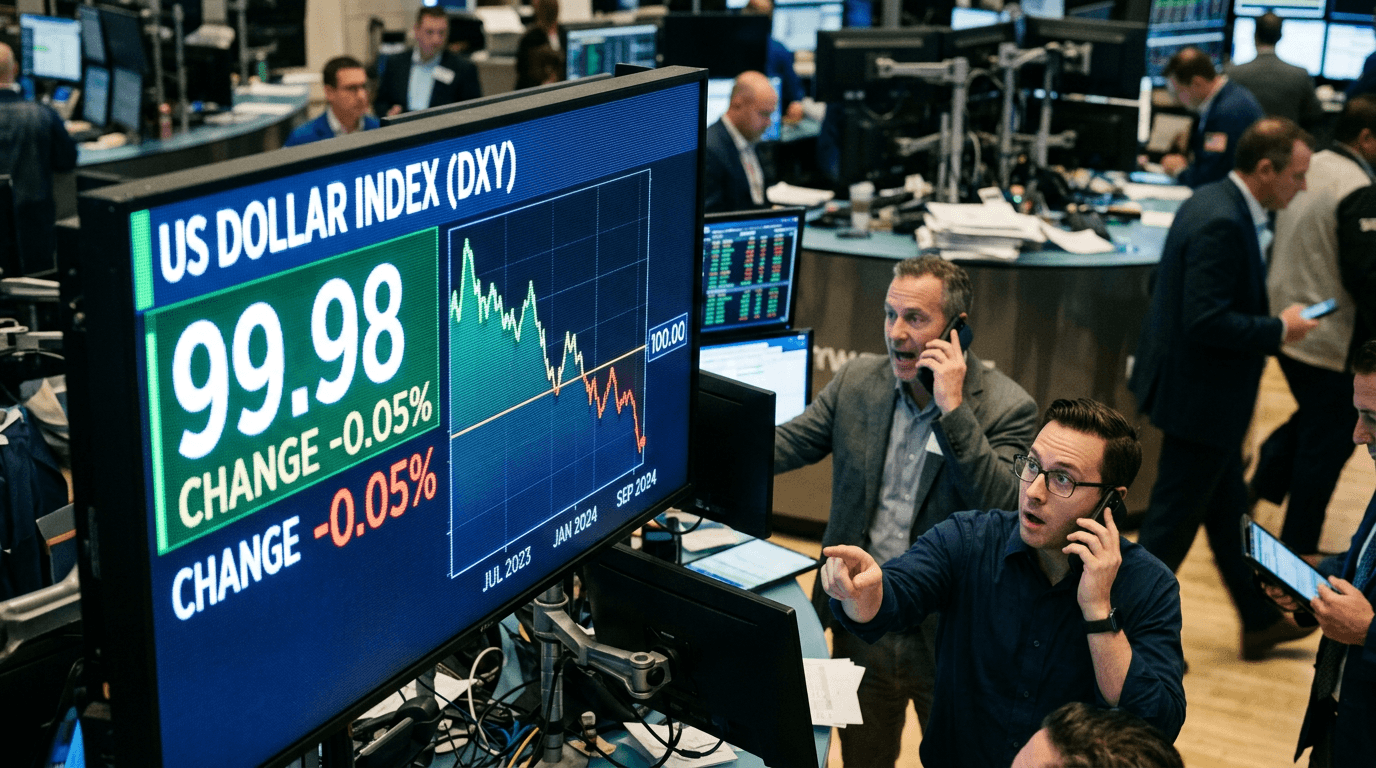
US Dollar Index Dips Below 100: Unpacking the Impact on Global Markets
The US Dollar Index's dip below the pivotal 100 mark for the first time since July 2023 signifies a profound shift in the global currency landscape. This breach is not just a technical blip; it signals evolving expectations surrounding Federal Reserve policies, international economic landscapes, and broader macroeconomic factors. For traders and investors, this juncture demands acute attention as it may catalyze significant capital flows across diverse asset classes, reshaping currency strategies in the imminent weeks.
A New Monetary Phase: From Tightening to Steady
The dollar's slide under this critical threshold coincides with the Federal Reserve's signal to pause its monetary tightening cycle. Markets have already priced in the Fed's stance to maintain the federal funds rate steady, predicting unchanged borrowing costs through 2026. This policy shift marks a stark reversal from earlier in the year when the dollar surged towards 110, buoyed by expectations of persistent Federal Reserve resolve and robust interest rate policies. This pivot highlights the fluidity of market sentiment as central bank support begins to waver.
Global Economic Shifts and Currency Dynamics
On the international front, conditions are increasingly unfavorable for the dollar. Key central banks, including the European Central Bank and the Bank of England, have adopted more hawkish positions, narrowing the interest rate gap that once favored the US currency. Concurrently, strengthening economic indicators from the Eurozone have diminished the dollar's traditional safe-haven appeal. Additionally, ongoing tariff tensions and policy uncertainties inject volatility, prompting traders to pare back dollar positions and re-evaluate strategies that previously thrived on dollar supremacy.
Technical Signals: A Bearish Outlook
From a technical perspective, the breach below 100 sends a bearish signal that should concern dollar bulls. Charts reveal a pattern of lower highs and lower lows, suggesting institutional selling pressure rather than mere profit-taking. The recent crossing of the 50-day moving average below the 200-day moving average forms a "death cross," a classic pattern indicating sustained downward momentum. The spike in trading volume during the breakdown confirms the move's strength, indicating that institutional investors are offloading dollar positions at scale.
Key Levels and Market Dynamics
Traders should vigilantly watch immediate downside support levels at 99.70 and 98.50. A breach below 97.50 would suggest a deeper, long-term trend reversal with potentially profound implications for capital flows across various asset classes. On the upside, the 100.20 to 100.50 range serves as a potential recovery zone, with resistance extending toward 101.60 and 103. The 200-day moving average remains a critical focal point for traders determining whether this weakness represents temporary consolidation or a more enduring reversal.
The Psychological Significance of the 100 Level
Understanding the importance of the 100 level provides essential context for this move. The US Dollar Index measures the dollar's strength against a basket of six major world currencies: the Euro, Japanese Yen, British Pound, Canadian Dollar, Swedish Krona, and Swiss Franc. For over a decade, the 100 level has acted as a crucial support and resistance zone, a key indicator for central banks, multinational corporations, and institutional investors globally. Dropping below it suggests the dollar is trading weaker than its historical average since the index's inception in 1973.
Round-number levels like 100 often trigger institutional money flows and signal shifts in currency strategies. The psychological significance of breaking below this threshold cannot be overstated. This isn't merely a numerical event; it signifies a crucial shift in market dynamics that traders and investors must grasp. The last time the index consistently traded below this level was during the aftermath of the 2008 financial crisis and the 2020 pandemic sell-off—periods marked by significant economic tumult and risk-off sentiment. The current breakdown suggests markets are anticipating similar economic challenges ahead.
Strategic Implications for Traders and Investors
For active traders and investment managers, this moment calls for close scrutiny as it could herald shifts across multiple asset classes. The dollar's decline directly impacts currency pairs, commodities priced in dollars, international equities, and bond markets globally. A weaker dollar typically supports emerging market assets, commodity exporters, and multinational companies with significant overseas earnings. Conversely, it increases import costs and could pressure sectors reliant on dollar strength.
The confluence of factors driving the dollar's weakness—Fed policy pause, central bank divergence narrowing, improving international economic data, and tariff-induced uncertainty—suggests this breakdown has legs rather than representing a temporary pullback. However, traders should recognize that markets remain positioned for potential consolidation or even dollar recovery if geopolitical tensions ease or economic data surprises to the upside.
Monitoring the Path Forward
Looking ahead, it is crucial to monitor whether the dollar stabilizes above 99.70 or succumbs to deeper selling pressure toward 98.50. Pay close attention to any Fed communications or economic data that might reignite dollar demand. Watch currency pairs closely, as the dollar's weakness creates opportunities in euro, yen, and commodity-linked currencies. The 100 to 100.50 level remains key resistance that would need to be reclaimed for a sustained recovery.
This moment in currency markets underscores the importance of staying informed about Fed policy shifts, international economic conditions, and technical levels. Traders who position themselves appropriately for this new regime while respecting technical support and resistance levels can capitalize on the opportunities this volatility presents.
News Impact Score: 7