
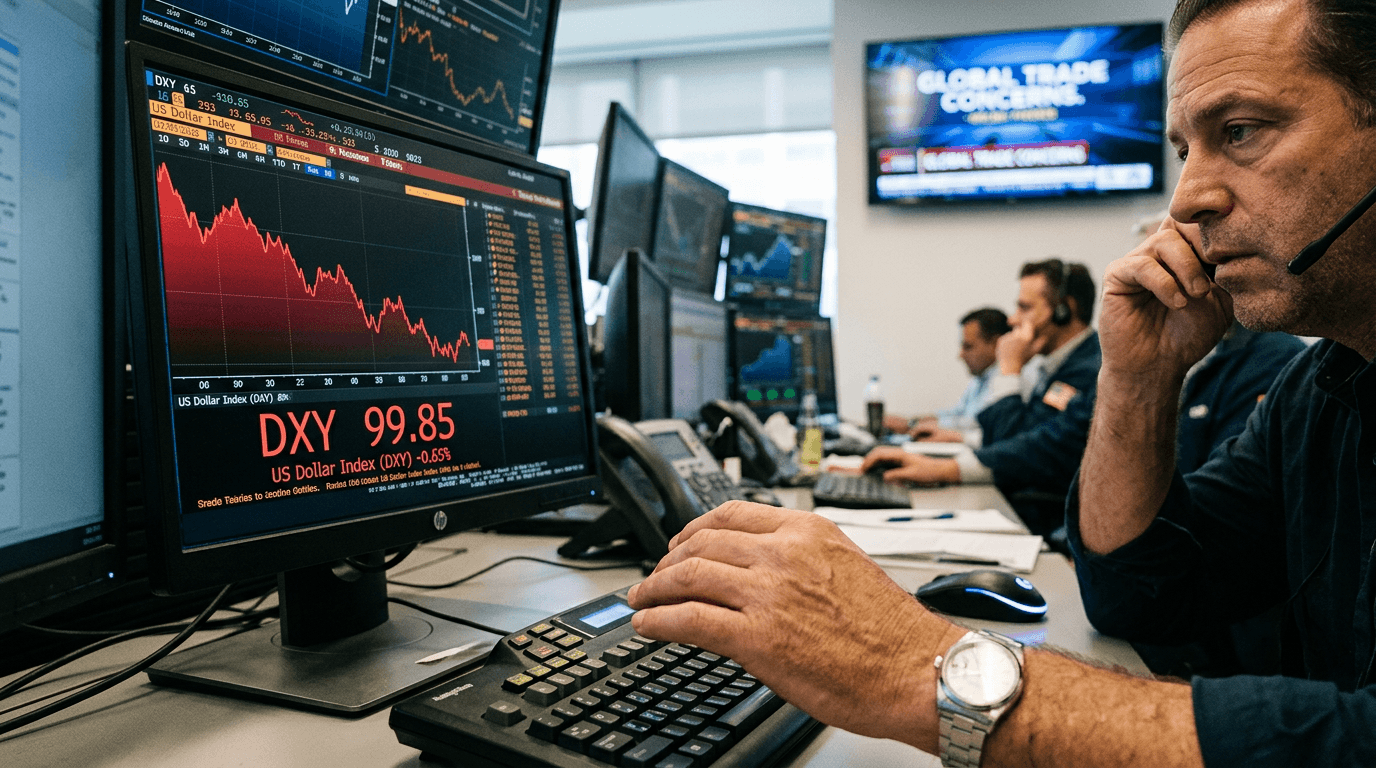
The US Dollar Index has dipped below the critical 100 mark for the first time since July 2023. This move is not just a routine currency fluctuation; it signifies a fundamental shift in global market dynamics, particularly concerning risk assessment, growth forecasts, and monetary policy. The DXY's decline follows a substantial run-up that saw it peak at a five-month high of 100.3, highlighting the dramatic nature of this recent pullback for traders and investors monitoring currency trends. Understanding the factors behind this shift and its implications for portfolios is crucial in today's uncertain trading climate.
The Significance Of The Dollar's Drop
The current downturn in the US dollar isn't a mere blip—it's one of the most notable declines in recent history. Since its peak on January 13th, 2025, the dollar has fallen by 7.3 percent, marking one of the most significant monthly drops since 2009. What makes this reversal unusual is that it occurred alongside a rise in Treasury yields, defying the conventional behavior where higher US bond yields bolster the dollar. This divergence between yield dynamics and currency performance suggests that structural issues are overshadowing traditional technical relationships.
The Drivers: Tariffs And Policy Turbulence
The dollar's decline is primarily driven by escalating concerns regarding aggressive tariff policies and their potential economic repercussions. Investors have reassessed their growth expectations for the US economy following widespread tariff implementations, leading to a dimmer outlook for dollar-denominated returns. Import tariffs typically spark inflation fears, which would normally support the currency, but the prevailing concern is the potential drag on growth. Additionally, President Trump's comments about replacing Fed Chair Jay Powell have added another layer of uncertainty, raising questions about the central bank's independence—a critical factor for global investors.
European funds have notably increased their sales of dollar-denominated debt, seeking alternatives due to apprehensions over new US policies. This exodus of foreign capital has exacerbated the dollar's decline, introducing a seasonal component. Historically, the lead-up to Federal Open Market Committee meetings during potential rate-cutting cycles is associated with dollar weakness, as traders hesitate to hold large dollar positions before critical policy decisions.
Technical Terrain: What Traders Should Monitor
For traders, recent price movements have highlighted significant technical support and resistance zones. The 96.50 to 97.00 range serves as major support from the 2025 lows, with consolidation likely around 96.80 to 97.30. On the upside, resistance is found at 99.40 to 99.50, with a pivot point near 98.80 to 99.00. The pressing question for technical analysts is whether the dollar will stabilize within a range or break lower towards the September FOMC lows around 96.20.
The 100 level itself is both a psychological and technical milestone. Previously, testing within the 100.20 to 100.50 range suggested potential advances to 101.60 and even 103. Now that the index has fallen below this threshold, traders need to watch closely to see if support holds or if further declines occur.
The Global Economic Landscape
The dollar's decline acts as a litmus test for the global economy. While a stronger dollar typically burdens emerging markets and raises borrowing costs for non-US entities with dollar debts, a weaker dollar can bolster commodity prices and relax global financial conditions. Current market conditions are influenced by conflicting pressures: rising energy prices due to geopolitical tensions versus potential growth slowdowns from tariff policies. For now, market behavior indicates that inflation and liquidity factors are keeping the dollar relatively buoyant despite its recent drop.
Crucial Insights For Market Participants
Three key insights emerge from the dollar's slide below 100. Firstly, the dollar's weakness is not due to a collapsing US economy but rather the fragility of other major economies and investor adjustments to growth expectations amid policy uncertainties. Secondly, the decoupling of Treasury yields and dollar strength signals that fundamental risk reassessment is driving market flows more than technical indicators. Thirdly, forthcoming FOMC decisions and economic data releases will likely influence whether the dollar stabilizes or continues to decline.
As currency market volatility remains high, staying informed about these technical levels, policy developments, and relative growth forecasts is vital for anyone engaged in foreign exchange markets or holding international investments.