
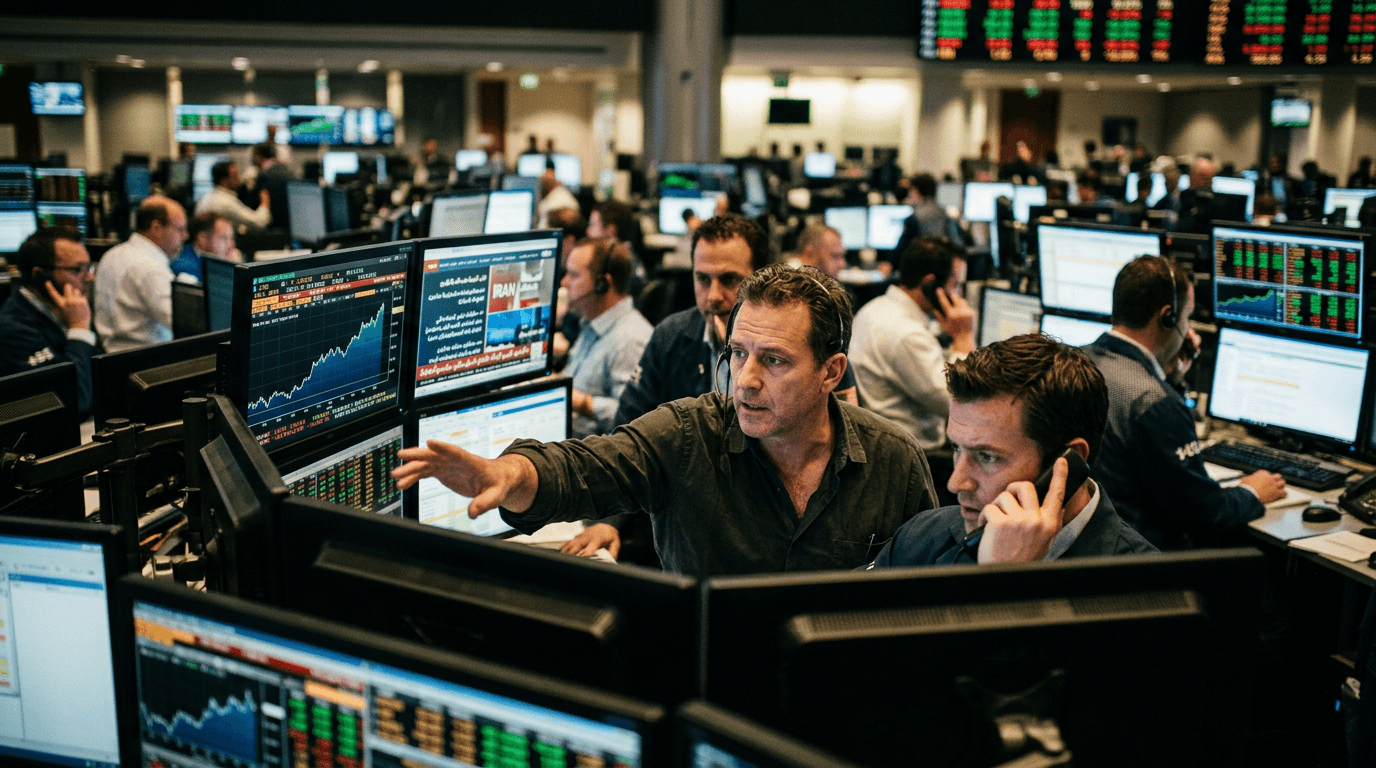
Oil futures snapped sharply higher as traders rushed to reprice geopolitical risk after Iran suspended ceasefire talks with the United States, reigniting fears of a drawn‑out conflict in a critical energy-producing region. Recent price action reflects an abrupt shift from cautious optimism back to risk aversion, with U.S. crude pushing toward recent highs and volatility returning to energy markets as geopolitical headlines again dominate trading screens.[2][3]
WHAT TRIGGERED THE MOVE IN OIL FUTURES?
The immediate catalyst was news that Iran had halted ceasefire discussions with the U.S., effectively stalling diplomatic efforts that markets had hoped would ease tensions and eventually normalize energy flows through key Middle Eastern shipping lanes.[2] That setback came on the heels of already fragile ceasefire prospects, reinforcing the perception that the conflict risk is structural rather than temporary.
Before this breakdown, crude had been under pressure as traders started to price in the possibility of a peace framework and a gradual reopening of disrupted supply routes. When those hopes faded, benchmark contracts reversed course. Brent crude, which had recently been trading near the $100 mark, bounced as ceasefire optimism evaporated, while U.S. West Texas Intermediate (WTI) futures climbed back toward the mid‑$90s per barrel after intraday gains of up to 3% in earlier volatile sessions.[2]
This is consistent with prior episodes in the same conflict: when a temporary ceasefire agreement was reached earlier, crude prices dropped sharply below $100 per barrel as safe passage for tankers reduced supply fears, even as global equity futures rallied on lower energy risk.[1] The latest move is effectively the mirror image of that reaction—this time, risk is being added back into oil prices as diplomacy stalls.
Why Middle East Tensions Hit Oil First
Oil is often the first major asset class to react to Middle East headlines because the region accounts for a significant share of global supply and, crucially, for seaborne exports that pass through strategic chokepoints. Even without immediate physical disruptions, traders price in the probability that flows could be reduced, delayed, or repriced if conflict escalates or key shipping lanes remain constrained.[2]
In this case, uncertainty around the status and duration of restrictions on tanker traffic has been central to market psychology. Earlier, when the Strait of Hormuz was reported as closed and the timeline for restoring flows was unclear, analysts warned that fully normalizing physical supply could take several weeks, even under constructive diplomatic scenarios.[2] The suspension of ceasefire talks makes those optimistic timelines less credible, which justifies a higher risk premium on oil.
Importantly, this “geopolitical premium” is about probabilities, not certainties. Futures do not wait for barrels to be physically lost before moving; they respond to changes in perceived risk. A headline that reduces the odds of a peaceful resolution can tighten the market’s risk tolerance in minutes, even if the actual balance of supply and demand has not yet changed.
How Futures Markets Price In Geopolitical Risk
Oil futures are forward-looking contracts, so prices represent the market’s best guess of what conditions—supply, demand, inventories, and risk—will look like at a specific point in the future. When geopolitical risk rises, several dynamics typically appear:
First, front‑month contracts usually move more sharply than longer‑dated ones. Traders demand compensation for taking near‑term exposure to disruption risk, which steepens backwardation—where near‑term prices trade above those further out on the curve.
Second, volatility spikes. Intraday swings of 2–4% become more common, particularly around key headlines or official statements.[2][3] Options on oil futures may see rising implied volatility and a stronger bias toward upside protection (call options), reflecting demand from hedgers and speculators positioning for further spikes.
Third, liquidity can become patchy. During headline-driven sessions, bid–ask spreads may widen, and price gaps can occur between sessions or across time zones as Asia, Europe, and the U.S. react sequentially to news. This environment rewards disciplined execution and punishes overly tight stop-loss orders that can be triggered by noise rather than trend.
For traders in both live and simulated environments, understanding that these moves are risk‑premium adjustments—not just simple supply-demand shifts—is critical. A rally driven by geopolitics can unwind quickly if conciliatory headlines emerge, or it can extend dramatically if the situation deteriorates.
Ripple Effects Across Equities, Fx, And Risk Sentiment
The latest spike in oil futures is not happening in isolation. Higher crude prices and increased volatility tend to weigh on risk sentiment more broadly. Equity markets often come under pressure as investors reassess profit margins, growth expectations, and overall risk appetite when energy costs rise suddenly.
We saw the opposite pattern earlier, when a temporary ceasefire agreement sent oil sharply lower and U.S. equity futures surging, as investors welcomed reduced energy risk and improved global growth prospects.[1] The current backdrop, with diplomacy stalling and crude climbing, leans toward a risk‑off bias: defensive sectors and energy-linked names can outperform, while rate‑sensitive and growth-heavy segments may lag.
Foreign exchange markets also react. Currencies of major energy importers tend to be pressured when oil spikes, as terms of trade deteriorate and inflation risks pick up. By contrast, “petrocurrencies”—those of significant energy exporters—may find support as markets price in better export revenues. At the same time, safe-haven currencies can catch a bid as investors seek shelter from heightened geopolitical uncertainty.
For macro and cross‑asset traders, these correlations matter. Oil is not just an isolated commodity; it functions as a barometer of geopolitical tension and a transmission channel into inflation expectations, interest-rate outlooks, and risk appetite.
Practical Takeaways For Traders And Simulated Strategies
For active traders, especially those honing their skills in a simulated environment, this episode offers several practical lessons:
1) Respect geopolitical risk, but avoid overreacting Headlines can drive dramatic short‑term moves, but not every spike leads to a structural trend. Distinguish between transient risk repricing and genuine changes to long‑term supply-demand dynamics. Monitor not only price but also positioning, volatility, and the shape of the futures curve.
2) Size positions for volatility, not for calm markets When crude is moving 3–4% in a session, the same leverage that worked in quieter conditions can become dangerous.[2][3] Adjust position sizes, widen stops thoughtfully, and consider the higher probability of gaps or slippage around major news.
3) Use scenarios—not predictions Instead of trying to guess the exact geopolitical outcome, build scenarios: a de‑escalation case, a status‑quo case, and an escalation case. Define in advance how you would respond in each, which price levels matter, and what signals (such as changes in curve structure or options pricing) confirm your thesis.
4) Watch cross‑asset signals Oil rarely moves alone. Track equity indices, energy stocks, related FX pairs, and even gold to gauge whether the broader market is confirming the story implied by crude prices.[1][2] Divergences can offer both opportunity and warning.
5) Treat simulated trading as a rehearsal for real risk Simulated finance platforms allow traders to practice navigating these complex, headline‑driven markets without financial damage. Use them to test how your strategy behaves under stress: How does your P&L react to a 5% overnight gap in crude? Do your risk controls hold up when volatility doubles? These insights are invaluable before deploying real capital.
Ultimately, the renewed spike in oil futures after Iran’s suspension of ceasefire talks is a reminder that geopolitics remains a central driver of energy markets. For traders, the edge lies not in predicting every headline, but in building robust processes, risk frameworks, and scenario plans that can adapt as the story evolves.