
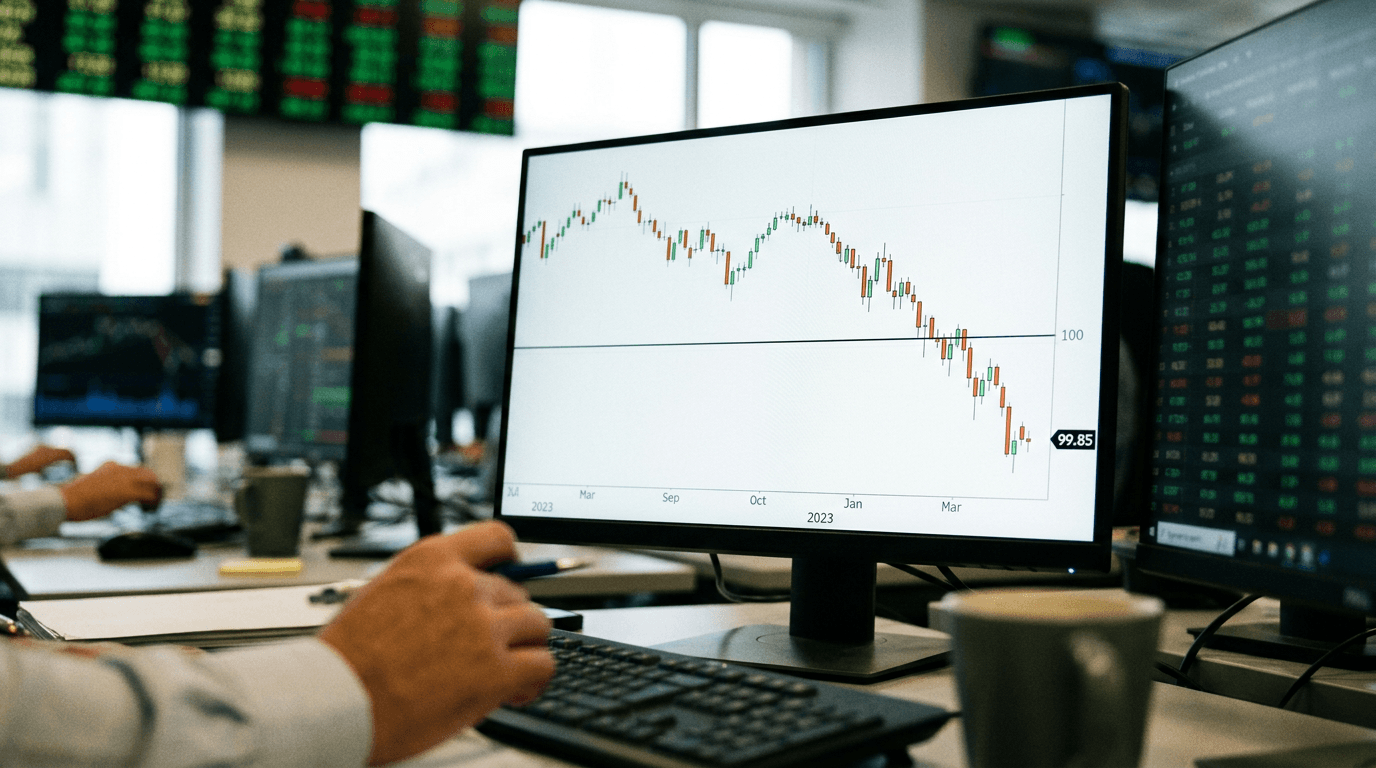
US Dollar Index Dips Below 100: Understanding the Market Shift
The US Dollar Index's recent plunge below the crucial 100 threshold marks a pivotal moment in currency markets, signaling a shift that traders and investors must grasp. This dip, the first below 100 since July 2023, highlights weakening USD sentiment with significant repercussions for forex markets, international trade, and portfolio strategies. This downturn stems from a mix of tariff anxieties, geopolitical strains, and uncertainties surrounding Federal Reserve policy, crafting a challenging trading landscape demanding insightful analysis.
The Importance of the 100 Level
The 100 mark on the US Dollar Index is more than a simple round number; it serves as a psychological and technical barrier under close market scrutiny. When the dollar sustains above 100.20-100.50, it typically indicates ongoing strength, potentially driving the index towards 101.60 and even 103. Conversely, breaking below this level casts doubt on the dollar's immediate trajectory and can spark momentum-driven selling. The significance of this level lies in its reflection of the balance between USD strength and weakness, impacting everything from commodity prices to emerging market stability. The current breach of 100 suggests that bearish forces on the dollar have outweighed the traditional supports that kept it aloft earlier this year.
Factors Behind the Dollar's Decline
Grasping the reasons behind the dollar's weakening is vital for traders preparing for future movements. A primary catalyst has been the widespread imposition of tariffs and resultant policy uncertainty. Investors have reassessed their economic outlook, fearing that aggressive tariff policies might hinder US growth and diminish expected returns on dollar-denominated investments. This reevaluation unleashed significant selling pressure in currency markets. Moreover, geopolitical tensions, particularly between the US and Iran, have disrupted energy markets around the Strait of Hormuz, driving oil prices up and complicating the Fed's policy decisions.
Another crucial factor is the uncertainty surrounding Federal Reserve independence and monetary policy direction. Political discussions about potentially replacing Federal Reserve Chair Jay Powell due to disagreements over interest rate policy have raised alarms among investors who value central bank autonomy. This concern has prompted risk aversion, causing investors to withdraw from dollar-denominated assets, accelerating the currency's decline. The convergence of these elements has created a perfect storm that overwhelmed traditional dollar-supporting dynamics.
Technical Analysis and Key Support Levels
From a technical standpoint, the dollar's breakdown is especially noteworthy given its rapid decline. The DXY has dropped approximately 2.50% in recent trading, testing critical support levels around 96.50 to 97.00. Traders are now observing if the index can stabilize above these levels or if it will challenge the 2025 lows of 96.50-97.00 before the Federal Open Market Committee (FOMC) meeting. A consolidation range between 96.80 and 97.30 leading up to the FOMC is deemed highly probable based on current technical setups.
The technical landscape has shifted dramatically. The dollar was previously buoyed by its 200-day moving average, suggesting sustained strength, but this support has now been breached. Key resistance levels to monitor include 98.00, 98.80-99.00, and the January resistance zone of 99.40-99.50. On the downside, the September FOMC lows at 96.20 and the early 2022 consolidation zone just below 96.00 represent additional support levels that traders are watching. These technical levels will be crucial in determining whether the dollar's weakness is a temporary pullback or the onset of a more prolonged downtrend.
Implications for Traders and Investors
The dollar's weakening has opened significant opportunities in forex markets, especially for EUR/USD and GBP/USD pairs, which have benefited from the declining greenback. For traders, the key question is whether the FOMC decision will bolster the dollar or further its decline. Should the Fed indicate a more dovish stance or if geopolitical concerns escalate, the dollar could test even lower levels. Conversely, if economic data remains robust or the Fed maintains a hawkish position, the dollar might stabilize and rebound towards the 99.00 level and potentially reclaim the 100 level.
Portfolio managers should consider the consequences of sustained dollar weakness for their international exposure and emerging market positioning. A weaker dollar typically bolsters emerging market assets and commodities priced in dollars, creating offsetting effects across various asset classes. Additionally, multinational corporations with substantial foreign exchange exposure need to monitor these shifts closely, as they directly affect currency translation adjustments and overseas earnings.
Key Takeaways for Market Participants
The break below 100 on the US Dollar Index reflects genuine concerns about US growth prospects and Fed independence rather than mere technical selling. Traders should focus on the FOMC meeting as a potential turning point—either supporting a dollar rebound or confirming continued weakness. The technical support levels at 96.50-97.00 and 96.20 will be critical to watch. Risk-averse investors should remain cautious given the geopolitical backdrop and policy uncertainty, while those seeking opportunities may look to capitalize on currency volatility. Understanding these dynamics is essential for navigating the current market environment effectively.