
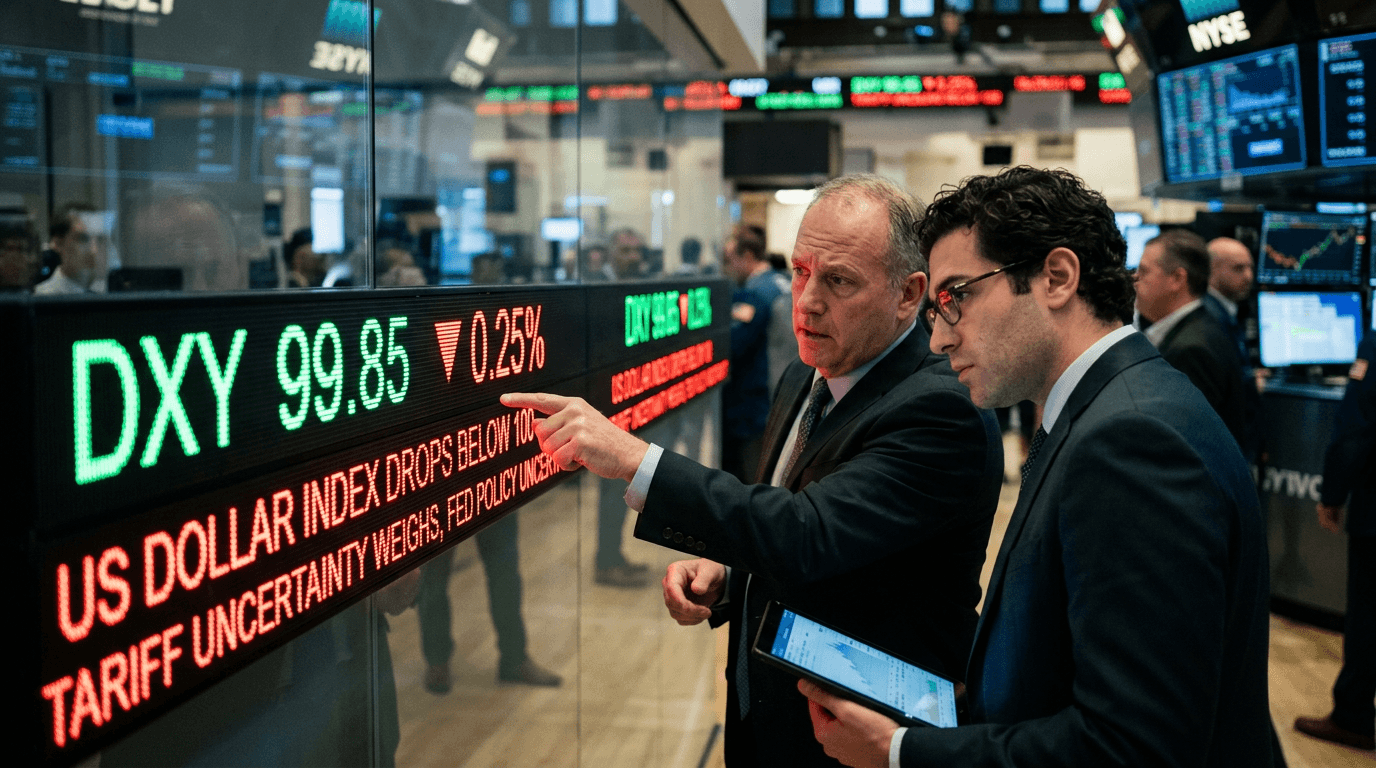
The breach of the psychological 100 level by the US Dollar Index has captured the attention of traders and investors worldwide. For the first time since July 2023, the DXY has dipped below this critical threshold, marking a pivotal change in market sentiment and posing crucial questions about the dollar's immediate path and the broader implications for global financial landscapes. This descent from a January peak of 110 to lows near 99.74 signifies more than just technical adjustments—it highlights serious apprehensions regarding U.S. economic growth, Federal Reserve policies, and geopolitical uncertainties that could redefine trading strategies across various markets.
The Significance Of The 100 Level
Crossing the 100 mark on the US Dollar Index is not merely a numerical event. It serves as a key psychological and technical boundary in currency markets, often acting as a support level and a benchmark for traders globally. A decisive breach of this level suggests a fundamental shift in market psychology, extending beyond mere technical corrections. The recent sharp 2.50% decline is particularly significant, illustrating that bearish forces have overtaken the traditional supports that once held the dollar steady earlier in 2026.
For those accustomed to a strong dollar, this reversal has been surprising. Wall Street analysts had predicted a robust dollar following President Trump's inauguration, but the greenback has dropped over 7% since then, defying expectations and leaving many investors blindsided. This gap between forecasts and reality emphasizes the necessity of monitoring both technical indicators and fundamental changes in market dynamics.
What's Driving The Dollar's Weakness
The dollar's decline is primarily driven by extensive tariff implementations and the ensuing policy uncertainties that have unsettled markets. President Trump's protectionist policies, marked by hefty 125% tariffs on China and significant levies on Mexico and Canada, have created substantial market stress and compelled investors to reevaluate their economic forecasts. Even though there was a temporary pause on some tariffs, fears of recession and inflation remain deeply ingrained in market sentiment.
European funds have started actively offloading dollar-denominated debt assets due to concerns over the new administration's policies, diminishing dollar demand and contributing to the decline. This shift in capital flows reflects a significant transformation in how institutional investors perceive dollar-denominated assets as a safe haven. Coupled with seasonal patterns that typically see the US Dollar weaken before interest rate decisions during easing cycles, the selling pressure has intensified notably.
The question of Federal Reserve independence and policy direction has also become a central concern. Investors are keenly observing for indications regarding future rate decisions, as the Fed's forthcoming actions could either bolster dollar strength or reinforce continued weakness. The uncertainty surrounding these crucial decisions adds another layer of complexity to an already volatile currency market landscape.
Technical Levels And Trading Opportunities
Technically speaking, the dollar is currently testing essential support levels between 96.50 and 97.00, with traders keenly observing whether the index can stabilize or head further down. A consolidation range between 96.80 and 97.30 appears probable based on existing technical setups, although a drop below 97.50 would indicate a more pronounced reversal pattern.
Key resistance levels to watch on any potential rebound include 98.00, 98.80 to 99.00, and the January area of 99.40 to 99.50. Conversely, traders are targeting the September FOMC lows at 96.20 and the early 2022 zone below 96.00 as potential targets should selling pressure intensify. Grasping these technical levels is vital for effectively positioning trades in the current scenario.
Market Opportunities And Global Impact
The dollar's drop has created notable opportunities in forex markets, particularly for EUR/USD and GBP/USD pairs, which have gained from the weakened dollar. Additionally, the Japanese Yen and Swiss Franc have assumed greater roles as safe-haven currencies as investors shift away from dollar assets. These currency movements reflect broader worries about U.S. economic prospects and evolving risk assessments in global markets.
The effects extend beyond forex. A weaker dollar typically boosts commodity prices and favors emerging market assets, while potentially posing challenges for U.S. multinational corporations with substantial overseas earnings. Understanding these ripple effects is crucial for traders managing diversified portfolios.
What Traders Should Focus On
The pressing question for traders in this environment is what the next Federal Reserve decision will reveal about the dollar's direction. Upcoming Fed decisions, crucial support levels, and geopolitical developments—including escalating US-Iran tensions affecting energy markets—should remain at the forefront of your analysis. The dollar's fall below 100 reflects genuine economic concerns rather than mere technical selling, making it crucial to comprehend these underlying dynamics.
As markets brace for key central bank decisions and geopolitical events continue to unfold, traders should stay alert to both technical setups and fundamental shifts in policy expectations. The coming weeks could be decisive in determining whether the dollar finds stability or continues its descent toward major support levels.