
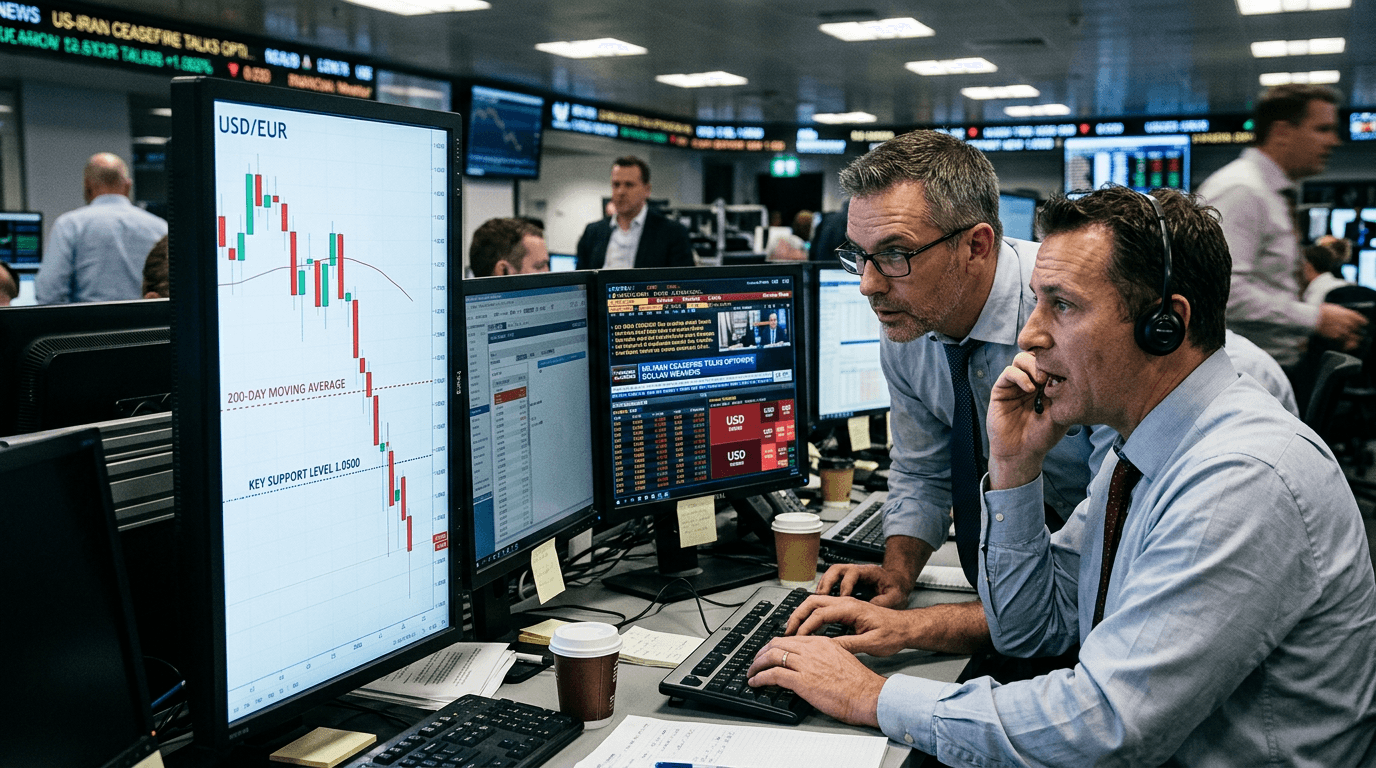
The U.S. dollar has entered a notable downtrend this week as investors increasingly bet on a resolution to the US-Iran conflict, marking a significant shift in market sentiment away from safe-haven demand. The Dollar Index has fallen below the psychologically important 98 level, touching its lowest point since late February, as traders abandon the greenback in favor of riskier assets. This currency rotation reflects a broader market consensus that geopolitical tensions may be easing, despite occasional flare-ups in the Strait of Hormuz. For traders monitoring forex markets, this movement signals important technical and fundamental changes that deserve closer attention.
Safe Haven Demand Fades As Peace Talks Progress
Since the outbreak of hostilities in late February, the dollar had benefited immensely from its traditional safe-haven status. When geopolitical risk spiked and oil prices soared following Iran's closure of the Strait of Hormuz, investors rushed to park capital in U.S. Treasury securities and dollar-denominated assets. However, recent developments suggest this risk premium is unwinding rapidly. Reports indicate that Iran is reconsidering attendance at peace talks in Pakistan, and despite occasional military skirmishes, both the United States and Iran appear committed to maintaining the ceasefire framework.
The shift in investor positioning has been dramatic. Traders who previously sought shelter in the dollar are now repositioning toward riskier currencies, particularly in commodity-exporting nations and emerging markets that had been punished during the initial crisis. As oil prices rise only modestly rather than spike dramatically, the urgency around safe-haven positioning has diminished considerably. This suggests that market participants view the current tensions as manageable within the existing ceasefire framework rather than as a precursor to escalation.
Technical Breakdown And Key Levels To Watch
The Dollar Index has now fallen 0.4 percent this week alone, setting up a second consecutive week of declines. More importantly from a technical perspective, the index has broken below 98 and touched 97.623, its lowest level since February 27—the day before the war began. This technical breakdown through major support levels is significant because it suggests conviction among traders that the dollar weakness is structural rather than temporary.
Major Wall Street institutions are reinforcing this view. Morgan Stanley strategists have issued a bearish outlook on the Dollar Index, predicting weakness toward 95 in coming months. This represents a decline of approximately 250 basis points from current levels, suggesting substantial room for further dollar depreciation if the geopolitical premium continues to unwind. The implied target suggests these analysts expect continued improvement in risk sentiment and sustained strength in riskier assets.
Currency Pairs Reflect Changing Market Dynamics
Against the euro, the dollar has weakened 0.5 percent this week, with EUR/USD climbing toward 1.1780. This move is particularly noteworthy because European currencies had been severely depressed following the surge in oil prices, as the eurozone remains heavily dependent on imported energy. The recovery in the euro reflects not just dollar weakness but also improving sentiment about Europe's economic resilience as energy costs stabilize.
The Japanese yen presents a more complex picture. While the dollar has weakened 0.2 percent against the yen to 156.695, traders remain keenly aware of Japanese authorities' willingness to intervene in currency markets to prevent further yen weakness. Japan's Ministry of Finance and Bank of Japan have issued repeated verbal warnings and conducted intervention operations to keep USD/JPY from breaching the 160 level, which represents a critical psychological threshold. Any breakdown through this level could trigger renewed volatility and potentially more aggressive policy responses from Tokyo.
What This Means For Traders And Investors
The current market environment presents both opportunities and risks. For traders with exposure to dollar-funded positions, the recent weakness suggests caution is warranted. Conversely, those positioned short the dollar or long riskier assets are seeing tactical confirmation of their thesis. The key variable remains whether the US-Iran peace framework actually holds or whether renewed hostilities could quickly reverse this dollar weakness.
Several events warrant close monitoring. The anticipated Trump-Xi summit on May 14-15 could prove pivotal, as geopolitical observers note that Chinese pressure for a quick resolution might accelerate peace progress. Additionally, any further military incidents in the Strait of Hormuz could rapidly reverse current market sentiment and trigger a swift reassertion of safe-haven demand for the dollar.
Oil prices remain crucial to this narrative. While crude has risen modestly, it has not accelerated sharply higher despite recent tensions. Should oil prices remain contained around current levels, the case for continued dollar weakness strengthens. Conversely, any sudden spike in energy prices would likely prompt an immediate reversal in dollar selling.
Conclusion And Key Takeaways
The dollar's current weakness reflects a fundamental reassessment of geopolitical risk rather than economic factors. As peace deal hopes mount between the United States and Iran, investors are rotating out of safe-haven assets and back into riskier positions. Technical support levels have broken decisively, and major institutions predict further downside for the Dollar Index toward 95. Monitor upcoming diplomatic developments, oil price trends, and any statements from central banks—particularly Japan—for potential inflection points that could shift this narrative.