
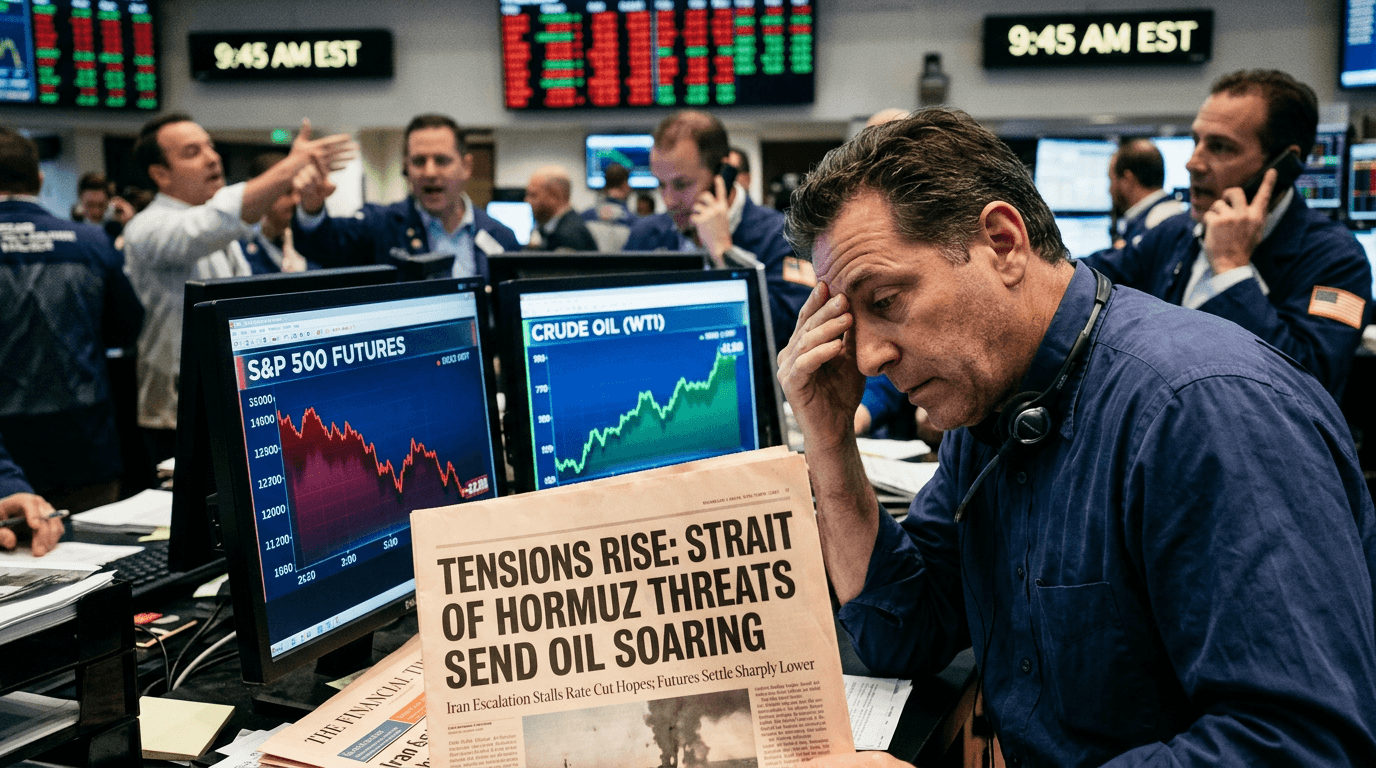
The last 48 hours of trading have painted a vivid picture of how quickly geopolitical tensions can ripple through global markets. As Middle East conflict escalated with expanded Iranian strikes and threats to critical shipping lanes, US equity futures plunged sharply, signaling a significant shift in risk sentiment. For traders and investors, understanding the mechanics behind these moves is essential for navigating the volatility ahead.
The Geopolitical Trigger
On March 3, 2026, major US stock indices fell as investors reacted to deteriorating conditions in the Middle East. Iran expanded military strikes across the region following US and Israeli attacks on February 28, prompting heightened concerns about stability and economic disruption. The most critical flashpoint: Iran's threats to restrict shipping through the Strait of Hormuz, one of the world's most vital energy corridors. This narrow waterway handles roughly one-fifth of global oil consumption, making it a chokepoint with outsized influence on world markets. Several Middle Eastern ports, including the major Jebel Ali container terminal in Dubai, suspended operations following drone strikes, further amplifying supply chain concerns.
Market Reaction And The Numbers
The impact on US equities was swift and substantial. The Dow Jones Industrial Average fell 403.51 points, representing a 0.83% decline, though intraday losses reached as deep as 2.6% at the worst point of the session. The Nasdaq Composite dropped 1.02% and the S&P 500 fell 0.94%. For futures traders, these moves reflected a classic risk-off environment where investors rotated away from equities toward perceived safe havens. The initial gap-down opening set a bearish tone, with the S&P 500 trading as low as approximately 6,750 intraday before finding some stability.
Energy markets reflected the most dramatic reaction. Brent crude, the international benchmark, surged more than 4% to $81 per barrel, while West Texas Intermediate climbed over 4% to $74 per barrel. On March 2 alone, Brent crude had risen as much as 13% in early trading, briefly exceeding $82. These oil price movements matter enormously because they directly feed into inflation expectations and monetary policy decisions. Investors immediately feared that sustained high oil prices would complicate Federal Reserve policy, potentially delaying anticipated rate cuts. Market expectations shifted, with traders pushing back their outlook for a 25-basis-point rate cut from July to September based on LSEG-compiled data.
Why Oil Prices Matter More Than The Headline Numbers
The stock market decline itself, while notable, tells only part of the story. The real concern driving the futures plunge centers on inflation dynamics and Federal Reserve implications. Higher oil prices translate directly to increased transportation costs, which ripple through supply chains and push up prices for consumers. Robert Pavlik, Senior Portfolio Manager at Dakota Wealth, crystallized the concern: investors worry that oil could move above $100 per barrel and remain elevated. A prolonged conflict scenario would push inflation higher, making it difficult for the Fed to cut rates and potentially keeping government bond yields elevated. This creates a particularly awkward situation for the Trump administration, whose key stated policy objectives include bringing down the cost of living and lowering interest rates.
The Strait of Hormuz situation proved critical. With approximately 150 ships anchoring in the waterway, trade flows faced real disruption. Insurance costs for maritime transit spiked, and natural gas prices followed oil higher. The disruption extended beyond energy: several Middle Eastern oil and gas producers halted production, further constraining supply. These aren't temporary blips but structural challenges that could persist if geopolitical tensions remain elevated.
Responding To Volatility: What Traders Should Watch
The initial market response showed the characteristic behavior of risk-off environments. Dispersion trades, which involve shorting certain stocks while maintaining long index positions, experienced significant unwinding as correlations rose. At the worst intraday point, fewer than 20 stocks in the S&P 500 remained in the green, indicating broad-based selling pressure. The Russell 2000 underperformed with an 1.8% decline, suggesting that small-cap equities faced particular headwinds.
One counterbalance emerged: President Trump's pledge to ensure free flow of energy through the Gulf, including potential US Navy escort for oil tankers and financial guarantees through the International Development Finance Corporation. This announcement helped moderate oil price increases from their highs, providing some support to equities by reducing the most extreme inflation scenarios.
For traders navigating this environment, several key metrics warrant close monitoring. Watch the 10-year Treasury yield as a barometer for inflation expectations and Fed policy shifts. Track oil prices carefully, as moves above $90-100 per barrel would likely trigger additional equity weakness. Pay attention to volatility indices and options positioning, as these often precede directional moves.
The current situation demonstrates how quickly external shocks can disrupt financial markets. Geopolitical events operate on different timelines than earnings releases or economic data, creating genuine uncertainty that markets struggle to price. This volatility, while challenging, creates opportunities for disciplined traders who understand the underlying drivers and maintain clear risk management protocols.