
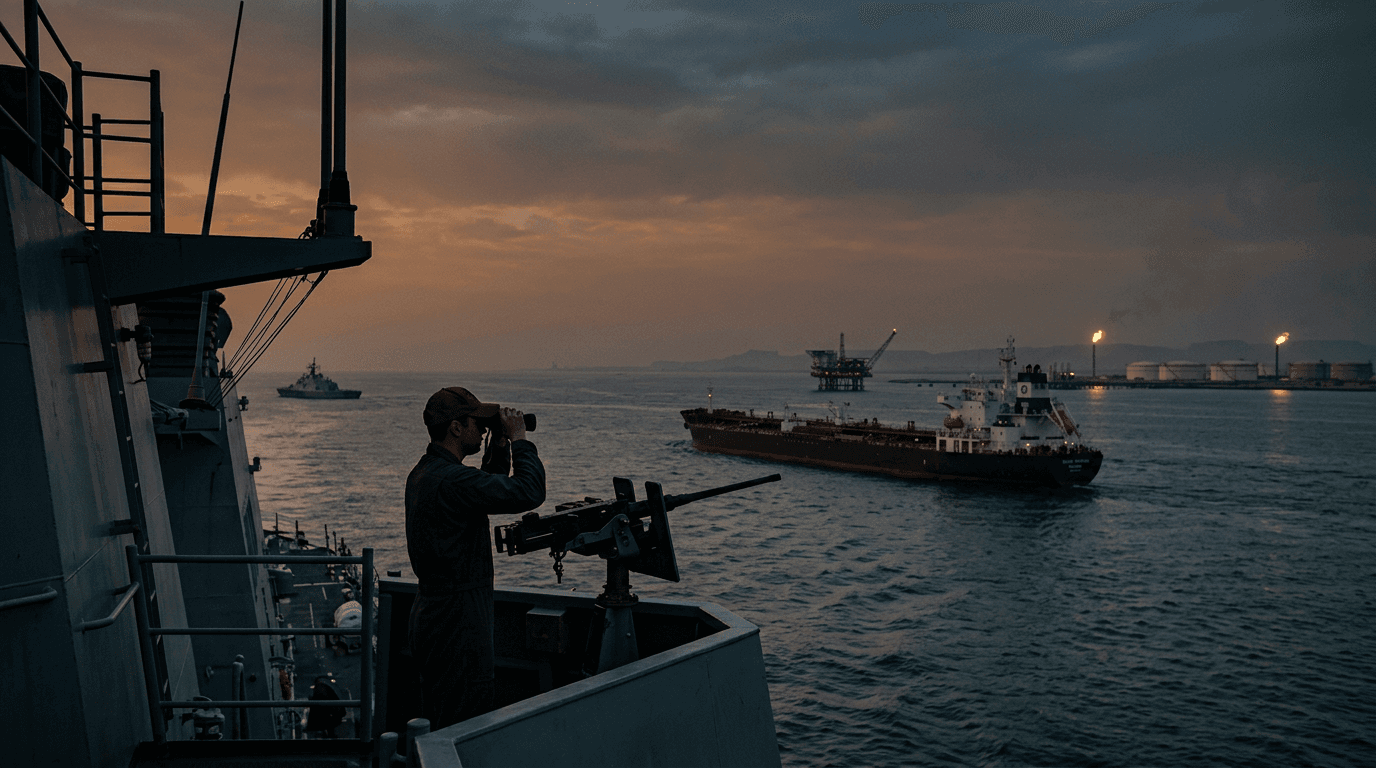
Oil Prices Soar Beyond $105 Amidst U.S.-Iran Tensions
Geopolitical tensions between the United States and Iran have reached a critical juncture, igniting one of the most notable rallies in crude oil markets seen in years. As military operations persist across the Middle East and diplomatic channels remain uncertain, oil prices have surged past the $100 per barrel mark, with Brent crude climbing to $105-109 per barrel and West Texas Intermediate crude surpassing $103 per barrel. For traders, investors, and market participants attuned to global energy markets, these movements represent far more than ordinary price fluctuations—they signal a fundamental reassessment of geopolitical risk and energy supply security worldwide.
The Catalyst: Trump's Bold Warning to Iran and Immediate Market Impact
On April 2, 2026, President Donald Trump delivered a stern warning of increased military action against Iran, instantly reshaping market sentiment across asset classes. In his address, Trump threatened to target Iran's electric generating facilities and vowed to reduce key parts of the Iranian regime "back to the Stone Age" over the forthcoming weeks. This pointed rhetoric triggered an immediate market response, with Brent crude surging by $6 per barrel in real-time trading—a spike not witnessed since hostilities began escalating in March.
The clarity and severity of Trump's objectives—dismantling Iran's navy and missile program while preventing nuclear weapon development—left traders with little doubt about the administration's intentions. Markets interpreted this as a clear signal that military operations would only intensify, fundamentally altering the risk calculus for global energy supplies.
Supply Chain Disruption: The Strait of Hormuz at the Forefront
A central factor in the oil market's dramatic response is the existential threat posed to the Strait of Hormuz—one of the world's most vital energy chokepoints. This narrow passage, which sees nearly one-third of all globally traded oil transit through it, has become a focal point of geopolitical anxiety. Iran has blocked the strait and refuses to open it to the United States, while simultaneously demanding a $2 million fee per ship for passage through contested waters.
The implications are profound. Should the Strait of Hormuz remain disrupted or face prolonged military operations, global oil supply chains could encounter catastrophic constraints. Refineries across Southeast Asia, including the Philippines, are already scrambling for alternative crude sources, with some nations purchasing Russian oil for the first time in years. This substitution effect underscores the desperation of energy importers confronting potential supply shocks—a desperation that is being priced into current crude valuations.
Refinery Damage and Recovery Timelines
Beyond immediate supply disruptions, significant damage to regional refinery infrastructure presents an equally concerning threat to oil market stability. Andrew Lipow, president of Lipow Oil Associates, articulated the critical reality the market faces: even if the conflict were to end tomorrow, restoring production could take weeks or months, while refinery damage ensures significantly reduced refined product manufacturing capacity even after hostilities cease.
This temporal disconnect between conflict resolution and actual supply recovery is vital for understanding why oil markets have remained elevated despite conflicting statements from Washington and Tehran about potential diplomatic talks. Markets are not pricing in an immediate resolution followed by rapid supply normalization—they are pricing in an extended period of uncertainty followed by a slow and uncertain recovery.
Market Volatility and Trader Positioning
The oil market's response has been characterized by extreme volatility rather than steady appreciation. Prices initially dropped 14% as conflicting statements about diplomatic talks created whipsaw conditions, before surging past $100 per barrel as military rhetoric intensified. This pattern reveals the underlying anxiety among professional traders: there is no consensus view on how the conflict resolves, how long it persists, or what oil supply normalization looks like in a post-conflict environment.
For SimFi traders and retail market participants, this environment presents both significant opportunities and substantial risks. Leverage amplifies both upside gains and downside drawdowns in volatile energy markets. The combination of fundamental supply concerns, geopolitical uncertainty, and tactical policy announcements creates conditions where technical analysis alone provides insufficient guidance.
Implications for Broader Markets and Inflation Concerns
Oil price spikes of this magnitude inevitably ripple through broader economic systems. Energy price inflation affects transportation costs, manufacturing inputs, and consumer goods pricing. Central banks face renewed pressure regarding inflation trajectories, potentially affecting interest rate policy decisions and broader macroeconomic outlook revisions. Asset classes from equities to fixed income feel the effects of elevated energy costs and the uncertainty premium embedded in current commodity prices.
Market consensus appears to be that global energy stability faces genuine disruption rather than a temporary spike. This distinction is critical for how traders position across timeframes and asset classes.
Strategic Considerations for Market Participants
As this situation unfolds, several critical factors warrant ongoing monitoring: official statements regarding Hormuz Strait passage security, refinement of military objectives and timelines, any resumption of diplomatic negotiations, and alternative energy supply arrangements being negotiated by major importers. Each of these variables could trigger substantial repricing in crude markets.
For traders engaging with crude oil markets through SimFi platforms or traditional channels, position sizing and risk management discipline become paramount in environments characterized by both fundamental supply threats and geopolitical uncertainty.