
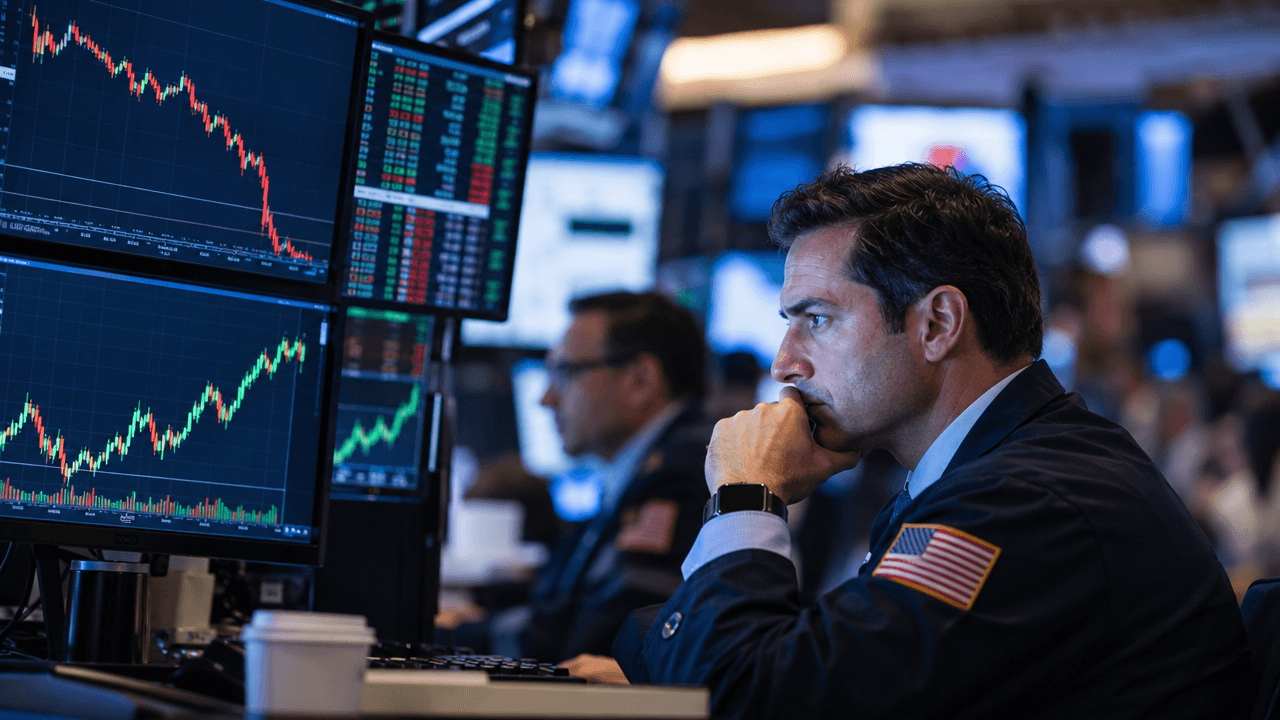
U.S. stock futures rebounded sharply Monday as investors stepped back into beaten-down technology shares following one of the most severe AI-related selloffs in recent market history. Nasdaq 100 futures initially gained about 2%, while S&P 500 futures rose roughly 1%, signaling an attempt to stabilize markets after the Nasdaq’s approximately 10% weekly decline. Later moves showed the rebound strengthening, with Nasdaq 100 futures up more than 3% and S&P 500 futures gaining over 2%. [1][6]
The recovery offers relief, but it does not erase the concerns that triggered the selloff. The central question for traders is whether Monday’s move represents the beginning of a durable recovery or simply a short-term bounce after an unusually aggressive liquidation.
What Drove The Ai-led Selloff
The recent decline was not caused by a single piece of economic data. Instead, it reflected a broad reassessment of the AI investment boom, including questions about valuations, spending plans, profitability, and the time required for major technology projects to generate returns.
Large technology and semiconductor companies had become central to market performance. Their rising valuations helped drive major indexes higher, but that concentration also increased the market’s sensitivity to disappointing news or a change in investor positioning. When traders began reducing exposure, selling spread quickly across stocks, exchange-traded funds, options, and related currencies.
The Nasdaq Composite fell about 10% during the week, its worst weekly performance since the early stages of the pandemic. The S&P 500 and Dow Jones Industrial Average also entered correction territory, generally defined as a decline of at least 10% from a recent high. [11]
This is important for SimFi traders because index movements can conceal very different conditions beneath the surface. A benchmark may appear to recover strongly while individual stocks remain far below recent highs. The headline rebound should therefore be evaluated alongside breadth, volume, sector performance, and volatility.
WHY MONDAY’S REBOUND MATTERS
A sharp futures rally indicates that buyers were willing to re-enter the market after prices dropped rapidly. Dip buyers often focus on companies with strong balance sheets, durable cash flow, and a credible connection to long-term AI demand. Their activity can create a powerful relief rally, especially when short sellers begin closing positions.
The early gains also suggest that some investors viewed the prior week’s losses as excessive. S&P 500 futures rose enough to interrupt a seven-session losing streak, while Nasdaq 100 futures outperformed because technology shares had suffered the most during the decline. [2]
However, a futures rebound is not the same as a confirmed trend reversal. Futures can move sharply before the cash market opens, and early gains may fade when regular-session liquidity returns. Traders should watch whether the market holds its opening range, whether gains broaden beyond mega-cap technology, and whether volume confirms the move.
Volatility Remains The Key Risk
The AI trade unwind has become a cross-asset event rather than an isolated stock-market correction. During the selloff, investors moved toward traditional havens, while Treasury yields, currencies, and other risk-sensitive assets reflected changing expectations about growth and monetary policy. The Cboe Volatility Index, commonly known as the VIX, jumped 26% to near 36 during Friday’s decline, highlighting the intensity of fear in the market. [13]
Elevated volatility changes the mechanics of trading. Stop-loss orders may execute well away from expected levels, options premiums can rise sharply, and normal support or resistance zones may be breached temporarily. A strategy that works in a calm market can produce much larger losses when daily price ranges expand.
For SimFi participants, risk management should take priority over prediction. Reducing position size, avoiding excessive leverage, and defining an invalidation point before entering a trade can help prevent one volatile session from damaging an account. Traders should also be cautious about chasing a large opening move. If the market is already several percentage points above the previous close, the risk-to-reward profile may be less attractive.
What Traders Should Watch Next
The next stage of the market reaction will depend on whether companies and investors can support the economic case for continued AI spending. Earnings reports, capital-expenditure guidance, data-center demand, chip sales, and evidence of actual revenue growth will be more important than optimistic commentary alone.
Market breadth will provide another useful signal. A healthier recovery would typically include participation from financials, industrials, consumer companies, and smaller stocks, rather than relying exclusively on a handful of technology leaders. If only the most heavily traded AI names rise while most stocks remain weak, the rebound may be more fragile.
Traders should also monitor interest-rate expectations. Higher bond yields can pressure growth stocks because future earnings become less valuable when discounted at a higher rate. Conversely, falling yields may support technology valuations, although a sharp decline caused by recession fears would introduce a different risk.
Practical Takeaways For Simfi Traders
First, distinguish a relief rally from a confirmed trend change. One strong session is evidence of buying interest, not proof that the selloff has ended.
Second, use a market plan built around scenarios. Consider what you will do if the index continues higher, trades sideways, or reverses after the open. Planning these outcomes in advance reduces emotional decision-making.
Third, focus on risk-adjusted opportunities. A stock that has fallen substantially is not automatically undervalued, and a strong company can remain under pressure while investors reassess its growth expectations.
Finally, treat volatility as information. Wide price swings indicate uncertainty, so position sizing and patience may matter more than finding the perfect entry.
Conclusion
The rebound in U.S. stock futures shows that investors are willing to buy after the AI-driven rout, but the market is still working through serious valuation and confidence concerns. The Nasdaq’s roughly 10% weekly decline and the rise in volatility serve as reminders that powerful long-term themes can still produce painful short-term drawdowns. [11]
For traders, the most useful response is neither panic nor blind optimism. Track breadth, yields, earnings expectations, and volatility, then adjust exposure to match the evidence. In a market dominated by rapid narrative shifts, disciplined execution may prove more valuable than trying to predict the next headline.