
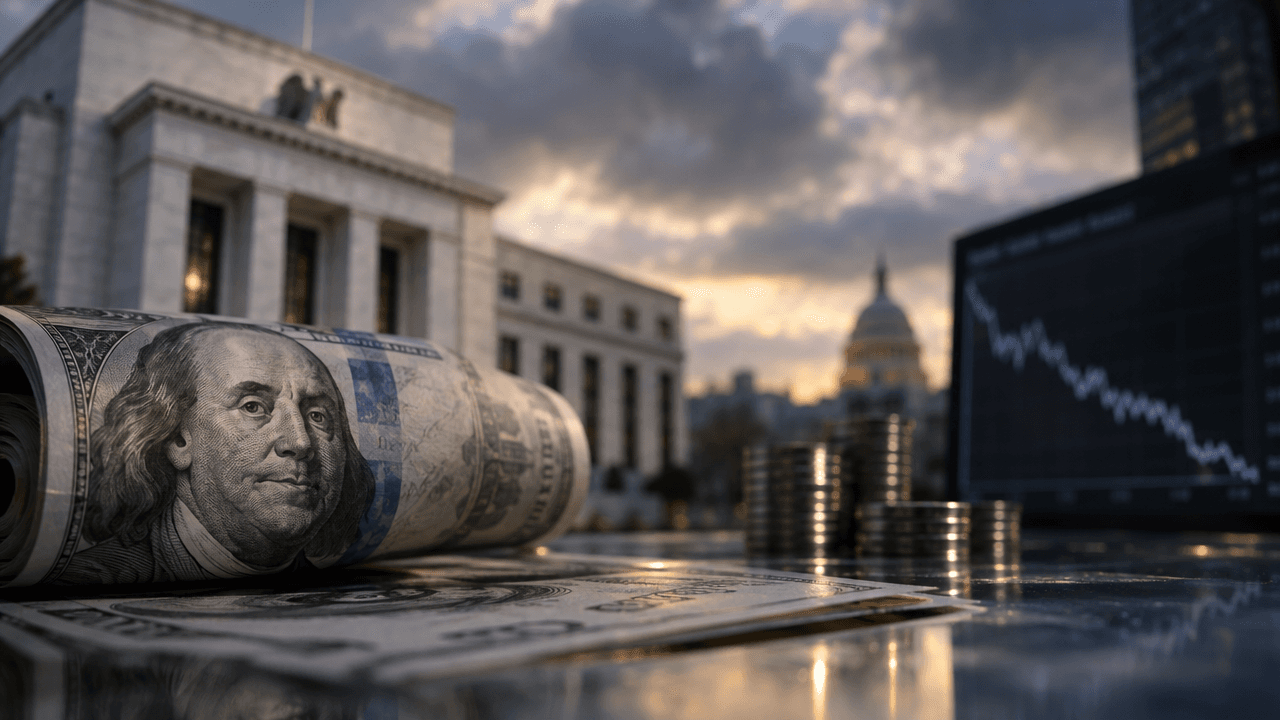
The U.S. dollar is edging higher as traders maintain expectations that the Federal Reserve may deliver additional interest-rate increases. The move has been modest rather than explosive, reflecting a market caught between two competing forces: the appeal of relatively high U.S. yields and growing demand for safety as concerns weigh on riskier assets.
That tension is shaping foreign-exchange trading. Expectations of tighter Federal Reserve policy generally support the dollar because higher interest rates can increase the return available on dollar-denominated assets. At the same time, falling Treasury yields suggest investors are reducing expectations for aggressive tightening and moving into safer assets. The result is a dollar that remains resilient, but with a rally vulnerable to changes in economic data and central-bank communication.
Why Fed Expectations Matter
Currency markets are highly sensitive to differences between countries’ interest rates. When investors believe U.S. rates will remain higher for longer, dollar assets can become more attractive relative to currencies issued by economies with lower or falling rates.
Recent hawkish comments from Federal Reserve officials and the October meeting minutes have strengthened expectations for further rate increases. Those expectations helped push the dollar toward a 19-month high earlier in November, while the two-year Treasury yield, which is particularly sensitive to Fed policy expectations, climbed sharply. [1]
For traders, the important point is that currencies respond not only to current interest rates but also to the expected path of future policy. If markets anticipate another rate hike, the dollar may gain even before the Federal Reserve takes action. Conversely, a weaker inflation report, softer employment data, or a less aggressive message from policymakers could quickly reverse those gains.
Lower Yields Send A More Complicated Signal
Ordinarily, a stronger dollar and lower Treasury yields might appear contradictory. Lower yields reduce the income investors receive from dollar assets, potentially limiting demand for the currency. However, Treasury yields can fall for different reasons, and the reason matters.
If yields decline because traders expect slower economic growth or fewer rate increases, that can weaken the dollar’s interest-rate advantage. If yields fall because investors are seeking safety, the dollar may still benefit from its status as the world’s primary reserve currency.
That second dynamic has recently been visible in financial markets. Concerns surrounding riskier assets, including technology and artificial-intelligence stocks, encouraged investors to reduce exposure to equities and seek safe-haven assets. The resulting demand for U.S. Treasuries pushed yields lower, while the dollar’s defensive qualities helped limit its losses. [2]
This is why traders should avoid treating Treasury yields as a standalone dollar signal. A falling yield accompanied by strong economic data may have a different implication from a falling yield caused by a broad market sell-off.
The Market Is Balancing Growth And Safety
The dollar’s current strength reflects a balance between two narratives. The first is a relatively hawkish Federal Reserve. If U.S. inflation remains persistent and economic activity holds up, policymakers may have room to keep rates elevated or raise them further.
The second narrative is growing caution about global growth and financial-market risk. Investors may be less willing to hold currencies linked to cyclical economies when equity markets are unstable. In that environment, the dollar can attract demand even when yields decline.
This combination creates a particularly important backdrop for major currency pairs. The euro and British pound may struggle if their respective economies show weaker growth or if their central banks appear less willing to tighten policy. The Japanese yen, meanwhile, can remain sensitive to the wide gap between U.S. and Japanese interest rates, although periods of intense risk aversion may support the yen as another traditional safe-haven currency.
For forex traders, the key is to identify which force is dominating each session: rate expectations or risk sentiment.
What Traders Should Watch Next
The next major moves in the dollar are likely to depend on incoming economic data and Federal Reserve guidance. Inflation figures will be especially important because persistent price pressures could reinforce expectations for additional tightening. Employment data, consumer spending, and business surveys will help determine whether the U.S. economy can withstand higher borrowing costs.
Treasury-market behavior also deserves close attention. A rise in the two-year yield would suggest that traders are pricing in a more aggressive Fed path. A decline in the 10-year yield alongside falling stock markets, however, could indicate a defensive shift rather than a straightforward change in monetary-policy expectations.
Traders should also monitor central-bank communication for changes in language. Words such as “persistent,” “restrictive,” or “further adjustment” can influence rate expectations rapidly, especially when markets are already positioned for a particular outcome.
Practical risk management is essential. Dollar rallies based on rate expectations can fade quickly if data disappoints or policymakers sound less hawkish. Position sizing, defined stop-loss levels, and awareness of major economic releases can help traders avoid reacting emotionally to short-term volatility.
The Bigger Picture
The dollar’s modest advance is not simply a story of stronger interest rates. It reflects the interaction between monetary policy, Treasury yields, economic resilience, and investor caution. Expectations for further Federal Reserve tightening are limiting selling pressure, while lower yields reveal that markets are also preparing for slower growth and seeking protection from risk.
For now, that combination is keeping the dollar supported. But the outlook remains highly data-dependent. A stronger-than-expected U.S. economy could revive the rate-driven dollar rally, while weaker inflation or deteriorating growth could shift attention toward policy easing and reduce its yield advantage.
The central lesson for traders is clear: follow both the Fed and the broader market mood. Dollar direction will depend not only on what interest rates do next, but also on why investors are buying or selling Treasury securities.