
Unraveling Market Volatility: Geopolitical Tensions and Energy Price Surge
Navigating the Current Market Storm
Investors are currently navigating a turbulent stock market landscape, driven by a volatile mix of geopolitical tensions, climbing energy prices, and changing expectations from the Federal Reserve. As the United States, Israel, and Iran remain embroiled in conflict for a fifth consecutive week without resolution, Wall Street braces for an extended period of uncertainty, threatening to derail the recent market rally.
The Sharp Equity Retreat
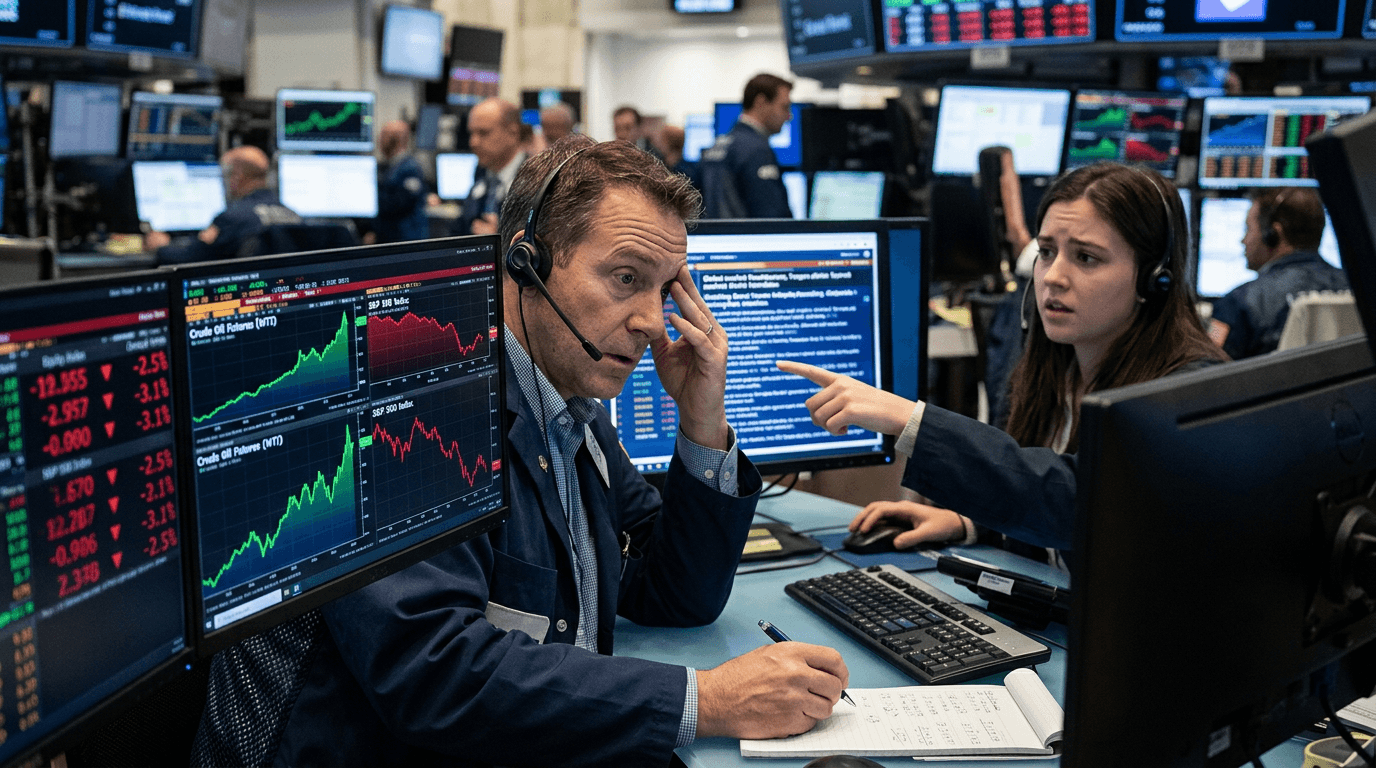
March has posed significant challenges for equity investors, with major US indices witnessing marked declines amid escalating geopolitical crises. The S&P 500 dropped 1.67% to 6,368 points, the Dow Jones Industrial Average fell 1.73% to 45,166, and the Nasdaq 100 experienced a 1.93% dip to 23,132 in recent trading sessions. These declines have nudged all three major indices toward correction territory, defined by a decline of approximately 10% or more from recent peaks. Meanwhile, the CBOE Volatility Index surged 13.16% to 31.04 points, the highest in nearly a year, reflecting the pervasive anxiety in financial markets.
This stark pullback contrasts sharply with the optimism that characterized Wall Street during the initial months of the Trump administration, when record stock market highs were propelled by strong corporate profits and investments in cutting-edge technologies like artificial intelligence. However, the eruption of tensions in the Middle East has fundamentally altered the market's trajectory, introducing an uncertainty that even robust earnings growth struggles to counteract.
The Oil Rally Reshaping Market Dynamics
While equities took a hit, energy markets experienced a dramatic rally driven by legitimate concerns over potential supply disruptions. Brent crude futures rose 3.37% to $105.32 per barrel, and West Texas Intermediate climbed 5.46% to $99.64 per barrel, as traders priced in a significant geopolitical risk premium. This surge notably narrowed the spread between the two benchmarks, indicating a unified market response to Middle Eastern supply concerns.
However, it's crucial to recognize that this rally is rooted in fear rather than actual supply shortages, according to Morgan Stanley's analysis. Oil markets are currently pricing geopolitical risk premiums estimated at roughly $7 to $9 per barrel, indicating that a large portion of current crude prices reflects insurance against potential disruption, rather than fundamental supply and demand changes. Unless tensions result in sustained, material supply disruptions, these premiums are expected to dissipate as markets reassess the true impact on global energy infrastructure.
Inflation Concerns and the Federal Reserve Shift
The interplay between rising energy prices and inflation expectations has significantly altered market participants' views on the Federal Reserve's trajectory. Just two months ago, traders anticipated two interest rate cuts from the Federal Reserve in 2026, but persistent conflict and rising energy prices have dramatically shifted expectations. Market participants now foresee a "higher-for-longer" hawkish stance from the Fed, with the CME FedWatch Tool reflecting elevated inflation concerns driven by increased energy costs. Additionally, the University of Michigan's inflation expectations for March rose significantly, surpassing analyst forecasts and highlighting growing anxiety over price stability.
This pivot poses particular challenges for equity markets, as historically, restrictive monetary contexts negatively impact stocks by increasing financing costs and hindering capital-intensive growth projects. The prospect of sustained higher interest rates threatens to undermine the valuations that supported the previous market rally.
Safe-Haven Flows and Gold's Resurgence
Amid the turmoil, gold has emerged as a beneficiary of safe-haven flows, despite headwinds from the hawkish Federal Reserve environment. Gold futures rose 2.66% to $4,492 per ounce as investors aggressively sought refuge from geopolitical uncertainty. Interestingly, gold prices have retraced approximately 8% from their all-time highs, creating what many investors perceive as attractive entry points at a discount. This dynamic illustrates how geopolitical risk can override traditional monetary policy relationships, as the demand for protection against prolonged conflict outweighed the typical pressure from a stronger dollar and rising bond yields.
Looking Ahead: Uncertainty and Opportunity
The current market environment presents a classic case of volatility driven by geopolitical shocks. Historical data from Deutsche Bank shows that stock markets have fallen an average of just 4% across 30 major geopolitical events since 1939, suggesting that even significant international crises are typically absorbed by equity markets within a reasonable timeframe. However, the duration and escalation trajectory of the current conflict remain uncertain, especially following President Trump's statement that the war would continue for at least another two to three weeks.
For investors, the key question is whether the recent market decline represents an overcorrection to temporary risks or a genuine repricing of risk that will persist. The combination of strong earnings growth and renewed geopolitical uncertainty will likely drive continued volatility in the near term, with equities potentially finding stability once clarity emerges regarding both the Middle Eastern situation and the Federal Reserve's actual policy path. Meanwhile, energy markets will remain sensitive to any developments suggesting supply disruptions, while gold may continue to serve as a hedging instrument for risk-averse portfolios navigating this uncertain environment.
---
NEWSIMPACTSCORE: 8