
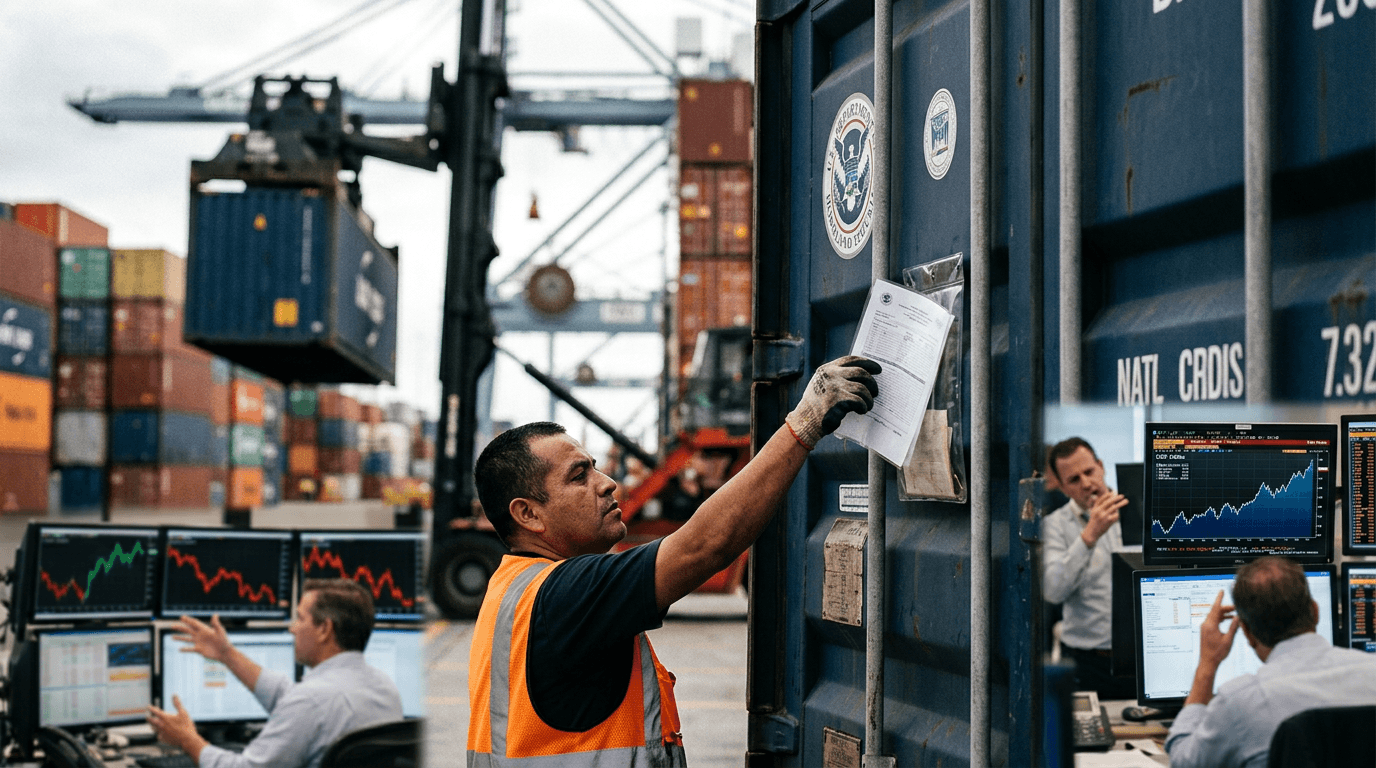
The Trump administration's reimposition of tariffs marks a critical inflection point for global trade dynamics and financial markets. On February 24, 2026, a sweeping 10% ad valorem tariff under Section 122 of the Trade Act of 1974 took effect on imports into the United States, with administration officials signaling intentions to escalate the rate to 15% in the coming weeks. This development has already rippled through import forecasts, currency markets, and trader sentiment worldwide, creating significant volatility for those positioned in trade-sensitive assets.
The Trigger And Legal Framework
The tariff announcement came swiftly following a Supreme Court decision on February 20, 2026, which ruled against the administration's use of tariffs under the International Emergency Economic Powers Act (IEEPA). Faced with the loss of its previous tariff authority, the administration pivoted to Section 122 of the Trade Act of 1974 as its legal foundation. The new tariff structure is temporary in nature, with a built-in 150-day expiration set for July 24, 2026, though the administration has already telegraphed that rate increases are under consideration.
What distinguishes this tariff from previous iterations is its breadth. The 10% duty applies globally across virtually all trading partners, with limited exceptions. This represents a significant departure from earlier targeted, country-specific approaches and signals the administration's intent to use tariffs as a comprehensive trade policy tool rather than as surgical instrument applied to specific nations or sectors.
Understanding The Tariff Landscape
While the headline 10% rate captures attention, the actual tariff environment is considerably more complex. Existing sectoral tariffs remain in force, layered atop the new Section 122 duty. Steel imports face 50% duties with no exemptions, automobiles are subject to 25% tariffs, and medium-heavy duty trucks carry 25% duties as well. Notably, Section 122 tariffs do not stack with Section 232 sectoral tariffs, though derivative products containing steel, aluminum, or copper face the Section 122 tariff only on the non-metals content.
Crucially, the administration has carved out several significant exceptions to the Section 122 tariff. Products qualifying under the United States-Mexico-Canada Agreement (USMCA) are exempted entirely, preserving preferential access for North American suppliers. Textile and apparel goods from CAFTA-DR countries also receive exceptions. Additionally, civil aircraft and certain parts now benefit from new global exemptions, reflecting negotiating priorities with key trading partners.
However, major trade partners who previously negotiated caps on IEEPA tariffs—including the European Union, United Kingdom, Switzerland, Japan, and South Korea—have lost those protective arrangements. These nations now face the full 10% rate, a significant shift that has prompted speculation about renewed trade negotiations.
Implications For Traders And Markets
For SimFi traders, this tariff environment presents both challenges and opportunities. Trade-linked currencies, particularly those of export-dependent economies, face renewed pressure. The strengthening U.S. dollar reflects several factors: tariffs typically support dollar strength by reducing capital outflows and increasing foreign demand for dollars to pay higher import bills. Meanwhile, currencies tied to economies heavily dependent on U.S. export markets—emerging market economies in particular—face headwinds.
Import data already reflects the tariff uncertainty. The National Retail Federation's Global Port Tracker indicates that imports at major U.S. container ports are expected to remain below last year's levels through the first half of 2026. This slowdown in import activity can ripple through commodity prices, shipping stocks, and logistical companies. Traders should monitor container volumes and logistics indices as leading indicators of trade health.
The potential escalation to 15% introduces significant event risk. Administration officials have publicly stated this possibility, and any formal announcement would likely trigger an immediate market reaction. Volatility in FX markets would likely spike around such announcements, creating both risks and opportunities for options traders and carry trade positions.
Navigating The Exceptions And Exclusions
Understanding tariff exceptions is critical for position management. USMCA beneficiaries—Canada and Mexico—maintain substantial advantages, suggesting that U.S. trade with North America may experience less disruption than trade with other regions. This dynamic potentially benefits companies with supply chains rooted in North America and creates relative outperformance opportunities for those exposures compared to other manufacturing exporters.
The 150-day sunset provision is equally significant. Traders should mark July 24, 2026 on their calendars as a critical inflection point. Either the tariff will expire, potentially triggering a risk-off rally in trade-sensitive assets, or the administration will extend or increase the rate, extending tariff uncertainty further.
Strategic Takeaways For Traders
Monitor the Federal Register for any Section 301 trade investigations the administration has indicated it will launch. These investigations typically precede additional targeted tariffs and provide valuable forward-looking signals.
Track import data releases closely as a proxy for tariff impact. Significant declines in import activity suggest tariffs are beginning to bite, potentially supporting USD strength and impacting commodity currencies.
Maintain awareness of the July 24 expiration date and watch for policy signals regarding the planned 15% escalation. These events will likely generate significant trading opportunities around central banks' reactions to tariff-driven inflation dynamics.