
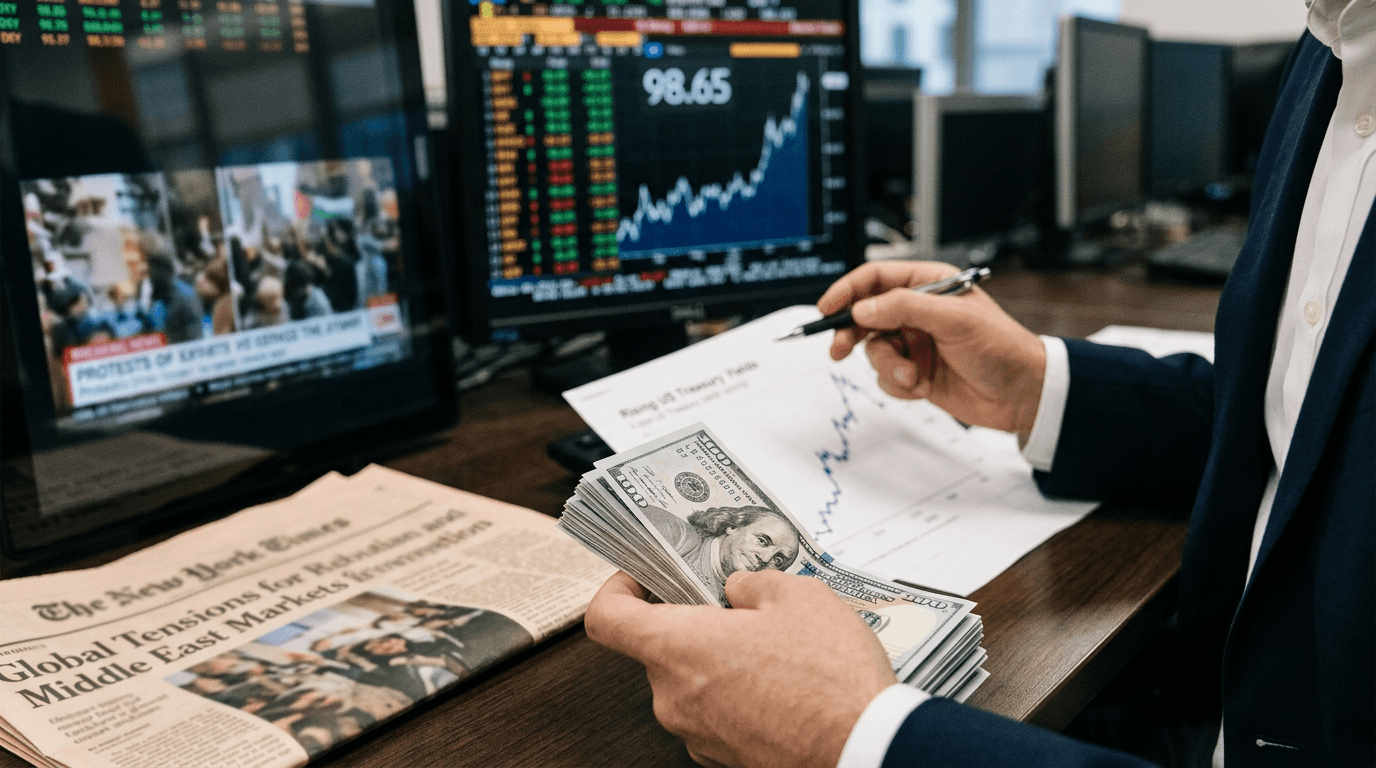
USD Surges Amid Middle East Tensions, Reinforcing Its Safe-Haven Status
In March 2026, the US dollar ascended to its highest levels in months, underlining its status as the ultimate safe-haven asset amidst escalating Middle East tensions. The Dollar Index (DXY) surged from February lows near 95, decisively surpassing the 98.60 resistance mark and briefly touching 99.20. This reflects a pivotal shift in global capital allocation strategies: when uncertainty peaks, institutional investors concentrate risk in the US dollar, the most liquid and stable asset.
Geopolitical Risk Premium Alters Market Dynamics
The intensifying Iran conflict has reshaped the traditional safe-haven landscape. Instead of a broad flight to safety, institutional capital is now explicitly flowing into dollar-denominated investments. Despite the US's active military involvement, its political and economic stability makes it the preferred choice for investors during uncertainty. This shift indicates that monetary policy, interest rate differentials, and currency stability now play a more dominant role than traditional geopolitical risk premiums. The Dollar Index's technical breakout, with the RSI climbing into the 60s, showcases this bullish momentum extending beyond simple risk aversion.
Monetary Policy and Geopolitical Stress
The Federal Reserve's hawkish stance has bolstered the dollar's position, as year-end fed funds pricing rises and Treasury yields reverse their sharp decline. This development enhances the appeal of dollar-denominated assets for international investors seeking both safety and yield. The redirection of institutional flows from commodities and precious metals to dollar-denominated securities reflects a strategic shift, as investors actively harvest risk premiums offered by current compensation structures.
Gold and Silver's Lackluster Performance
Despite the escalating conflict, traditional precious metals have underperformed. Gold stabilized around $5,322 per ounce, while silver dropped to about $83.70. This unexpected outcome highlights the dominance of macro-driven sentiment, with rising Treasury yields and dollar strength overshadowing geopolitical anxiety. Investors turn to the dollar for value storage and seek inflation hedging through oil, rather than precious metals. Central banks reinforce this trend, as sovereign wealth managers prioritize currency strength over commodities.
Institutional Positioning and Cash Flow Reallocation
The dollar's strength enhances both domestic and foreign equity investments for US-based institutions, enabling efficient capital deployment without currency hedging costs. This creates a self-reinforcing cycle, attracting further institutional flows and amplifying initial moves. Energy market disruptions redirect commodity investments to oil, rather than diversified safe-haven baskets. The US's role as the primary military participant in the Iran conflict directs capital towards dollar investments, maintaining stability despite active warfare.
Essential Insights for Traders
The sustained geopolitical risk premium supporting the dollar indicates a move beyond temporary positioning. Until clarity on the conflict's trajectory emerges, the combination of safe-haven flows, higher yields, and positioning reversal is likely to uphold the dollar's strength. Traders should be vigilant: a swift resolution could trigger relief rallies in emerging markets and non-US equities, reversing recent flows, while further escalation could push the dollar higher as global systemic risk pricing expands.
March 2026 illustrates the importance of understanding market drivers over reflexively investing in traditional safe-haven assets during geopolitical stress. The dollar's dominance underscores that currency strength, monetary policy, and yield advantages often dictate risk asset allocation more decisively than historical crisis patterns imply.
News Impact Score: 7