
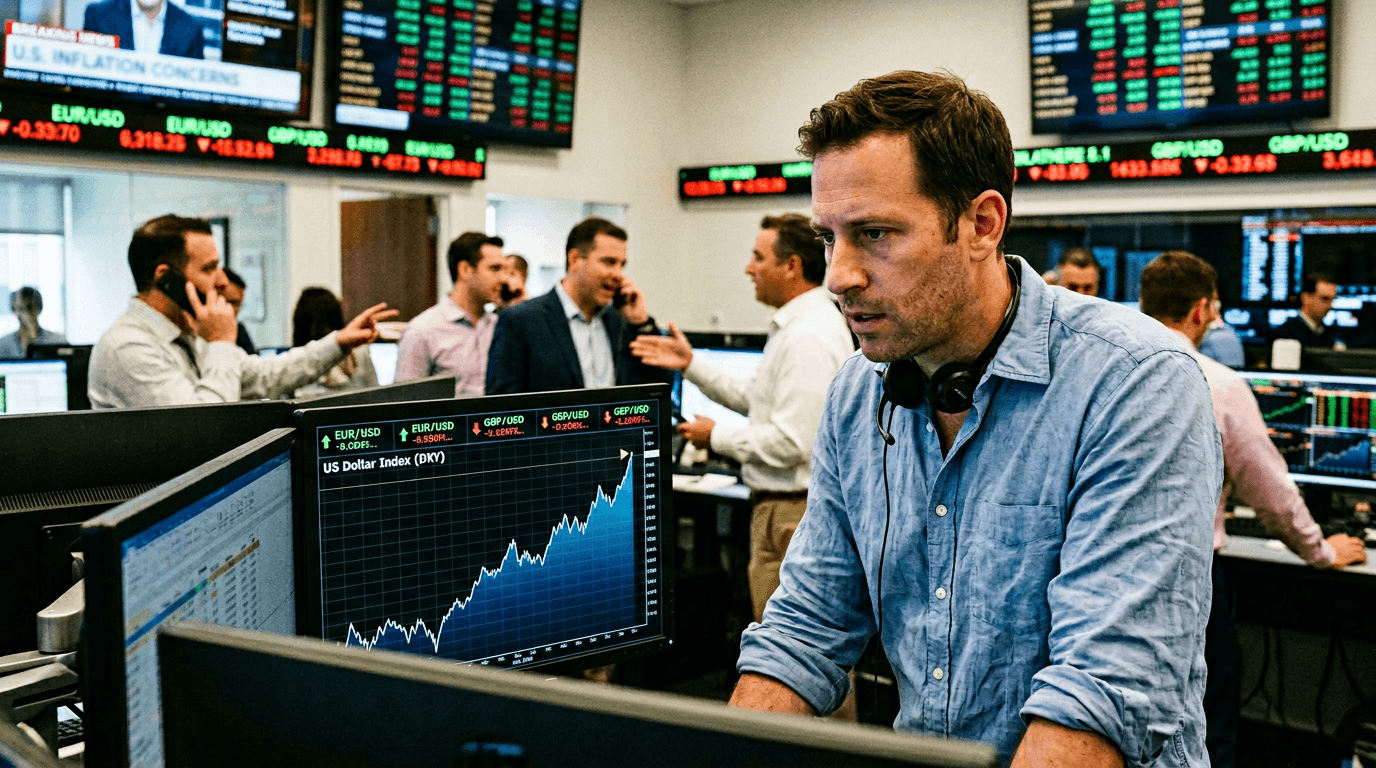
The US Dollar Index has surged to its highest level in approximately four months, reaching above 100.4 as of mid-March 2026, driven by a potent combination of inflation concerns and safe-haven demand stemming from escalating geopolitical tensions in the Middle East.[1][3] This rally represents a significant shift in currency markets, with the greenback climbing 3.70% over just the past month and signaling renewed confidence in the dollar as a protective asset during uncertain economic times.[3] For traders monitoring currency markets, this movement carries important implications for both near-term positioning and longer-term portfolio strategy.
The Inflation Factor And Monetary Policy
The foundation of the dollar's recent strength lies in inflation dynamics and the Federal Reserve's apparent shift in policy direction. The core PCE price index, which serves as the Fed's preferred inflation gauge, is running at 3.1% year-over-year, maintaining stubbornly elevated levels that have prompted the central bank to pause interest rate cuts.[1] This development contrasts sharply with earlier market expectations for significant rate reductions in 2026, as inflation remains a persistent concern despite some mixed economic signals.
The recent economic data underscores this complexity. While US personal spending rose 0.4% month-over-month in January and the University of Michigan consumer sentiment index exceeded expectations, Q4 GDP was revised lower and capital goods orders disappointed.[1] This mixed backdrop has reinforced expectations that the Fed will maintain a patient stance on rate cuts, providing crucial support for dollar valuations. Higher interest rates in the United States create positive interest rate differentials relative to other major currencies, making dollar-denominated assets more attractive to global investors seeking yield.
Geopolitical Safe-haven Demand
Beyond inflation considerations, the escalating conflict in Iran has emerged as a critical driver of dollar strength, with the currency functioning as a traditional safe-haven asset during periods of heightened uncertainty. The Iran war shows no signs of easing, with Defense Secretary Pete Hegseth announcing the largest wave of US strikes yet, signaling an extended period of Middle East tensions.[1][3] This ongoing conflict has kept crude oil prices elevated, threatening to further pressurize inflation globally and dampening prospects for near-term Fed rate cuts.
The safe-haven demand extends beyond geopolitical hedging concerns. The conflict has created asymmetric economic impacts across the globe. Energy-dependent economies in Europe and Japan face particular vulnerability to sustained elevated oil prices, weakening their currency valuations relative to the dollar.[1] Meanwhile, the United States benefits from greater energy independence, positioning it as a more resilient economy during periods of external shock. This structural advantage has reinforced investor preference for dollar assets as geopolitical risks persist.
Currency Pair Implications
The dollar's strength has manifested clearly across major currency pairs. The EUR/USD exchange rate has declined to 1.14167, down 0.83% as of mid-March, reflecting sustained pressure on the euro as European economic vulnerabilities mount.[1] The USD/JPY pair sits at 159.730, up 0.24%, demonstrating the yen's limited capacity to compete as a safe-haven currency against the strengthening dollar despite Japan's own economic challenges.[1]
For traders operating within the SimFi environment, these movements create distinct opportunities and risks. Currency volatility remains elevated, with the dollar index posting a 3.66% gain since mid-February 2026 alone.[1] This momentum suggests the potential for continued strength if inflation remains sticky or geopolitical tensions persist, though traders should remain cognizant of potential mean reversion should conditions stabilize.
Technical And Fundamental Outlook
The dollar index's break above 100.3 marks a significant technical achievement, establishing its highest level since mid-May 2025.[3] From a technical perspective, this milestone suggests potential for continued upside momentum should support levels hold. However, forward-looking projections from Trading Economics suggest more modest valuations, with expectations for the index to trade at 99.26 by quarter-end and 97.23 in twelve months, indicating potential headwinds ahead.[3]
This divergence between recent momentum and longer-term forecasts reflects underlying uncertainty about whether current conditions remain sustainable. If the Iran conflict de-escalates or inflation trends lower more convincingly, the dollar could face significant correction pressure. Conversely, continued geopolitical turmoil or persistent inflation could extend the current rally.
Key Takeaways For Traders
The current dollar strength presents several actionable insights for market participants. First, the combination of higher interest rates and safe-haven demand creates a compelling case for dollar positioning in the near term, particularly for traders with shorter time horizons. Second, the elevated correlation between oil prices, inflation expectations, and dollar strength suggests that monitoring energy markets and Fed communications will be essential for anticipating currency moves. Finally, the divergence between short-term momentum and longer-term forecasts highlights the importance of maintaining disciplined risk management and avoiding overextension in positions.
For traders on SimFi platforms, the current environment rewards both tactical currency positioning and strategic hedging considerations. The dollar's ascent to four-month highs reflects genuine economic and geopolitical drivers rather than ephemeral market moves, suggesting that the current trend carries meaningful conviction. However, mean reversion remains a fundamental market principle, and positions taken at current levels should incorporate appropriate stop-loss discipline.
---