
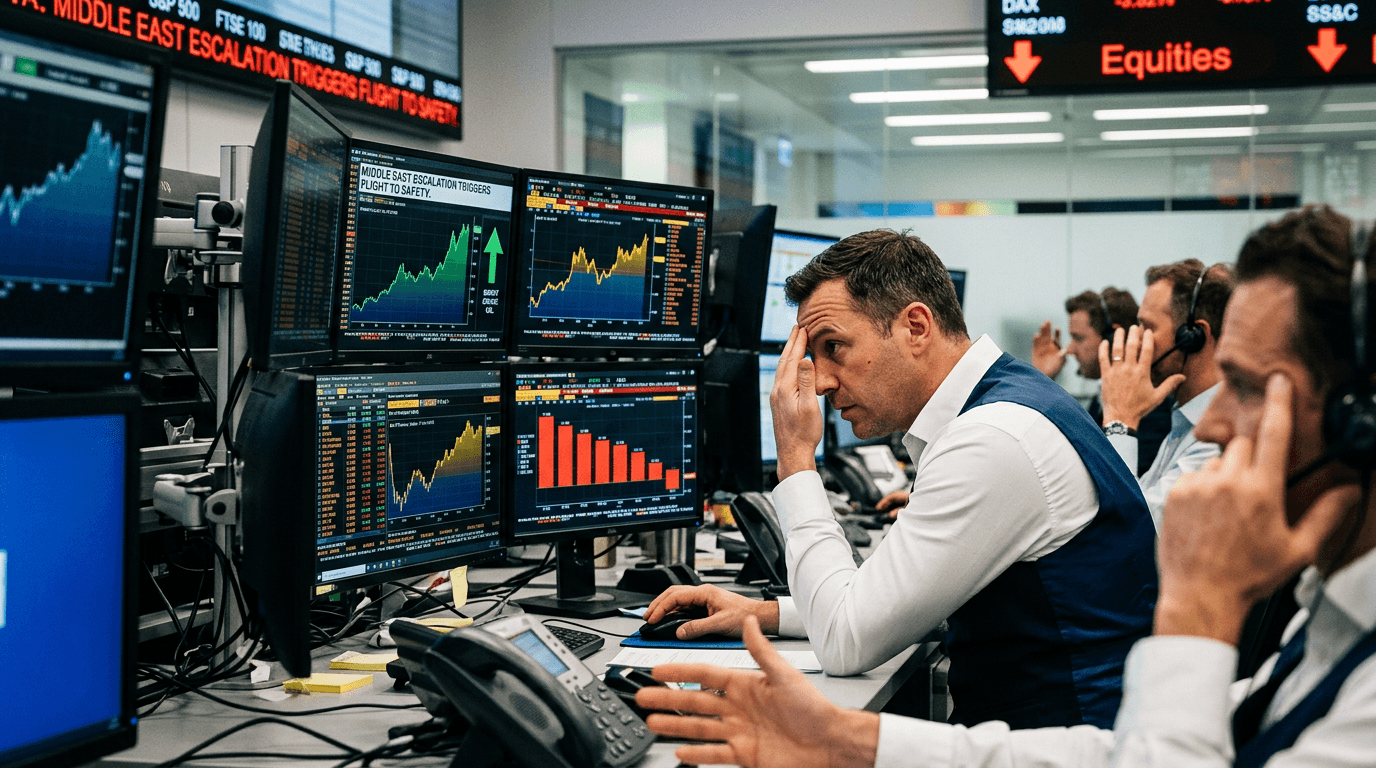
Oil markets have been thrust back into the spotlight as the Middle East conflict between the U.S., Iran and regional actors escalates, driving a sharp spike in crude prices and a broad risk-off move across global assets.[1][4][6] West Texas Intermediate (WTI) and Brent futures have jumped roughly 9%, climbing to their highest levels since 2024, while global equity indices have turned lower and traditional safe havens such as gold and the Japanese yen have attracted strong demand.[1][4][6] For traders, this is a classic geopolitical shock: a supply-sensitive commodity reacts first, inflation expectations get repriced, and then everything from bonds to FX and equity futures is forced to adjust.
Markets React To Escalating Middle East Conflict
Oil is reacting so violently because the geography of this particular conflict sits at the heart of global energy flows.[1][7] Strikes on Iranian targets, threats to shipping in the Strait of Hormuz, and the potential for wider regional involvement all raise the probability of disruptions to crude exports from the Gulf.[1][7] Even small changes in perceived supply risk can lead to outsized moves when markets are already tight or nervous.
A near-9% jump in WTI and Brent in a short span is not a routine move; it reflects a sudden reassessment of both physical supply risk and the geopolitical risk premium embedded in prices.[1][2] Analysts have long warned that a direct, sustained confrontation involving major producers could push oil toward extreme levels—some scenarios even see $150 per barrel and a hit to global output approaching $1 trillion if the conflict were to broaden dramatically.[8] While today’s prices are far from that worst case, the direction of travel matters: markets are now pricing in a higher probability that supply will be constrained, even if temporarily.
Equity markets have responded in textbook fashion. Higher energy costs pressure corporate margins, especially in energy-intensive sectors, and raise concerns about slower growth in regions already struggling with weak demand, such as Europe and China.[3] As a result, broad indexes have traded lower, with cyclical and consumer-sensitive names underperforming. Investors are effectively demanding a higher risk premium to hold stocks while the war path and its economic consequences remain uncertain.[4][6]
Oil Spike, Inflation Fears And Central Bank Expectations
The most important channel from oil to the broader macro environment is inflation. When crude jumps, it tends to feed into gasoline, diesel and input costs across transportation, manufacturing and agriculture.[1][3] Even if the shock proves transitory, central banks must decide whether it risks unanchoring inflation expectations or simply adds short-term noise.
In the current environment, the oil surge is complicating the narrative that inflation is safely on a downward trajectory.[3][4] As energy prices rise, forward-looking measures of inflation expectations can firm, and that in turn reduces the odds that the Federal Reserve and other central banks will deliver aggressive rate cuts in the near term.[4][9] Markets are already repricing the path of policy: fewer cuts are being priced in, and the timing is being pushed out.
Bond yields and rate futures are caught between two opposing forces. On one side, higher inflation risk and fewer expected Fed cuts point toward higher yields, especially at the front and intermediate parts of the curve.[4][9] On the other, a stronger risk-off tone as equities sell off tends to drive demand for safety in longer-dated government bonds, which can cap or even lower yields at the long end. The net result is increased volatility and a more complex, less linear relationship between growth, inflation and rates.
For traders, the key takeaway is that geopolitical shocks often hit the inflation channel faster than they hit the growth channel. That means yield curves, breakeven inflation, and rate cut probabilities become critical indicators to monitor. When oil is driving the macro narrative, fixed income markets can move as sharply as crude itself.
Safe-haven Bid And Broad Risk-off Flows
The other major theme emerging from the latest escalation is the classic rotation into safe havens. Gold prices have pushed higher as investors seek assets perceived to retain value in times of geopolitical stress and inflation uncertainty.[4][6] The Japanese yen—historically viewed as a funding currency and safe haven—has strengthened as carry trades are unwound and capital shifts toward lower-volatility assets.[4][6]
At the same time, higher-yielding and risk-sensitive currencies, particularly those tied to global growth and commodities, have faced selling pressure. Equity index futures have seen volatility spikes, and volatility measures themselves are being repriced to reflect the higher probability of tail-risk events. In FX, traders are not only reacting to risk sentiment but also rethinking monetary policy divergences, as the Fed’s projected path changes relative to the Bank of Japan and other central banks.
This cross-asset risk-off move is important because it reveals how interconnected modern markets are. A military strike in the Gulf can quickly shift oil curves, which reshapes inflation expectations, which then alters rate differentials, which finally drives FX and equity flows. Understanding that chain is essential for anyone trading multi-asset strategies, whether in live markets or simulated environments.
What This Means For Traders And Simulated Finance
For traders using simulated finance (SimFi) platforms such as E8 Markets, this episode is an opportunity to stress-test strategies in a realistic, high-volatility environment. A few practical takeaways stand out:
First, position sizing and risk management become critical when geopolitical risk is the main driver. Oil and equity futures can gap on headlines, and options pricing can change rapidly as implied volatility adjusts. Simulated environments allow traders to experiment with tighter stops, dynamic position sizing and portfolio hedging without real capital at risk.
Second, cross-asset thinking is vital. A purely directional view on oil may miss the bigger picture: how that view interacts with rate expectations, FX trends and sector rotation in equities. Scenario analysis—such as “oil higher for longer, but no full-blown supply shock” versus “rapid ceasefire and reversal in crude”—can help traders design strategies that perform across a range of outcomes.[3][5]
Third, macro awareness is no longer optional. Headlines about Middle East strikes need to be translated into concrete market drivers: shipping risk in the Strait of Hormuz, potential supply curbs, OPEC+ reactions, and central bank communication.[1][8] SimFi platforms provide a sandbox to practice this translation repeatedly, building discipline and pattern recognition that are invaluable when similar shocks occur in the future.
Looking Ahead: Key Risk Drivers To Watch
Looking forward, the trajectory of the conflict is likely to remain the primary driver of oil and broader risk sentiment. Traders should watch:
– The intensity and geographic spread of military activity, especially around key shipping lanes and energy infrastructure.[1][7] – Any changes in production guidance or emergency measures from major producers and OPEC+.[1][8] – Central bank rhetoric, particularly from the Fed, on how they weigh energy-driven inflation against growth risks.[4][9] – Market-based indicators such as oil curve backwardation, inflation breakevens, and FX volatility as signals of whether the shock is escalating or stabilizing.
Periods like this highlight why disciplined, informed trading is so challenging—and so rewarding. Geopolitics, macroeconomics and market microstructure collide in real time, and the ability to connect those dots is what separates reactive trading from strategic positioning. Whether in live markets or in simulated finance, the current Middle East-driven oil spike is a powerful case study in how quickly risk can reprice—and how important it is to be prepared before the next headline hits.