
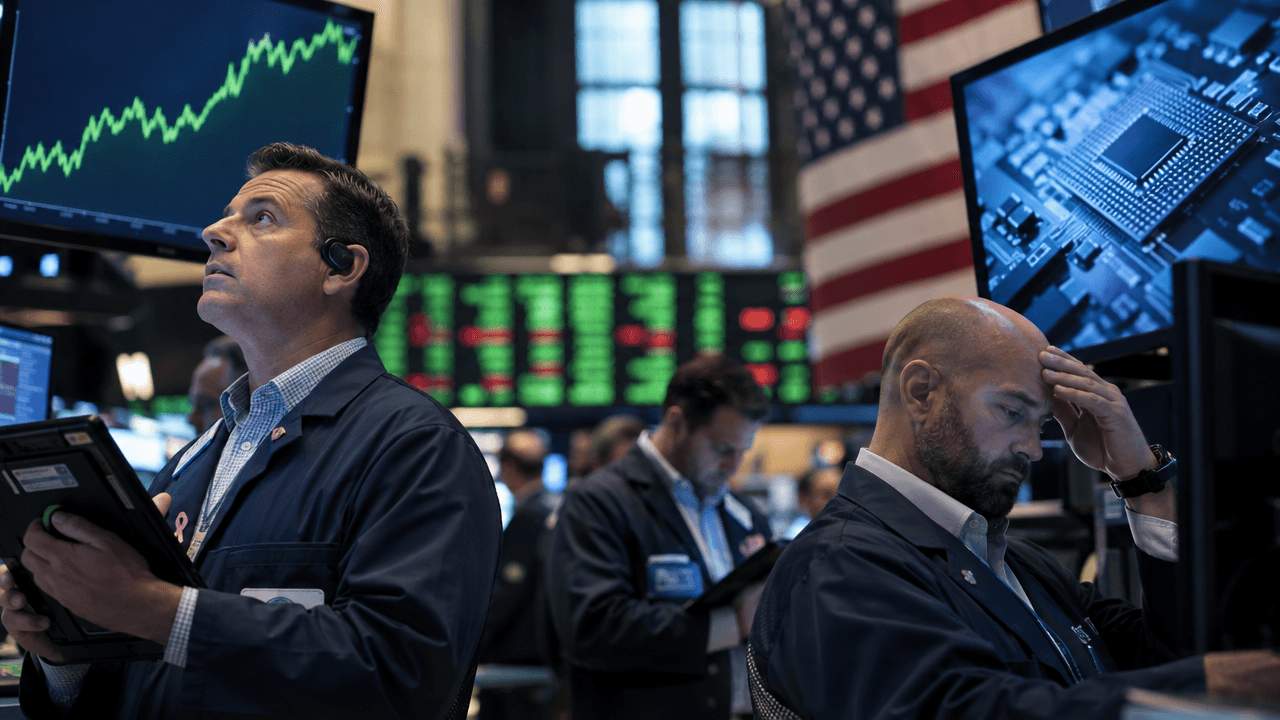
European and U.S. equity futures are finding firmer footing as investors reassess the market consequences of the U.S. midterm election outcome. The initial reaction was unsettled, particularly across artificial intelligence and semiconductor shares, but broader markets have begun to focus on a potentially more constructive interpretation: greater political clarity, lower policy uncertainty in selected areas, and improved expectations for international business conditions.
The shift is a useful reminder that markets do not trade election headlines in isolation. They rapidly compare the political result with what was already priced into stocks, bonds, currencies, and commodities. For traders, the important question is no longer simply who won. It is which industries may benefit, which may face new restrictions, and how quickly those policies could affect corporate earnings.
Markets Move From Shock To Reassessment
European equities have outperformed as investors reassessed the implications of the Democratic victory. The STOXX 600 rose and moved close to its previous record high, while U.S. stock futures recovered after initially falling sharply. The S&P 500 had also closed significantly higher in the previous session, showing that investors were willing to look beyond the immediate political surprise. [1]
One explanation is that a clear election result can reduce uncertainty. Markets generally prefer a defined policy environment to a contested or ambiguous one, even when the winning party’s agenda creates challenges for particular sectors. Investors are also considering whether the result could encourage a less confrontational trade relationship and reduce the risk of some policies that had weighed on international companies.
This does not mean the election has removed uncertainty. It has changed its form. Traders are now evaluating possible adjustments to regulation, government spending, tariffs, taxation, and industrial policy. Those themes will likely influence market leadership over the coming months rather than produce a single, one-day outcome.
Technology And Semiconductors Remain Under Pressure
The broad market recovery has not been evenly distributed. Technology and semiconductor shares have continued to weaken as investors consider whether a Democratic-controlled Congress could impose tighter oversight on artificial intelligence companies and data-center construction. Asian chip shares fell, while a U.S.-listed semiconductor exchange-traded fund dropped nearly 4% in premarket trading, according to market reports. [5]
The concern is connected to the enormous capital spending behind the AI boom. Technology companies have committed billions of dollars to data centers, advanced chips, power infrastructure, and cloud capacity. If regulation slows new construction, raises compliance costs, or limits certain applications, investors may reduce their estimates for future growth.
There is also a valuation issue. Many AI-related companies had already attracted substantial premiums because of expectations for rapid earnings expansion. When policy risk rises, traders may demand a larger margin of safety. Even if long-term demand remains strong, a stock can decline when its expected growth rate or valuation multiple is revised lower.
For SimFi traders, this distinction is essential. A falling semiconductor stock does not automatically signal that the entire AI industry is weakening. It may reflect a rotation from highly valued growth companies into sectors viewed as more stable, internationally exposed, or economically sensitive.
Why Europe Is Benefiting
European markets have been treated as a relative beneficiary of the election-driven rotation. The STOXX 600 has acted as a hedge against some AI-related risks, while European financial, industrial, healthcare, and consumer companies have attracted renewed interest. [6]
Investors are also examining whether a change in the U.S. political balance could moderate certain trade pressures or reduce the possibility of additional restrictions affecting European businesses. One market strategist argued that Democratic control of Congress could limit the U.S. administration’s ability to impose requirements or sanctions on European banks operating in the United States. [4]
That interpretation remains conditional. European companies still face their own challenges, including uneven economic growth, currency movements, energy costs, and interest-rate uncertainty. Nevertheless, international diversification can become more appealing when U.S. technology leadership appears vulnerable to regulation or profit-taking.
Traders should therefore avoid treating “Europe higher” as a complete investment thesis. The stronger approach is to identify the specific industries driving the move and determine whether their earnings outlook has genuinely improved.
What Traders Should Watch Next
The next stage of the market reaction will depend on evidence rather than headlines. Traders should monitor congressional statements, proposed AI legislation, data-center permitting rules, tariff developments, bond yields, and corporate guidance. Each could either reinforce or challenge the current rotation.
Price action is equally important. If European equities continue to outperform while U.S. mega-cap technology shares lag, the market may be signaling a sustained leadership change. If semiconductor stocks stabilize quickly, the election selloff may prove to be a short-term repricing rather than a fundamental break in the AI trend.
Volatility should also remain part of the trading plan. Election-related moves can reverse as investors receive more information. Using smaller position sizes, predefined stop levels, and scenario-based plans can help prevent a trader from confusing a temporary reaction with a lasting trend.
A practical SimFi exercise is to build three watchlists: potential beneficiaries such as financials and industrials, policy-sensitive technology and semiconductor names, and defensive assets such as healthcare or consumer staples. Track relative strength, volume, and the relationship between equity prices and Treasury yields. This creates a structured way to study rotation without relying on a single headline.
The Bigger Market Lesson
The rise in European and U.S. equity futures shows how quickly markets can move from political uncertainty to selective optimism. The election result has not produced a uniform bullish signal. Instead, it has created a more complex environment in which broad indexes can rise while important technology groups decline.
That divergence offers both risk and opportunity. Broad market strength may continue if investors believe the outcome supports clearer business conditions and more constructive international relations. At the same time, AI and semiconductor shares may remain volatile as traders reassess regulation, capital spending, and valuations.
The best response is not to predict every political development. It is to separate headline impact from earnings impact, watch how capital rotates between sectors, and trade only when price action confirms the underlying thesis. In a SimFi environment, that disciplined process is the real advantage: test the idea, manage the risk, and let evidence—not election excitement—drive the decision.