
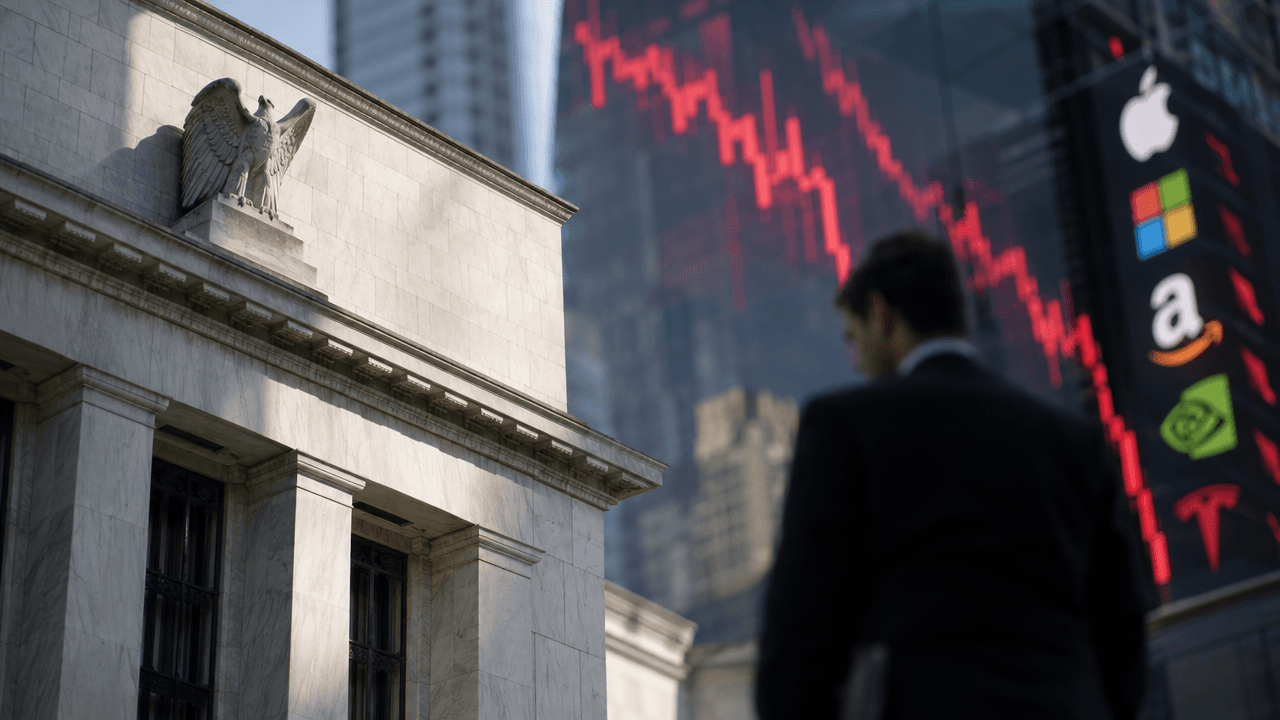
Strong U.S. employment data would normally strengthen expectations for higher interest rates. Yet markets are sending a more complicated message. Traders have reduced some bets on December rate increases by both the Federal Reserve and the European Central Bank, as a sharp technology selloff raises new concerns about economic growth and financial conditions.
Current market pricing implies roughly a 70% probability of a Federal Reserve rate hike in December, down from more than 80% the previous week. Expectations for an ECB increase have fallen to about 60%, compared with approximately 75% previously. [1] The shift does not mean investors have abandoned the possibility of tighter policy. Instead, it shows that confidence in the timing and scale of further increases has weakened.
Why Strong Jobs Data Did Not Settle The Debate
The U.S. labor market delivered a strong headline. Employers added 165,000 jobs in October, well above economists’ expectations of 65,000, while unemployment declined to 4.1%. Wages also increased by 0.4% during the month, providing another signal that demand in the economy remains resilient. [4]
Those figures support the argument for another Federal Reserve rate increase. A durable labor market can sustain consumer spending, increase wage pressure and make it more difficult for inflation to return quickly to the central bank’s target.
However, monetary policy does not respond to a single data point. Central bankers must also consider financial markets, business investment and the risk that previous rate increases are still working their way through the economy. A strong employment report may keep a hike on the table, but it does not eliminate concerns about what could happen next.
The Technology Route Changes The Market Signal
The major complication is the technology-led selloff. Investors have become increasingly concerned that high valuations, heavy artificial-intelligence investment and large data-center spending commitments may be vulnerable to higher borrowing costs or disappointing growth.
When technology shares fall sharply, the impact can spread beyond stock prices. Companies may delay investment, lenders may reassess risk and households may feel less confident if retirement accounts and equity portfolios decline. Credit markets can also tighten, creating an additional restraint on economic activity.
That is why financial conditions matter to rate expectations. Even if employment remains strong, a broad market decline can effectively tighten policy by raising the cost of capital and reducing risk appetite. MUFG analyst Lee Hardman noted that tightening U.S. financial conditions could become more important to the Fed’s December decision than the latest employment report. [1]
For traders, this creates a difficult balance. Strong data points toward higher rates, while weaker market sentiment points toward caution.
The Ecb Faces A Different Growth-inflation Mix
The European Central Bank is dealing with the same broad dilemma, although the euro-area economy has its own vulnerabilities. Inflation pressures can justify another hike, particularly if wage growth, energy costs or services prices remain elevated. At the same time, higher interest rates could put further pressure on manufacturing, housing and business investment.
The decline in December ECB hike expectations from around 75% to approximately 60% suggests that traders are becoming less certain that policymakers will maintain a predictable tightening path. [1] The ECB has indicated that incoming economic data will guide its decisions, making inflation reports, wage figures and growth indicators especially important before the December meeting.
Currency markets may react strongly to this uncertainty. If investors lower ECB rate expectations faster than Federal Reserve expectations, the euro could weaken against the dollar. Conversely, evidence that U.S. growth is deteriorating more quickly could reverse that relationship.
What This Means For Traders
The immediate lesson is that probability is not the same as certainty. A 70% market-implied probability of a Fed hike means a move is favored, but it also leaves meaningful room for disappointment. Traders should avoid treating rate futures as fixed forecasts. They are positions that change as new information arrives.
Several developments deserve close attention
First, watch inflation rather than relying exclusively on employment. A strong labor market supports higher rates, but policymakers ultimately need evidence that price pressures are not becoming entrenched.
Second, monitor financial conditions. Equity volatility, credit spreads, bond yields and currency movements can influence central-bank decisions even when economic data appears strong.
Third, separate the technology sector from the wider economy. A technology correction may reduce investment and confidence, but it does not automatically signal a recession. The key question is whether weakness spreads into employment, consumption and credit.
Finally, prepare for larger market swings around central-bank communications. When expectations are already divided, relatively small changes in inflation or growth forecasts can produce significant moves in bonds, currencies and equity indexes.
A More Uncertain Policy Path
The Fed and ECB are not necessarily abandoning their tightening plans. Rather, markets are reassessing how much economic weakness higher rates and falling technology valuations could create. Strong U.S. jobs data keeps a December Fed hike in play, while inflation concerns continue to support the ECB. But the technology rout has reminded investors that monetary policy operates with a lag and that financial conditions can change quickly.
For traders and investors, the most practical approach is to focus on scenarios instead of predictions. A December hike remains plausible at both central banks, but the path afterward may depend heavily on whether growth holds up. The central question is no longer simply whether rates will rise. It is whether policymakers can continue tightening without turning a market correction into a broader economic slowdown.