
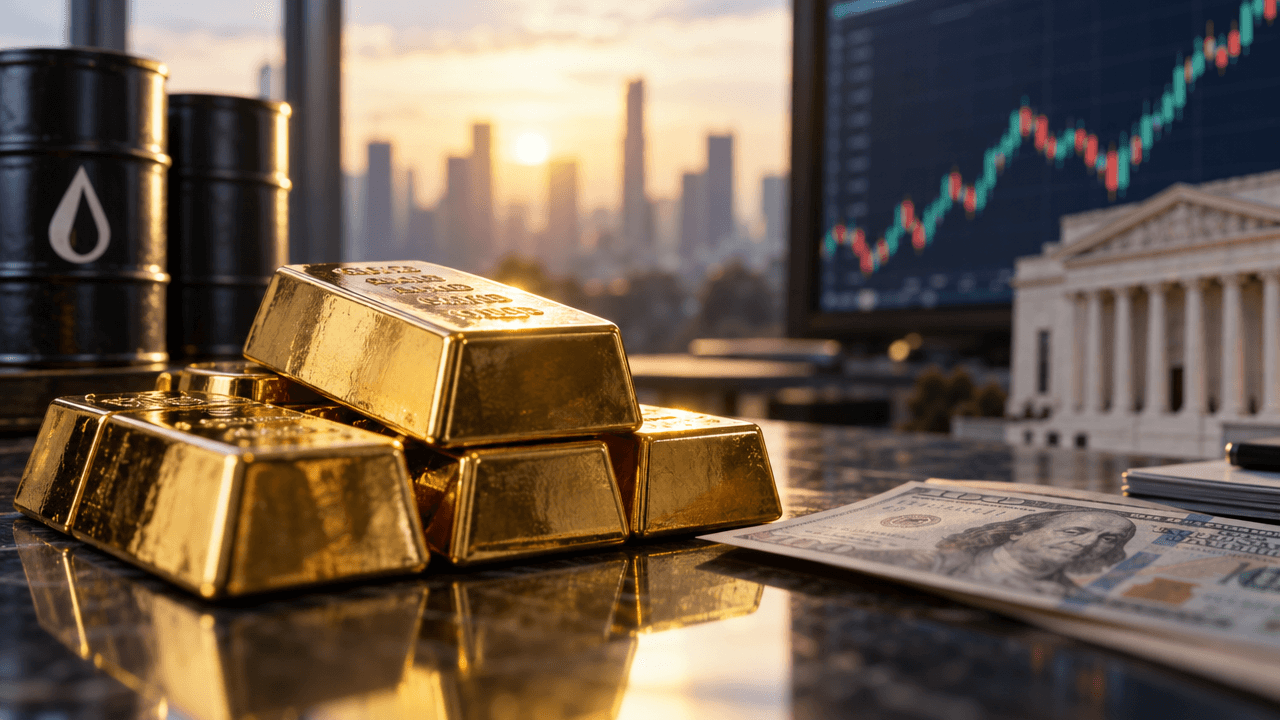
Gold has staged a notable rebound after a sharp selloff, recovering toward $3,946 per ounce after briefly falling to approximately $3,870. The move reflects a rapid shift in the forces that have recently pressured bullion: lower oil prices have reduced inflation concerns, Treasury yields have eased, and the US dollar has softened. Together, these changes have improved the short-term appeal of an asset that pays no interest. [1][4]
The recovery is a useful reminder that gold is influenced by more than fear and geopolitical headlines. Interest-rate expectations, real yields, currency movements, energy prices, and investor positioning can all affect the metal at the same time. For traders, understanding those relationships is often more valuable than reacting to a single price move.
Why Lower Oil Prices Matter For Gold
Oil prices play an important role in the inflation outlook. When crude becomes more expensive, transportation, manufacturing, electricity, and household costs can rise. Persistent energy inflation may encourage central banks to keep interest rates higher for longer, increasing the opportunity cost of holding gold.
Gold does not generate interest or dividends. As bond yields rise, investors can earn more from relatively low-risk income-producing assets, which may reduce demand for bullion. Higher yields can also support the US dollar, making gold more expensive for buyers using other currencies.
The recent decline in oil prices has eased that chain reaction. Lower energy costs could reduce inflation pressure and lessen expectations for prolonged monetary tightening. That has helped gold recover from its recent low, with spot prices rising more than 1% and moving back above $3,940 in recent trading. [1][4]
This does not mean falling oil prices automatically guarantee a lasting gold rally. Inflation data, employment figures, central-bank guidance, and bond-market positioning remain important. However, oil has recently served as a major transmission channel between Middle East developments, inflation expectations, interest rates, and bullion prices.
The Role Of Treasury Yields And The Dollar
The pullback in Treasury yields has provided another tailwind for gold. When yields decline, the relative disadvantage of holding a non-yielding asset becomes smaller. Traders therefore often monitor the 10-year Treasury yield and inflation-adjusted yields when assessing gold’s direction.
The dollar is equally important. Gold is priced internationally in US dollars, so a weaker dollar generally makes bullion more affordable for overseas buyers. It can also encourage investors to seek alternatives to cash and dollar-denominated assets.
Recent market commentary pointed to lower Treasury yields and a softer dollar as additional support for gold’s rebound. [4] These factors helped offset some of the damage caused by the earlier selloff, when higher oil prices, elevated yields, and a firmer dollar weighed on bullion.
For traders, the lesson is to watch correlations rather than price alone. A gold rally supported by falling yields and a weaker dollar may have a different foundation from a rally driven purely by safe-haven demand. If yields reverse higher or the dollar strengthens, gold’s recovery could lose momentum even if geopolitical risks remain elevated.
Safe-haven Demand Could Return
Gold’s traditional safe-haven role remains relevant. Renewed tensions in the Middle East could increase demand for defensive assets, particularly if investors become concerned about energy supplies, regional stability, or broader market disruption.
The relationship is complicated, however. Geopolitical tension can lift gold through safe-haven buying, but it can also push oil prices higher. If the oil response is large enough to revive inflation fears and increase expectations for higher interest rates, the negative effect of rising yields may outweigh the initial safe-haven benefit.
That tension has been visible in recent trading. Earlier strength in oil contributed to inflation and rate concerns, while the subsequent oil decline helped gold recover. Market participants are therefore watching both the headlines and their impact on crude, bonds, and the dollar rather than treating geopolitics as an automatic bullish signal for gold. [7][8]
What Traders Should Watch Next
The first priority is confirmation. A single rebound from $3,870 toward $3,946 shows that buyers have returned, but it does not yet prove that a durable trend reversal is underway. Traders may look for gold to hold above recent support while maintaining higher short-term lows.
The second priority is the interest-rate outlook. Any change in expectations for upcoming Federal Reserve policy could quickly affect yields, the dollar, and gold. Inflation reports, labor-market data, central-bank speeches, and Treasury-market volatility deserve close attention.
The third priority is crude oil. A continued decline in oil would reinforce the argument that inflation pressure is moderating. A renewed surge could produce the opposite effect by reviving rate-hike concerns.
In a SimFi environment, traders can use this event to build a structured plan rather than chase momentum. One approach is to define a support level near the recent low, identify a confirmation zone above the rebound area, and set a maximum risk before entering. Another is to compare gold with the dollar index, Treasury yields, and crude oil on the same chart. The goal is to understand whether the trade is supported by several aligned factors or by one fragile headline.
A disciplined trader should also consider two scenarios: continuation, in which softer oil and lower yields support further recovery, and rejection, in which stronger yields or renewed inflation fears push gold back toward recent lows. Planning both outcomes can reduce emotional decision-making.
Conclusion
Gold’s rebound toward $3,946 per ounce reflects a meaningful change in market expectations, but the recovery remains connected to developments beyond the metal itself. Lower oil prices have reduced inflation and rate concerns, while softer yields and a weaker dollar have improved gold’s relative appeal. [1][4]
The next phase will depend on whether those conditions persist. Traders should monitor oil, Treasury yields, the dollar, Federal Reserve expectations, and Middle East developments together. For both beginners and experienced participants, the central takeaway is clear: gold’s price action becomes easier to interpret when viewed as part of a broader macroeconomic system rather than as an isolated market.