
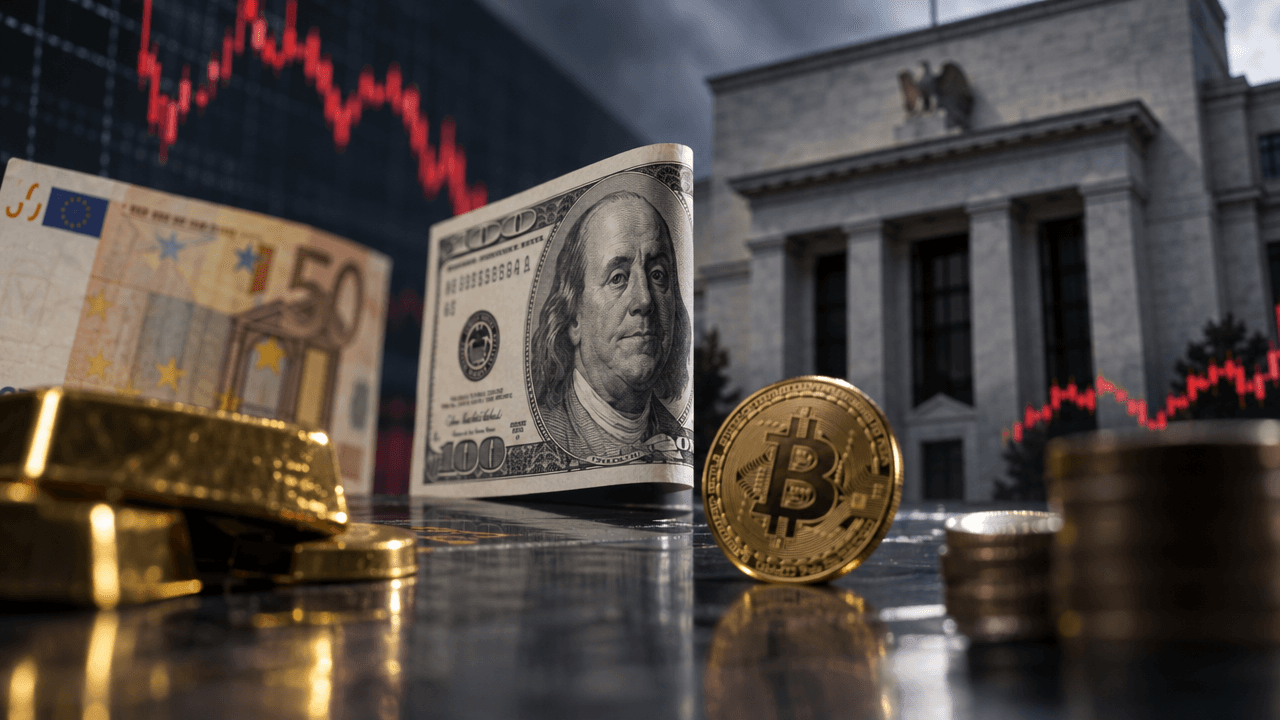
The U.S. dollar is entering the final weeks of November with powerful momentum. Stronger-than-expected inflation data, resilient economic activity and increasingly hawkish Federal Reserve commentary have persuaded investors that another interest-rate increase is likely in December. The dollar index recently reached its highest level since April 2025, reflecting a sharp repricing of the U.S. interest-rate outlook. [8]
For traders, the move is about more than one anticipated policy decision. It reflects a widening contrast between the Federal Reserve’s willingness to keep tightening and expectations for less aggressive policy elsewhere. Higher U.S. yields improve the appeal of dollar-denominated assets, while tighter financial conditions can pressure currencies, commodities and risk-sensitive markets.
Why The Federal Reserve Is Supporting The Dollar
The latest inflation figures have given policymakers a reason to maintain a restrictive stance. Rather than showing a clear and consistent return toward the Federal Reserve’s target, price pressures have remained firm enough to keep officials concerned about the risk of inflation becoming persistent.
That concern has been reinforced by economic data showing continued consumer resilience. Better-than-expected retail sales, combined with hotter inflation readings, have strengthened the argument for another rate increase. Markets are now pricing in roughly a 94% probability of a 25-basis-point hike at the December meeting, while assigning a smaller probability to a larger 50-basis-point move. [6]
Federal Reserve Governor Christopher Waller has added to the hawkish tone. He argued that the central bank may need to take more aggressive action, either through a half-point increase in December or by signaling a faster pace of future rate hikes. [2] Even if a 50-basis-point move does not occur, the discussion itself has raised expectations for interest rates to remain higher for longer.
This matters because currency markets respond not only to current rates, but also to the expected path of monetary policy. When investors believe U.S. rates will remain elevated, demand for dollars can increase as global capital moves toward U.S. government bonds and other dollar-based assets.
The Euro And Other Currencies Under Pressure
The euro has been one of the clearest casualties of the dollar’s advance. EUR/USD recently fell to its lowest level since April 2025 as traders reassessed the relative outlook for U.S. and European interest rates. [2]
A stronger dollar does not necessarily mean the eurozone economy is weakening dramatically. Instead, exchange rates reflect the difference between two policy and growth outlooks. If the Fed is expected to raise rates while the European Central Bank is viewed as less likely to tighten aggressively, the interest-rate advantage shifts toward the United States.
The same dynamic can affect other major currencies. Higher U.S. yields may attract funds away from markets where interest rates are lower or where economic growth appears less certain. Commodity-linked and emerging-market currencies can face additional pressure because a stronger dollar often raises the cost of dollar-denominated imports and external debt.
Traders should therefore monitor not just the direction of the Dollar Index, but also whether the move is broad-based. Strength against the euro, yen, pound and Australian dollar would suggest a wider policy-driven rally rather than a temporary move in one currency pair.
Why Gold, Bitcoin And Risk Assets Are Feeling The Pressure
Gold typically faces a difficult environment when real yields and the dollar rise together. The metal does not pay interest, so higher yields increase the opportunity cost of holding it. A stronger dollar can also make gold more expensive for buyers using other currencies.
Gold recently fell more than 1% to its lowest level in over a year as investors reacted to higher Treasury yields and a more hawkish Federal Reserve outlook. [14] The decline illustrates how quickly expectations about interest rates can influence commodities, even when gold retains longer-term appeal as a hedge against inflation and uncertainty.
Bitcoin and other risk-sensitive assets can also struggle when liquidity conditions tighten. Bitcoin fell toward a four-month low as the dollar strengthened and investors reduced exposure to volatile markets. [2] This does not mean that every dollar rally automatically produces a sustained cryptocurrency decline. However, tighter policy can reduce speculative demand and make investors more selective.
Equities may experience a similar tension. Strong economic data can support corporate earnings, but rising yields increase borrowing costs and reduce the present value of future profits. Growth-oriented assets are especially sensitive because much of their valuation depends on cash flows expected years ahead.
What Traders Should Watch Next
The December Fed meeting is the immediate catalyst, but the market reaction will depend heavily on the accompanying guidance. A widely expected 25-basis-point hike could produce a limited response if officials signal that the tightening cycle is nearing its end. Conversely, a firm commitment to additional increases could extend the dollar rally.
Incoming inflation, employment and consumer-spending data will remain important. A renewed acceleration in prices could revive expectations for a 50-basis-point move, while signs of economic deterioration could weaken the case for aggressive tightening.
Traders should also watch Treasury yields, because they often provide an early signal of whether dollar strength is being driven by rate expectations. Technical levels in EUR/USD, gold and bitcoin can help identify whether markets are experiencing a short-term pullback or a broader trend reversal.
Risk management is essential in this environment. Rather than relying on a single directional forecast, traders can define invalidation levels, reduce excessive leverage and account for event-driven volatility around economic releases and central-bank speeches.
The Bigger Market Lesson
The dollar’s current strength demonstrates how expectations can move markets before policymakers act. Inflation data and official commentary have shifted the debate from whether the Fed will raise rates to how aggressive the next phase of policy might be.
For SimFi traders, the key takeaway is to follow relationships rather than isolated headlines. A hawkish Fed can lift the dollar and Treasury yields, pressure gold and weigh on high-beta assets at the same time. Understanding those connections creates a more complete market framework.
The dollar may remain supported while U.S. inflation stays firm and Federal Reserve officials emphasize the need for restrictive policy. Yet the trend is not risk-free. If inflation cools, growth weakens or policymakers soften their guidance, crowded dollar positions could unwind quickly. The most prepared traders will be those who track both the prevailing narrative and the evidence that could challenge it.