
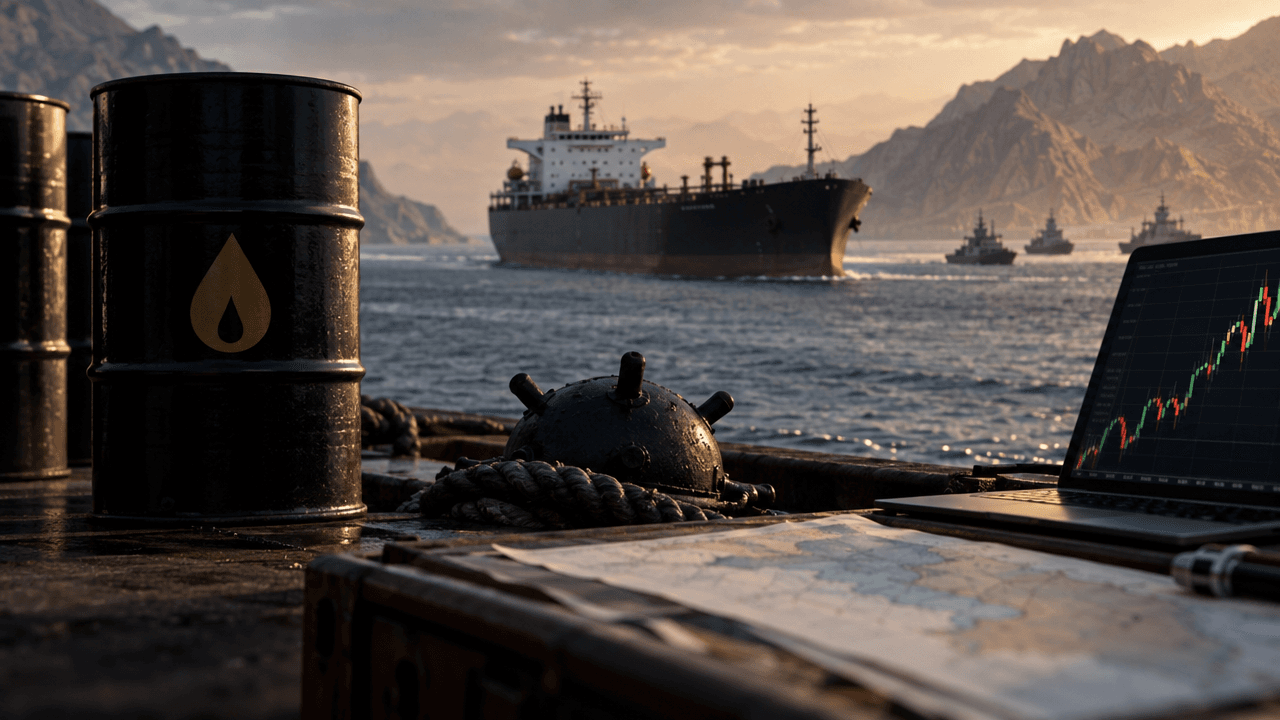
A shipping-risk claim can move energy markets long before a barrel of oil is physically lost. Reports that Iranian authorities said naval mines damaged or destroyed tankers near the Strait of Hormuz have therefore placed traders on alert. The claims were not independently confirmed, but with Brent crude reported near $103 per barrel, the market has little room for complacency. Any evidence that commercial traffic is becoming harder or more dangerous could add a sharp geopolitical premium to oil prices.
Why Hormuz Matters
The Strait of Hormuz is one of the world’s most important energy chokepoints. Roughly 17 to 20 million barrels per day of crude and condensate, along with substantial volumes of refined products and liquefied natural gas, normally pass through the waterway. Even a temporary slowdown can affect prompt supplies for refiners in Asia, Europe, and the Middle East. [5]
The key risk is not necessarily the immediate loss of the tankers mentioned in the reports. It is the possibility that shipowners, insurers, and crews begin treating the entire route as hazardous. A suspected minefield can disrupt traffic more broadly than an isolated attack because vessels cannot easily determine where additional mines may be located. Reports of mine damage have already raised concerns about slower sailings, route changes, naval escorts, higher insurance premiums, and elevated tanker freight rates. [3]
For oil markets, this creates a supply-risk problem even if production remains unchanged. Crude may still be available at the loading terminal, but transporting it to the buyer becomes more expensive, slower, or uncertain.
Why Unconfirmed Claims Still Matter
Financial markets price probability, not only confirmed outcomes. When credible reports suggest that tankers have been damaged, traders immediately assess the likelihood of additional incidents, tighter security measures, and a broader interruption to regional exports.
That does not mean every headline deserves an automatic buying response. Iranian authorities have made the claims, but independent confirmation remains limited. Other accounts have offered conflicting descriptions of incidents and vessel movements, while regional and Western maritime sources have not verified every detail. [7] The uncertainty itself, however, can increase volatility. Traders may reduce short positions, energy funds may increase exposure to crude, and options markets may price a greater chance of sudden price gaps.
At around $103 per barrel, Brent is already trading at a level where a new risk premium could produce significant dollar moves. A 3% increase would represent roughly $3 per barrel, while a larger repricing could occur if shipping companies suspend transits or governments announce a sustained disruption. Historical episodes show that threats to Hormuz can add several dollars per barrel even when physical flows eventually continue. [11]
The Market Channels To Watch
The first signal is the front of the crude futures curve. If traders believe the risk is immediate, nearby Brent and Dubai contracts should strengthen more than later-dated contracts. This type of movement would indicate concern about prompt availability rather than a long-term change in global production.
The second signal is the Brent-Dubai relationship. Gulf-origin crude becomes more valuable when access to the region is threatened, while Atlantic Basin barrels may gain relative support if refiners seek alternative supply. Price relationships between benchmarks can therefore reveal whether the market is reacting to a localized shipping problem or a broader global supply shock.
The third signal is tanker economics. Freight rates and war-risk insurance premiums can rise before crude prices fully respond. If shipowners demand higher compensation to enter the region, delivered crude costs increase even if the cargo itself remains available. Longer voyages, rerouting, and inspection delays can also reduce the number of vessels available elsewhere.
Natural gas and refined products deserve attention as well. Hormuz carries significant LNG volumes, and any disruption could tighten regional gas markets. Refined-product buyers may also compete for alternative cargoes if gasoline, diesel, or jet-fuel shipments are delayed.
What Traders Should Avoid
The most important discipline is separating verified developments from headline momentum. A claim of tanker damage is not the same as confirmation that the main shipping lanes are closed. Traders should monitor maritime advisories, vessel-tracking information, government statements, insurance notices, and evidence of actual loading or transit delays.
It is also risky to assume that every risk premium will remain in place. If authorities verify that the incidents were isolated, traffic continues normally, and no additional vessels are affected, the initial oil spike could fade quickly. Conversely, confirmed mining of recognized shipping lanes, repeated attacks, or a decision by major operators to suspend voyages would justify a much larger and potentially longer-lasting repricing.
Position sizing matters in this environment. Crude futures can move sharply in both directions as new information arrives. Using defined-risk strategies, avoiding excessive leverage, and checking liquidity around major news releases can help traders manage the gap risk associated with geopolitical headlines.
The Bigger Market Lesson
The Hormuz reports demonstrate how sensitive energy markets are to transportation risk. Oil pricing reflects more than production and consumption; it also reflects the cost and reliability of moving barrels from producer to consumer.
For now, the claims remain uncertain, but uncertainty is enough to keep Brent vulnerable to abrupt risk-premium moves. The most constructive approach is to track confirmation, physical shipping behavior, futures-curve changes, and insurance costs together rather than relying on a single headline.
If the reports are disproved and traffic remains steady, the market may gradually remove part of the premium. If they are verified or followed by additional incidents, Brent near $103 could become a starting point for a sharper repricing. The central takeaway is simple: in a chokepoint as important as Hormuz, perceived shipping risk can become a market-moving supply event before measured production data shows any change.