
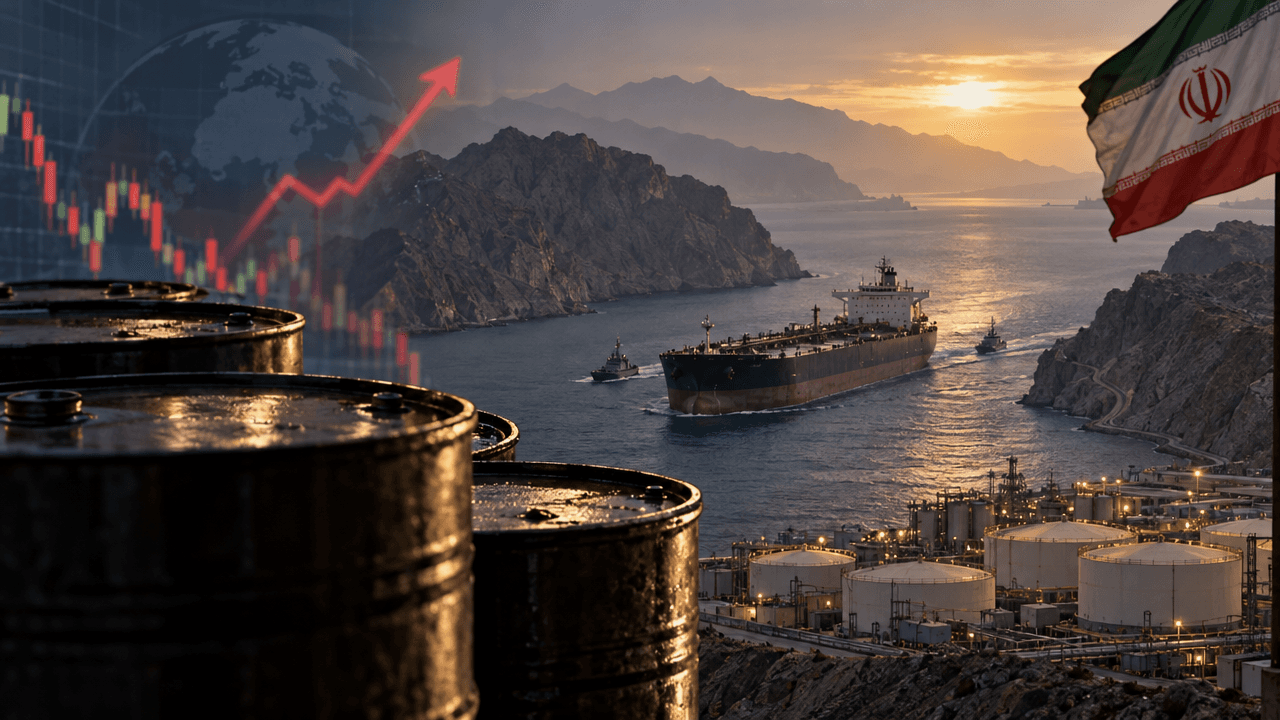
Oil markets remain highly sensitive to Middle East supply risks, with traders balancing the possibility of prolonged shipping disruption against coordinated efforts to increase available fuel. On Friday, Brent crude traded near $105 per barrel while West Texas Intermediate remained close to $98, reflecting a market that is pricing in both immediate supply concerns and a substantial geopolitical risk premium. [1][5]
The central issue is the Strait of Hormuz, a vital maritime route through which a significant share of global oil and petroleum products normally passes. Any threat to tanker movements through the strait can quickly affect prices, freight costs, insurance premiums, and delivery schedules. Even when physical supplies continue moving, uncertainty about whether future cargoes will arrive can encourage refiners, governments, and traders to secure barrels in advance.
Why The Strait Of Hormuz Matters
Oil markets react not only to confirmed production losses but also to the risk that supply could be interrupted. The Strait of Hormuz connects the Persian Gulf with global shipping routes, making it strategically important for energy exporters and importers alike.
Recent attacks and shipping incidents have increased concern over the safety of tankers operating in the area. Reports that two cargo ships sank near the strait have added to uncertainty, while market participants continue to assess whether vessels can transit safely and consistently. [2]
For traders, the consequences extend beyond the number of barrels physically removed from the market. Tankers may be delayed, rerouted, or forced to pay higher insurance costs. These expenses can raise the delivered price of crude and refined products even if production remains relatively stable.
This explains why oil prices can remain elevated despite day-to-day declines. A lower settlement price does not necessarily mean the underlying risk has disappeared. It may simply indicate that traders are temporarily focusing on reserve releases, demand expectations, or profit-taking.
Emergency Stock Releases Offer Relief
The International Energy Agency has agreed to accelerate the release of approximately 100 million barrels of emergency oil stocks, including more than 20 million barrels of diesel. Around 330 million barrels had already been released under the collective action launched in March, and total releases are expected to exceed the original 400-million-barrel commitment. [3][7]
Emergency reserves are designed to provide a bridge during a supply shock. By adding crude and refined products to the market, governments can reduce the risk of shortages, support refiners, and moderate sudden price spikes.
However, reserve releases are not a permanent replacement for regular production and transportation. Their impact depends on how quickly barrels reach consumers, which grades of crude are released, and whether the disruption continues. If shipping through Hormuz remains unreliable, additional stock releases may cushion the market without fully removing the risk premium.
The announcement has already helped limit upward pressure on prices. Yet the market’s response remains restrained because traders understand that strategic inventories are finite. A release can buy time, but it cannot resolve a geopolitical conflict or restore normal tanker traffic.
The Inflation Channel
Persistent energy risks are particularly important for Europe, where higher oil and fuel costs can feed through to transportation, heating, manufacturing, and food distribution. Brent crude near $105 represents a substantial burden compared with periods of lower energy prices, especially for economies that import much of their fuel.
The first impact is usually visible at petrol stations and in wholesale fuel markets. Over time, higher transportation costs can spread through supply chains. Businesses may absorb some of the increase, reduce margins, or pass it on to customers. If energy prices remain high for long enough, inflation can become broader and more persistent.
European inflation risks may intensify as winter approaches. Rebuilding fuel inventories at elevated prices could add pressure to household and business energy bills, while sustained oil costs may keep headline inflation stubborn into 2027. [4]
For central banks, this creates a difficult policy balance. Higher energy prices can raise inflation even as they weaken consumer purchasing power and corporate activity. Policymakers must determine whether the shock is temporary or likely to become embedded in wages, expectations, and pricing decisions.
What Traders Should Watch
The next direction for oil will depend on several moving parts. First, traders should monitor the number and frequency of successful tanker transits through the Strait of Hormuz. A steady return to normal shipping could reduce the risk premium, while further incidents could push prices sharply higher.
Second, the timing and composition of emergency stock releases matter. Crude releases may help refiners, but diesel availability is equally important because distillates support freight, agriculture, construction, and heating. The market will also assess whether government barrels arrive quickly enough to offset near-term shortages.
Third, supply developments outside the Middle East remain relevant. Russian refinery disruptions, changes in sanctions, inventory data, and production decisions can either amplify or offset the effect of Hormuz-related risks. Demand expectations will also influence prices, particularly if high energy costs begin to slow economic activity. [7]
Traders should avoid treating a single headline as a complete market signal. Instead, they can track price structure, shipping news, refinery margins, inventory reports, and volatility together. Risk management is especially important when geopolitical events can produce sudden gaps in crude, energy equities, currencies, and inflation-sensitive assets.
The Bigger Market Lesson
The current oil environment demonstrates how quickly transportation risk can become a global macroeconomic issue. The market does not need to lose all Middle Eastern supply for prices to rise; uncertainty alone can alter behavior across the energy chain.
Emergency stock releases may reduce immediate stress, but the longer-term outlook depends on the restoration of secure shipping and reliable production. Until that happens, oil is likely to remain highly responsive to military developments, maritime incidents, policy announcements, and inventory data.
For SimFi traders, the practical lesson is clear: focus on scenarios rather than predictions. A calm shipping week could ease prices, while a new disruption could overwhelm the stabilizing effect of reserve releases. Understanding those competing forces—and sizing positions accordingly—is more valuable than relying on a single directional view.