
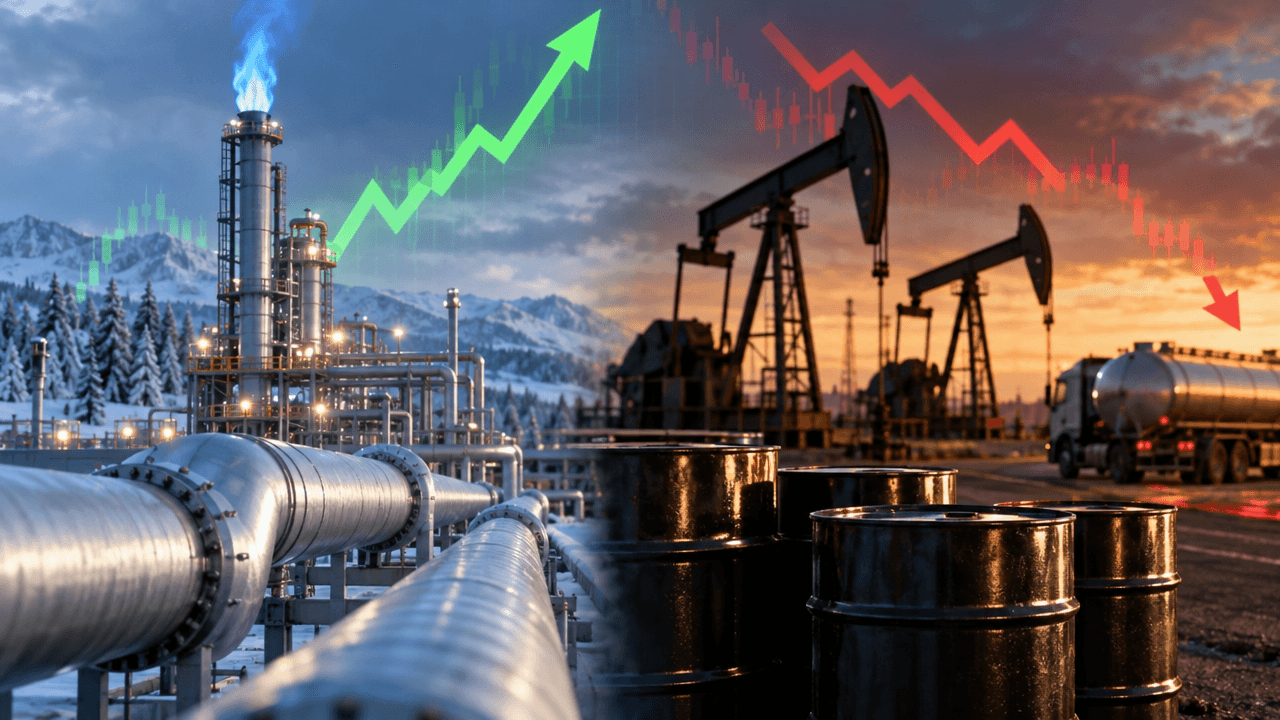
Natural-gas futures have broken away from the broader energy complex. In the latest weekly market review, natural gas gained roughly 8% while crude oil and several refined-product contracts weakened. That divergence is important: it suggests the rally is being driven by gas-specific factors, including changing weather expectations, supply concerns, strong liquefied natural gas exports, and crowded bearish positioning—not by a broad-based energy boom.
For traders, the move is a reminder that “energy” is not one trade. Oil, gasoline, heating oil, and natural gas respond to different inventories, demand cycles, transportation networks, and seasonal catalysts. Understanding those distinctions is essential when evaluating futures markets or building a SimFi trading plan.
Weather Has Become The Primary Catalyst
Natural gas demand is highly sensitive to temperature. Colder weather increases residential and commercial heating consumption, while extreme heat can raise demand from power generators running air-conditioning systems. As forecasts shifted toward more seasonal or colder conditions in parts of the eastern United States, traders raised expectations for heating demand heading into winter. [1]
This change was especially significant because the market had recently been positioned for relatively mild conditions. A small adjustment in the forecast can create a large price response when traders are heavily committed to one side of the market. In this case, cooler projections encouraged short sellers to buy back contracts, adding momentum to the rally.
The timing also matters. Late November marks the transition into the core winter-demand period. As December, January, and February approach, traders pay closer attention to heating-degree-day forecasts, regional temperatures, and the potential pace of storage withdrawals. A forecast that appears modest in early autumn can become much more influential as winter consumption approaches.
Supply And Lng Exports Tighten The Balance
Weather is only one part of the natural-gas equation. Production trends and exports are equally important because they determine how much gas is available to satisfy demand and replenish storage.
Recent market commentary pointed to softer domestic production, including output near 109.5 billion cubic feet per day during part of the period. At the same time, LNG feedgas demand remained strong, with flows approaching record levels as export facilities operated at high utilization. [2]
LNG exports effectively connect the U.S. gas market to global demand. When overseas buyers need more American gas, additional supply is pulled toward coastal export terminals. That can reduce the amount available for domestic storage and consumption, making the U.S. market more sensitive to weather surprises.
The result is a market with less room for error. If production declines at the same time that heating demand and LNG exports rise, storage inventories can tighten faster than expected. Traders therefore watch daily production estimates, pipeline flows, LNG feedgas volumes, and weekly storage data for signs that the balance is becoming less comfortable.
Why Crude And Refined Products Moved Differently
The weakness in crude and refined products highlights the commodity-specific nature of the natural-gas rally. Oil prices faced pressure from rising U.S. crude inventories, increasing gasoline and distillate stocks, and concerns about demand or supply conditions. One market report cited a weekly crude inventory increase of approximately 4.7 million barrels, alongside higher product inventories. [3]
Crude oil is driven primarily by transportation demand, refinery activity, global production, trade flows, and geopolitical risk. Natural gas, by contrast, is more directly exposed to regional weather and power-sector consumption. Gasoline demand also follows driving patterns and refinery economics, while diesel is closely linked to freight, manufacturing, and broader economic activity.
These differences explain why oil and gas prices can move in opposite directions. A weakening outlook for global petroleum demand does not automatically reduce the need for U.S. heating gas. Likewise, colder weather can lift gas prices even when crude inventories are rising.
This divergence can create opportunities, but it can also encourage careless comparisons. Traders should avoid assuming that a falling oil price automatically signals weakness in natural gas. Each contract requires its own fundamental framework.
The Role Of Positioning And Short Covering
Fundamental news was amplified by market positioning. Reports indicated that hedge funds had accumulated a record short position in natural gas before the rally. When forecasts became less bearish, those positions came under pressure, forcing traders to buy futures to reduce losses or protect against further upside. [2]
This process, known as short covering, can accelerate a move beyond what the immediate change in supply and demand might suggest. A forecast does not need to become strongly bullish to trigger a sharp rally; it may only need to become less bearish than traders expected.
For SimFi traders, positioning is a valuable part of risk analysis. A market with unusually large short exposure may be vulnerable to a fast upside move, while a market dominated by long positions may be exposed to a sudden liquidation. Positioning should not replace fundamental research, but it can help explain why prices respond dramatically to seemingly moderate news.
Practical Takeaways For Traders
First, separate weather-driven trades from broader energy-market narratives. Natural gas can rally even when crude oil and gasoline decline.
Second, monitor several data points together. Weather forecasts, storage injections or withdrawals, domestic production, LNG feedgas demand, and pipeline flows provide a more complete picture than any single headline.
Third, treat forecast changes as risk events. Natural gas prices can react quickly when temperature models change, particularly when positioning is crowded.
Fourth, manage leverage carefully. Futures provide substantial exposure with relatively little capital, and natural gas is known for sharp, volatile moves. Define the maximum acceptable loss before entering a position rather than after the market begins moving.
Finally, use scenario planning. Consider what could happen if temperatures turn colder than expected, production rebounds, LNG demand weakens, or short covering runs out of momentum. A well-designed SimFi strategy should have a plan for each outcome.
Conclusion
The natural-gas rally is a clear example of why commodity markets must be analyzed individually. Weather expectations, firm LNG exports, softer production, and heavy short positioning combined to produce a powerful move even as crude and refined products weakened.
The broader lesson is that market divergence often contains the most useful information. Rather than treating the energy sector as a single trade, traders should identify the specific supply, demand, and positioning forces affecting each contract. In natural gas, the next major catalyst will likely be the interaction between winter weather and available supply. That interaction—not the direction of crude oil alone—will determine whether the recent surge develops into a sustained trend or fades as quickly as it began.