
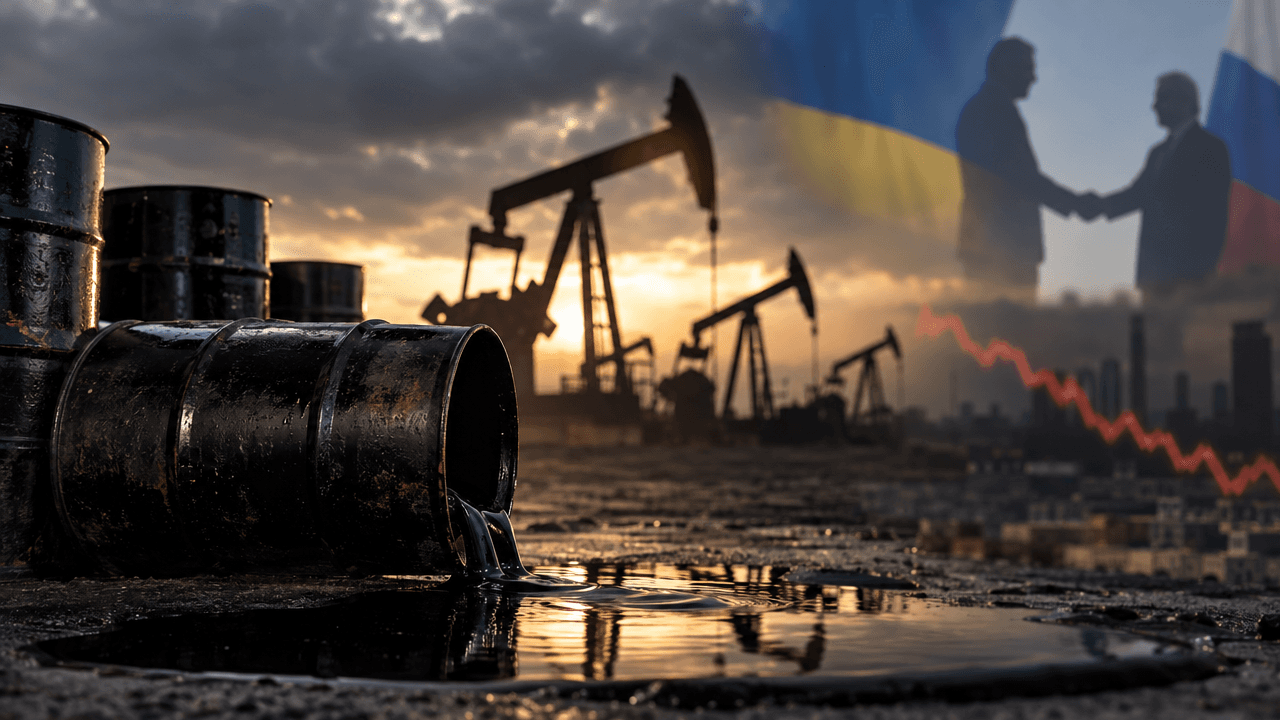
Oil prices fell more than 2% as traders reacted to two forces that could significantly reshape the supply outlook: signs of a potential global crude surplus and renewed hopes for progress toward a peace agreement between Russia and Ukraine.
The decline reflected a shift in market sentiment. Geopolitical tensions often support oil prices because traders fear supply disruptions. However, the possibility of easing conflict-related risks can quickly remove that premium. At the same time, evidence that production is recovering faster than demand has raised concerns that available crude could outpace consumption.
For traders, the move highlights how rapidly oil markets can transition from scarcity fears to oversupply anxiety. It also demonstrates why crude prices respond not only to current production and consumption, but to expectations about future barrels, inventories, shipping routes, and geopolitical conditions.
Supply Growth Puts Pressure On Crude
The International Energy Agency reported that the global oil market could return to surplus in the fourth quarter of 2026. Its November outlook projected average supply of approximately 105 million barrels per day, around 1.7 million barrels per day above expected demand. The agency also said global oil demand was forecast to decline by 2.7 million barrels per day in 2026 to 102.3 million barrels per day before recovering by 2 million barrels per day in 2027. [5]
That imbalance matters because even a relatively modest surplus can accumulate in storage tanks, pipelines, and vessels. When inventories rise, sellers may need to offer lower prices to attract buyers. If traders believe the surplus will persist, futures contracts can weaken further as the market prices in greater availability over coming months.
A key contributor is the recovery of production from major oil-producing regions. The IEA said global supplies had begun surpassing demand for the first time since the outbreak of the war in Iran, while Gulf exports were recovering. The agency’s November report described the market as showing tentative signs of rebalancing, with a larger surplus potentially developing in 2027. [1]
The supply picture can therefore exert pressure even when geopolitical risks remain elevated. Oil does not need to be physically abundant everywhere for prices to fall. Expectations of additional exports, improving production, or weaker demand can be enough to change positioning across futures markets.
Ukraine Peace Prospects Remove Risk Premium
The second major influence was the possibility of progress in Ukraine peace negotiations. Russian and Ukrainian negotiators agreed to a major prisoner exchange after talks in Abu Dhabi, although significant disagreements remained, including territorial issues. [12]
Markets generally respond to diplomatic developments before a formal agreement is reached. Traders attempt to estimate whether a settlement could eventually reduce sanctions, restore disrupted trade flows, or lower the risk of attacks on energy infrastructure. Even if those outcomes are uncertain, the possibility of improved relations can reduce the geopolitical premium built into oil prices.
Russia remains a major energy producer, making any change in the country’s relationship with global markets important for crude traders. A durable peace process could encourage expectations of more predictable exports and lower transportation or insurance risks. It could also reduce concerns about further disruptions involving pipelines, refineries, ports, and shipping routes.
However, peace talks do not guarantee an immediate increase in supply. Negotiations may stall, sanctions may remain in place, and infrastructure damage can take years to repair. The market reaction is therefore based on probability rather than certainty. Traders may sell oil when the perceived risk of disruption falls, even though the physical market has not yet changed.
What Lower Oil Prices Mean For Markets
A sustained decline in crude prices could help ease inflation expectations. Energy costs influence transportation, manufacturing, heating, electricity generation, and the price of many consumer goods. If oil remains cheaper, businesses and households may face less pressure from fuel and logistics expenses.
That development could affect interest-rate expectations. Lower energy prices can reduce headline inflation and potentially give central banks more flexibility if underlying price pressures are also cooling. Bond yields, currencies, and equity valuations may respond as investors reassess the path of monetary policy.
The effects are not universally positive. Energy-linked currencies can come under pressure when crude prices fall because lower oil revenue may weaken export income and trade balances. Currencies associated with commodity-producing economies can therefore lag during sharp oil selloffs.
Energy equities and oilfield-service companies may also face pressure. Lower prices can reduce expected cash flow, narrow profit margins, and lead producers to delay drilling or capital-intensive projects. By contrast, airlines, transport companies, and other fuel-intensive businesses may benefit if lower energy costs improve operating margins.
Practical Takeaways For Traders
The first takeaway is to monitor both physical fundamentals and geopolitical headlines. Supply data, production guidance, refinery activity, and inventory reports can reveal whether a surplus is becoming established. Diplomatic developments can change the risk premium within minutes.
The second is to distinguish between a temporary price reaction and a structural trend. A two-day selloff does not prove that oil has entered a long-term bear market. Weather events, production outages, sanctions, military escalation, or stronger-than-expected demand can quickly reverse sentiment.
The third is to watch the futures curve. A market moving toward contango, where later contracts trade above near-term prices, can signal expectations of abundant supply and rising storage demand. A shift toward backwardation may indicate tighter prompt availability.
Finally, risk management remains essential. Oil is highly volatile, and leverage can magnify losses when prices react to unexpected headlines. Traders should define position size, stops, and maximum acceptable risk before entering a position rather than relying on a directional forecast alone.
Conclusion
The more-than-2% decline in oil prices reflects a market reassessing the balance between supply, demand, and geopolitical risk. A projected surplus has increased pressure on crude, while Ukraine peace prospects have reduced some of the disruption premium previously embedded in prices.
The broader lesson is that oil markets are forward-looking. Prices can fall before additional barrels arrive or before a peace agreement is signed because traders are pricing the possibility of those outcomes. For SimFi participants, the most useful approach is to combine fundamental analysis with disciplined risk controls and a clear understanding of how energy markets influence currencies, inflation expectations, equities, and interest rates.