
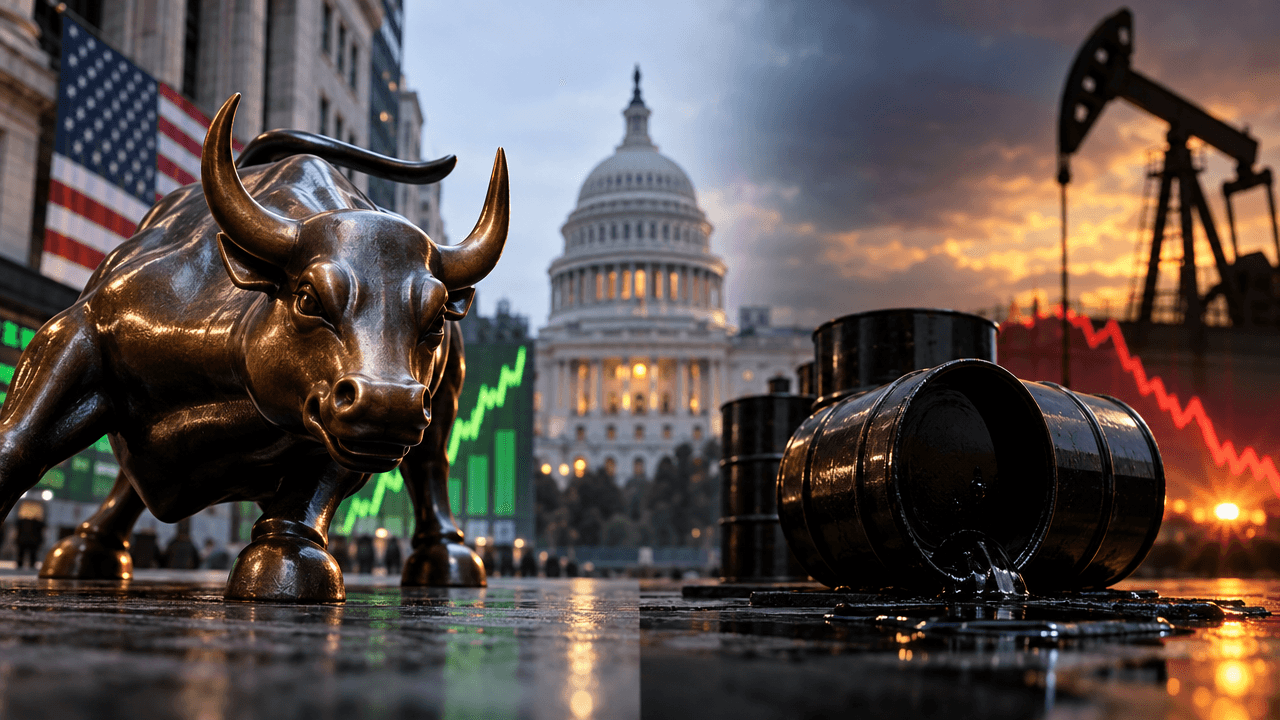
A dramatic shift in political expectations sent U.S. financial markets sharply higher while crude oil suffered one of its steepest declines in months. Following the midterm election result, investors appeared to price in reduced policy uncertainty, a more constrained presidential agenda, and a potentially faster path toward easing geopolitical tensions. The Dow Jones Industrial Average gained roughly 1,569 points, or 3%, while the S&P 500 and Nasdaq also posted strong advances. [1][8]
At the same time, oil prices plunged. West Texas Intermediate crude fell more than 8% to approximately $88 per barrel, while Brent crude declined about 8.7% to around $94.62. [10] The unusual combination of surging equities and sinking energy prices offers an important lesson: markets do not react simply to whether election results are viewed as positive or negative. They react to how those results change expectations for inflation, interest rates, government spending, regulation, and geopolitical risk.
Why Stocks Rallied After The Election
The election removed a significant source of short-term uncertainty. Investors had been waiting to see whether one party would retain control of Washington or whether the result would produce a divided government. With Democrats taking control of both chambers of Congress, markets began to anticipate greater difficulty for the administration in passing major legislation, changing tax policy, or expanding spending programs.
That expectation can be supportive for stocks when investors view political gridlock as a limit on disruptive policy changes. A divided government may reduce the probability of aggressive new tariffs, large fiscal packages, or sudden regulatory shifts. Even when gridlock slows legislation, it can give companies and investors a more predictable operating environment.
The market response was broad. The Dow rose about 3%, the S&P 500 gained approximately 1.6%, and the Nasdaq advanced around 1.4% by the close of trading. [13] The move suggests that investors were not merely buying a handful of technology shares. They were repricing the wider outlook for corporate earnings and economic stability.
Why Oil Plunged
Crude oil reacted to a different part of the election story: geopolitical risk. The result raised expectations that political pressure could build for the United States to pursue a less confrontational approach to the war with Iran. Comments from Vice President JD Vance linking the conflict to the election outcome added to those expectations, helping push oil prices lower. [11]
Oil prices often include a risk premium when traders fear supply disruptions. If markets believe the probability of a wider conflict is falling, that premium can disappear quickly. The result may be a sharp decline even if global production and consumption have not changed significantly in a single day.
The drop in crude also reflected concerns about future demand. If political developments reduce the likelihood of prolonged military spending or weaken expectations for a major data-center and infrastructure boom, traders may lower their forecasts for energy consumption. Energy shares consequently lagged the broader market, while sectors that benefit from lower input costs received a relative boost. [6]
What Lower Oil Means For Inflation And Interest Rates
A sustained decline in crude oil could help reduce inflationary pressure. Transportation, manufacturing, agriculture, and logistics companies all depend on fuel, while households feel the effect through gasoline and heating costs. Lower energy prices can therefore improve consumer purchasing power and reduce operating expenses for businesses.
That matters because inflation expectations influence bond yields and Federal Reserve policy. A cheaper energy market can make investors more confident that price pressures will cool, potentially supporting lower Treasury yields and more favorable financial conditions. Treasury yields did fall as markets absorbed the election result and oil selloff. [14]
However, one day of lower oil prices does not guarantee a lasting inflation trend. Energy markets remain vulnerable to supply disruptions, production decisions, currency movements, and changes in global demand. Traders should distinguish between a short-term risk-premium adjustment and a durable change in the underlying supply-and-demand balance.
Practical Takeaways For Traders
First, avoid treating a large index rally as proof that every stock is attractive. Election-driven moves can create strong sector rotation. Technology, consumer discretionary, transportation, and other oil-sensitive industries may respond differently from energy producers, defense companies, utilities, or regulated businesses.
Second, watch the relationship between crude oil, Treasury yields, and equity leadership. If oil remains lower while yields ease and economically sensitive sectors strengthen, the market may be signaling confidence in moderating inflation and stable growth. If oil rebounds quickly or yields rise again, the initial interpretation may be losing momentum.
Third, manage volatility rather than chase it. A 1,500-point Dow rally can make missing the move feel costly, but entering after an unusually large gap can expose traders to reversals. Simulated trading is useful here because it allows traders to test entries, stops, position sizes, and sector strategies without putting capital at immediate risk.
Finally, separate the headline from the lasting economic consequences. Election results can change expectations instantly, but legislation, diplomacy, corporate investment, and Federal Reserve decisions develop over weeks and months. The strongest trading plans combine the immediate market reaction with confirmation from price trends, economic data, earnings guidance, and risk management.
The Bigger Market Lesson
The post-election surge demonstrates how quickly markets can reprice uncertainty. Stocks rallied not because the political environment became simple, but because investors believed the new balance of power could limit disruptive policy changes and reduce geopolitical risk. Oil fell because traders saw a possible path toward de-escalation and lower demand for a conflict premium.
For investors and SimFi traders, the key lesson is to follow the transmission mechanism. Ask how an event affects policy, inflation, interest rates, earnings, and risk premiums. That framework is more durable than reacting to a headline alone.
The market’s next move will depend on whether those expectations become reality. If geopolitical tensions ease and lower oil prices persist, equities may receive continued support. If negotiations fail, inflation returns, or political gridlock creates new uncertainty, the rally could lose momentum. In either case, disciplined analysis and controlled risk remain more valuable than trying to predict every headline.