
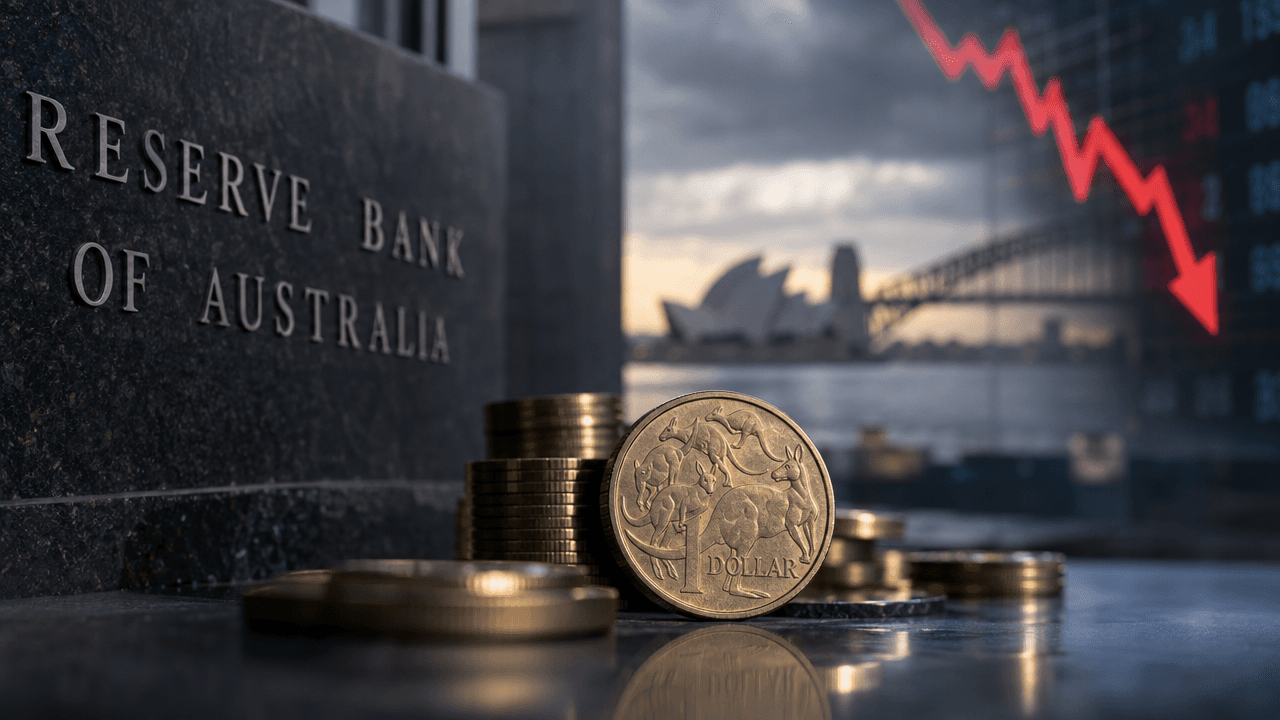
The Reserve Bank of Australia has raised its cash rate by 25 basis points to 4.85%, taking borrowing costs to their highest level since December 2008. The move was widely expected, yet the Australian dollar weakened after the announcement. The Aussie fell as much as 0.35% against the US dollar, reaching approximately US$0.6974. [1][15]
The market reaction highlights an important lesson for traders: interest-rate decisions are not judged only by the headline move. Investors also assess how strongly the decision was supported, what the central bank says about future policy, and whether the increase has already been priced into markets.
Why The Rba Raised Rates
The RBA’s decision reflects continued concern about inflation. The central bank has indicated that price pressures remain elevated and broad-based, while inflation is expected to stay above 3% over the coming year. The bank does not expect inflation to return to the top of its 2–3% target range until late 2027. [2][12]
Higher interest rates are designed to slow demand throughout the economy. When borrowing becomes more expensive, households may reduce spending, businesses may delay investment, and the housing market can face additional pressure. These effects can gradually reduce inflation, although monetary policy typically works with a lag.
The 25-basis-point increase also marks the fifth rate hike of 2026. However, the decision was not unanimous. Six of the nine Monetary Policy Board members supported the increase, while three preferred to keep the cash rate at 4.60%. [5]
That split vote matters because it suggests the RBA is becoming more cautious. Although inflation remains a concern, a significant minority of policymakers believed existing rates were already sufficiently restrictive. For traders, the vote reduced the likelihood that the latest increase automatically signals another hike at the next meeting.
Why The Australian Dollar Fell
At first glance, higher Australian interest rates should support the Australian dollar. Higher yields can attract international capital, especially when investors expect rates to remain elevated for an extended period. Yet currency markets trade expectations rather than simply reacting to the latest decision.
In this case, the hike was already broadly anticipated. Because traders had positioned for a 25-basis-point increase, the announcement did not provide a major surprise. Once the decision was confirmed, investors focused on the more cautious elements: the divided board and the lack of a clear signal that further increases are imminent. [4][12]
The broader market environment also worked against the Aussie. The currency is closely linked to global risk sentiment and commodity markets. When investors become more defensive because of geopolitical uncertainty, economic concerns, or volatility in other major markets, they often reduce exposure to risk-sensitive currencies such as the Australian dollar.
This explains why a currency can decline even when its central bank raises rates. A higher policy rate is supportive in theory, but that support can be outweighed by cautious forward guidance, profit-taking, or a broad move toward safer assets.
What The Decision Means For Traders
For Australian dollar traders, the key issue is now the path of future policy. A sustained recovery in the currency would likely require evidence that inflation remains persistent enough to justify additional tightening, combined with stable or improving global risk sentiment.
Conversely, softer domestic economic data could strengthen expectations that the RBA will pause. Employment, wages, consumer spending, housing activity, and future inflation reports will all be important. Traders should also monitor interest-rate futures, Australian government bond yields, and the yield spread between Australia and the United States.
The AUD/USD pair may remain particularly sensitive to US Federal Reserve expectations. Even if Australian rates are high, a stronger US dollar can pressure the Aussie if US yields rise or investors seek the relative safety of dollar-denominated assets.
From a technical perspective, traders should avoid assuming that a rate hike guarantees a bullish currency trade. Instead, they can evaluate whether price action confirms the fundamental narrative. A failure to rally after a widely expected hike may signal that bullish expectations have already been exhausted. Risk management remains essential, particularly around central-bank announcements when spreads and volatility can increase quickly.
Practical Takeaways
The RBA’s move delivers several lessons for SimFi traders.
First, distinguish between an expected decision and a surprise. A widely forecast rate hike may create limited upside for the currency because the market has already priced it in.
Second, read the statement and voting pattern carefully. A split vote can make an apparently hawkish decision less supportive for the currency by suggesting that policymakers are nearing a pause.
Third, follow the reaction across multiple markets. The Australian dollar, government bonds, equity indexes, and commodity prices can provide a more complete picture than any single chart.
Fourth, consider the global backdrop. Domestic monetary policy is only one influence on AUD/USD. Risk appetite, China-related developments, commodity demand, and US interest rates can all alter the currency’s direction.
Finally, avoid trading solely on headlines. Waiting for the initial volatility to settle can help traders identify whether the market is accepting or rejecting the first move.
The Bigger Market Picture
The RBA’s decision confirms that inflation remains the central challenge for Australian policymakers. Raising rates to 4.85% demonstrates a willingness to restrict demand, but the divided vote shows that the policy debate is becoming more balanced.
For markets, the message is neither purely hawkish nor clearly dovish. Rates are higher, but the next move is less certain. That tension may keep Australian bonds and the currency sensitive to incoming data.
The Australian dollar’s decline after the hike is therefore not a contradiction. It is a reminder that markets respond to the difference between expectations and reality. For traders, the most valuable edge often comes from understanding that difference before entering a position.