
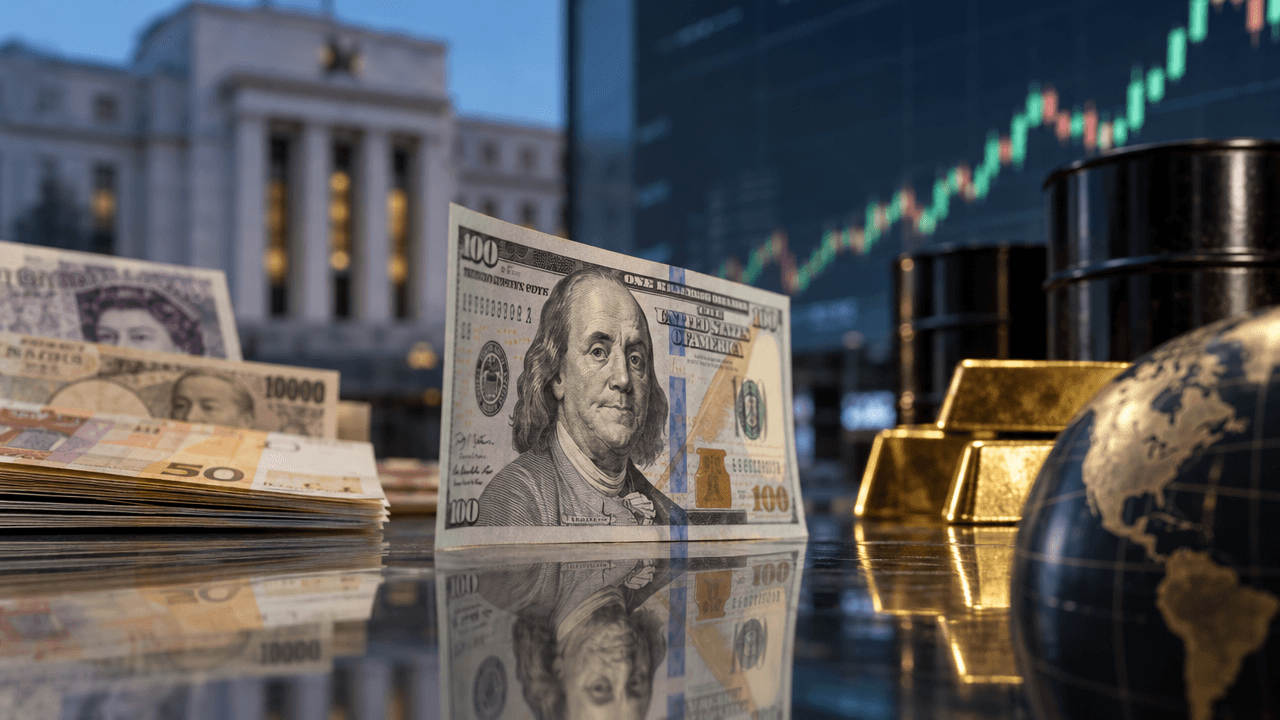
The U.S. dollar is heading toward a third consecutive monthly gain, extending its longest winning streak in roughly two years. The Bloomberg Dollar Spot Index has risen about 1.8% in November and remains close to its highest level since early 2025. The latest session was relatively quiet, but the greenback continues to draw support from expectations that the Federal Reserve will raise interest rates in December. [4]
For traders, the rally illustrates how quickly currency markets can reprice when interest-rate expectations change. A stronger dollar can influence nearly every major asset class, from foreign exchange and commodities to equities, bonds, and emerging-market investments. It also creates both opportunities and risks for participants in simulated finance markets.
Why Fed Expectations Are Driving The Dollar
Interest-rate differentials are one of the most important forces in foreign exchange. When investors expect U.S. interest rates to rise relative to rates in other economies, dollar-denominated assets can become more attractive. Higher Treasury yields may encourage global investors to hold more U.S. bonds, while expectations of better returns can increase demand for the currency itself.
Markets are now pricing in an approximately 99% probability of a 25-basis-point Federal Reserve rate increase in December, according to recent reports. Traders are also considering the possibility of additional increases by the middle of next year. [10]
This repricing has supported the dollar even when daily movements have been modest. In currency markets, the major move often happens before the policy decision, as traders position themselves based on what they believe the central bank will do. Once the decision arrives, the dollar’s reaction may depend less on the hike itself and more on the Fed’s guidance about future policy.
That distinction matters. If a quarter-point increase is already fully priced in, the dollar may struggle to rise further unless policymakers signal that more tightening is likely. Conversely, a cautious message could prompt profit-taking and a short-term decline.
Why The Rally Has Extended
The dollar’s strength reflects more than interest-rate expectations. Firm U.S. economic data has encouraged investors to believe that the economy can withstand tighter monetary policy. Recent market coverage also pointed to higher inflation concerns, rising Treasury yields, and safe-haven demand linked to weakness in technology shares. [5]
A currency can benefit when investors are optimistic about its economy, but it can also gain during periods of uncertainty. The U.S. dollar remains a major reserve currency and is widely used in global trade and finance. When investors reduce exposure to riskier assets, they often seek the relative liquidity of dollar-based holdings.
That combination has created a supportive backdrop: stronger expectations for U.S. rates are attracting yield-seeking capital, while market volatility is encouraging defensive positioning. The result is a dollar that has remained elevated even as the latest trading session showed little net movement.
Impact On Other Currencies And Assets
A rising dollar can place pressure on major currencies such as the euro, Japanese yen, and Australian dollar. If U.S. yields rise faster than yields elsewhere, capital may move toward dollar assets. Economies with weaker growth prospects or less aggressive central banks can face additional selling pressure.
The yen is especially sensitive to changes in U.S. Treasury yields because the interest-rate gap between the United States and Japan affects the appeal of yen-funded trades. A stronger dollar can also weigh on currencies tied to global growth and commodity demand, including the Australian dollar.
Emerging-market assets may face even greater challenges. Many governments and companies in developing economies borrow in dollars. When the greenback appreciates, the local-currency cost of servicing that debt increases. A stronger dollar can also raise the price of imported goods, adding to inflationary pressure and making it harder for local central banks to support economic growth.
Commodities may also feel the effect. Gold and other dollar-priced assets can become more expensive for buyers using other currencies. That does not guarantee falling commodity prices, because supply disruptions and geopolitical risks can offset currency effects, but a firm dollar is generally a headwind.
What Traders Should Watch Next
The next major catalyst is not simply whether the Fed raises rates. Traders will focus on the policy statement, economic projections, and any comments about the path beyond December. The market’s current pricing leaves less room for a surprise from the hike itself, increasing the importance of forward guidance.
Key indicators include inflation data, employment figures, consumer spending, and economic growth. Strong data could reinforce expectations for further tightening and extend the dollar’s advance. Weaker data could cause traders to scale back those expectations, especially if policymakers signal that rates are already sufficiently restrictive.
Positioning is another important consideration. When a trade becomes crowded, even a small change in expectations can trigger a sharp reversal. Traders should avoid assuming that a near-certain rate increase automatically means the dollar will rise every day.
Practical takeaways are straightforward
Monitor interest-rate futures rather than focusing only on headlines.
Compare the Fed’s expected path with policy expectations in Europe, Japan, Australia, and emerging markets.
Watch Treasury yields because they often provide an early signal of changing dollar demand.
Use defined risk when trading currency pairs after major central-bank announcements.
Consider how dollar strength may affect commodities, equities, and emerging-market exposure.
The Bigger Picture
The dollar’s third monthly gain reflects a powerful combination of monetary-policy expectations, resilient U.S. economic sentiment, and demand for liquidity. Yet a strong trend is not the same as a one-way market. With a December Fed hike largely priced in, future dollar gains may require evidence that additional increases are coming or that the U.S. economy is outperforming expectations by a meaningful margin.
For SimFi traders, this environment offers a useful lesson in market structure. The most important question is not only what policymakers will do, but what the market has already anticipated. Understanding that difference can help traders identify when momentum is likely to continue, when a move may be overextended, and where risk management matters most.