
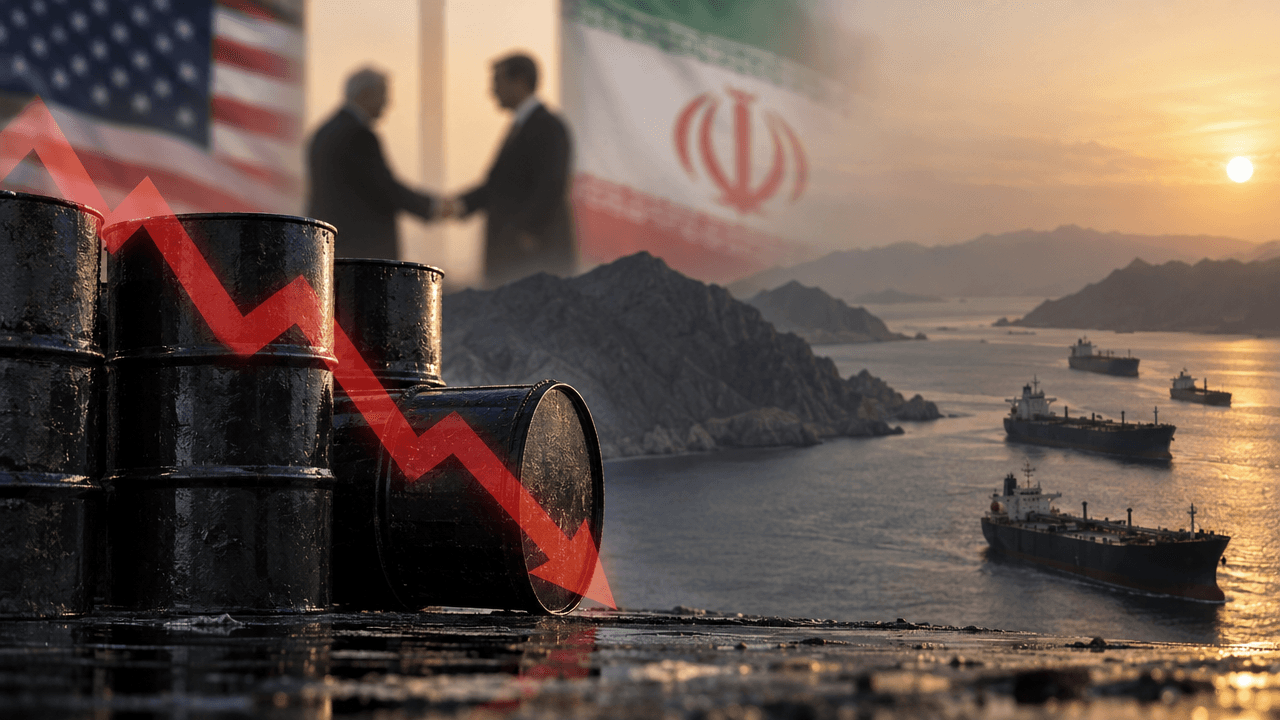
Oil prices remain under pressure as tentative signs of progress between the United States and Iran encourage traders to price in a lower risk of prolonged supply disruption. Brent crude recently fell about 1.1% to approximately $103.60 per barrel before declining another 0.4%, extending a sharp retreat from earlier highs. The move reflects changing expectations: markets are no longer pricing only the immediate danger of conflict, but also the possibility that diplomatic efforts could eventually stabilize regional energy flows. [4][7]
Why Diplomatic Progress Matters
The main market issue is not simply whether Washington and Tehran hold discussions. Traders are focused on whether negotiations can reduce the risk surrounding the Strait of Hormuz, one of the world’s most important energy routes.
Iranian and Qatari officials have been involved in discussions aimed at preventing further escalation and creating the conditions for a broader U.S.–Iran agreement. Reports indicate that mediators have circulated proposals intended to bridge differences between the two sides. However, Iranian officials have also emphasized that Tehran will not accept diplomacy based on coercion, and a definitive breakthrough has not been confirmed. [4][7]
Even the prospect of talks can influence crude prices because oil markets react to expected future supply conditions. If traders believe that shipping restrictions could ease, the risk premium built into prices may decline. That risk premium represents the extra amount buyers are willing to pay for protection against a sudden loss of supply.
The effect can be substantial. Brent crude settled at $104.77 after losing more than 7% in a previous session, while WTI also recorded a significant decline. These moves show how quickly prices can fall when the market shifts from fearing escalation to anticipating de-escalation. [2][5]
Hormuz Remains The Key Risk
Diplomatic optimism has not eliminated the physical risks facing energy markets. Unconfirmed reports of tanker-related incidents near the Strait of Hormuz have limited the decline in crude prices. Commercial ships have reportedly faced attacks in the Persian Gulf, the Strait of Hormuz, and the Gulf of Oman, with multiple incidents reported since the beginning of the month. [4]
The Strait of Hormuz is strategically important because large volumes of crude oil and refined products move through the waterway. Any sustained disruption could delay shipments, raise insurance costs, increase freight rates, and force buyers to compete for alternative supplies.
This creates a difficult balance for traders. A credible diplomatic agreement could reduce the risk premium quickly, especially if it includes a reopening of shipping routes. But another attack, a military response, or a failed negotiation could push prices higher just as rapidly.
Markets therefore remain highly sensitive to headlines. An unverified report can produce a sharp intraday move, while later clarification can reverse it. The result is a market characterized by high volatility and frequent price swings rather than a clear one-way trend.
What The Price Action Suggests
The recent decline suggests that traders currently place greater weight on the possibility of improving diplomacy than on the immediate threat of further supply losses. Brent’s move toward the $103 to $104 range indicates that part of the conflict-related premium has already been removed.
That does not necessarily mean the market expects a quick or durable peace agreement. Instead, it suggests that investors are reassessing the probability of the most damaging outcomes. If negotiations continue, the market may gradually price in improved shipping conditions and a lower chance of direct escalation.
At the same time, prices remain well above levels that would likely prevail in a fully normalized regional environment. This gap reflects uncertainty over how quickly disrupted trade could recover. Even if an agreement is reached, vessel operators may wait for clear evidence that the route is safe before restoring normal schedules. Analysts have warned that shipments through Hormuz may not immediately return to normal after a diplomatic deal. [10]
For traders, this means headline direction may be less important than confirmation. A reported meeting is not the same as an agreement, and an agreement is not the same as restored physical supply.
Practical Takeaways For Traders
First, monitor both diplomatic statements and shipping data. Official comments from Washington, Tehran, and regional mediators may move prices, but vessel traffic, insurance conditions, and port activity can provide a more reliable view of whether supply risks are actually easing.
Second, distinguish between a risk-premium decline and a genuine increase in available oil. Prices can fall because fear decreases even when production has not changed. If physical shipments remain restricted, a single new incident could quickly reverse the move.
Third, manage volatility carefully. Large daily price changes can create opportunities, but they also increase the risk of oversized losses. Traders may want to reduce leverage, define stop levels before entering a position, and avoid treating every headline as confirmation of a lasting trend.
Finally, watch the relationship between Brent and WTI. Brent carries greater exposure to international supply and shipping risks, while WTI is more closely linked to U.S. production, inventories, and domestic infrastructure. A widening or narrowing spread between the two benchmarks can reveal how markets are interpreting regional developments.
The Outlook
Oil prices are likely to remain headline-driven while U.S.–Iran negotiations continue. Further evidence of progress could push Brent lower by reducing concerns about supply disruptions and transportation bottlenecks. Conversely, a failed negotiation or confirmed attack near Hormuz could restore the premium that has recently been removed.
The most important point is that diplomacy has changed the market’s balance of risks, not eliminated uncertainty. Traders are watching for proof that negotiations can produce safer shipping, more reliable exports, and a sustained reduction in military tensions. Until that proof arrives, oil may remain vulnerable to sharp moves in both directions.
For investors and SimFi traders, the current environment is a reminder that energy markets respond to probabilities as much as physical barrels. The best approach is to combine headline awareness with confirmation from real-world supply data, disciplined risk management, and a clear understanding of what each price move is actually signaling.