
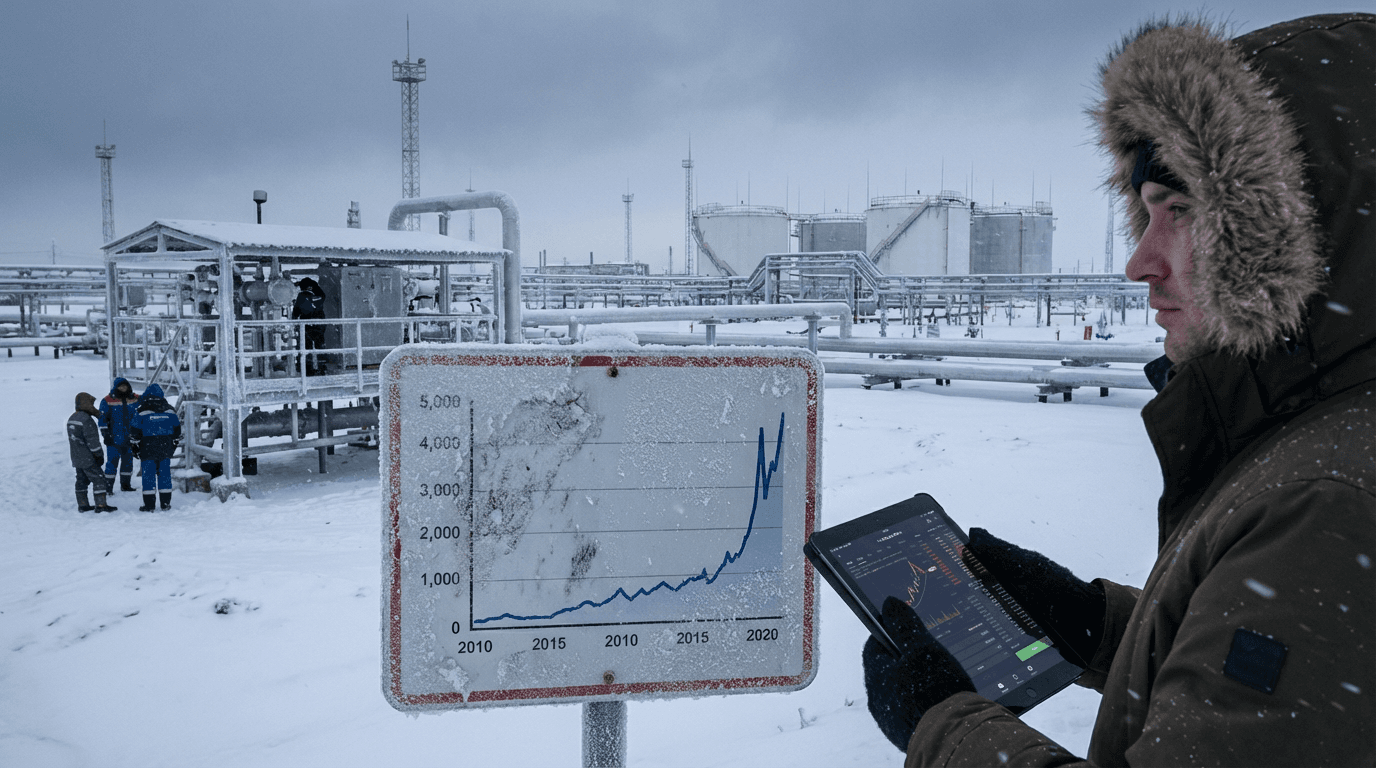
The convergence of severe winter weather and energy markets in late January 2026 resulted in an extraordinary escalation of natural gas and electricity prices across the United States. An Arctic blast swept from the Southwest to the East Coast, disrupting production, strangling supply, and leaving consumers with sticker shock on their utility bills. This event underscored to investors and traders in the SimFi markets the sheer force of weather-driven commodity volatility and the pivotal role that real-world supply constraints play in energy pricing.
The Unprecedented Storm
From January 23 to 27, a formidable Arctic storm enveloped much of the nation, bringing sub-zero temperatures, record snowfall, and ice storms that spread from the Midwest through the Northeast. In Minnesota, temperatures didn’t rise above negative numbers for days, and the storm delivered record snowfall to parts of the Northeast, causing widespread power outages across the Midcontinent and Southeast. This wasn't just an inconvenience—it was a seismic event that exposed vulnerabilities in the nation's energy infrastructure.
Timing was crucial. Major utilities, including Xcel Energy and CenterPoint Energy, swiftly issued notices to customers about impending rate hikes. As Xcel Energy stated, "Cold weather across a large section of the U.S. is affecting production of and demand for natural gas, which leads to higher wholesale prices." What began as a weather forecast rapidly morphed into a wholesale commodity crisis.
Supply Crunch And Price Surge
The production figures tell a compelling story. U.S. natural gas volumes in pipeline samples averaged 66.0 Bcf/d for the week ending January 25, marking a 4.3% decline from the previous week. More notably, pipeline samples revealed a drop of over 9 Bcf/d in U.S. gas production over the weekend and early week as the Arctic blast disrupted field operations. In the Permian Basin, where temperatures plunged into single digits, production losses exceeded 2 Bcf/d, with similar declines reported in Appalachia and the Haynesville.
This phenomenon, known as freeze-offs, occurs when extreme cold envelops multiple points in energy delivery systems. Wellheads and pipes clog as water and heavier NGLs freeze in the wellbore. Gathering systems lose pressure or access to power during extreme weather, and gas processing plants are forced to curtail or operate below capacity. It's a physical constraint that no amount of financial engineering can circumvent.
The price reaction was historic. Henry Hub spot prices surged past $30 per million British thermal units on January 26, while the front-month Henry Hub February 2026 contract doubled over the past week to trade at $7.20 by January 28. Natural gas futures contracts soared more than 70% for the week, setting the commodity on track for its largest weekly increase since 1990 and reaching its highest price since 2022.
For context, typical natural gas prices hover around $4 per dekatherm, but during the peak of the crisis, prices reached approximately $70 per dekatherm—about 15 times the normal rate. An average home furnace uses around one dekatherm per day during winter, meaning the spike directly translated to dramatically higher heating bills for residential consumers.
Impact On Consumers And Real-world Consequences
The theoretical price spikes became a harsh reality for households across the affected regions. Minneapolis resident Annie Dahlquist shared her experience: "A couple of days ago, I got my bill. It was significantly higher. It was like $170 when I was used to it being $75 to $100." Her story echoed across the country as utility companies began passing through the higher wholesale costs to customers.
The Minnesota Department of Commerce acknowledged the severity, noting they would provide more detailed data on gas usage and price impacts later in February. Traders and analysts anticipated the Energy Information Administration would report a 230 Bcf storage withdrawal for the week ending January 23, with a combined 570 Bcf potentially withdrawn over two consecutive weeks as the nation heavily tapped into storage reserves.
Wider Market Implications
Winter natural gas price volatility is routine, but the scale of this event highlighted a larger pattern. Natural gas prices have been historically suppressed by rapidly growing supply, particularly from associated gas produced alongside crude oil from shale wells. This surplus has kept prices artificially low, making the sudden spike all the more dramatic and disruptive.
The event also mirrored global dynamics. Rising electricity prices in New York are driven not only by the increased cost of gas due to the immediate weather event but also by longer-term factors, including the ongoing Russia-Ukraine War and increased LNG exports diverting supplies from domestic markets. These geopolitical and structural factors amplify the weather-driven volatility.
Lessons For Traders And Investors
This winter weather event demonstrated that energy markets remain fundamentally tied to physical reality. Weather disruptions, supply constraints, and infrastructure vulnerabilities can override longer-term price trends and create explosive opportunities for those positioned correctly. For SimFi traders, the lesson is clear: monitor weather forecasts, track production data, and understand that extreme events can rapidly reshape commodity valuations in ways traditional analysis might miss.