
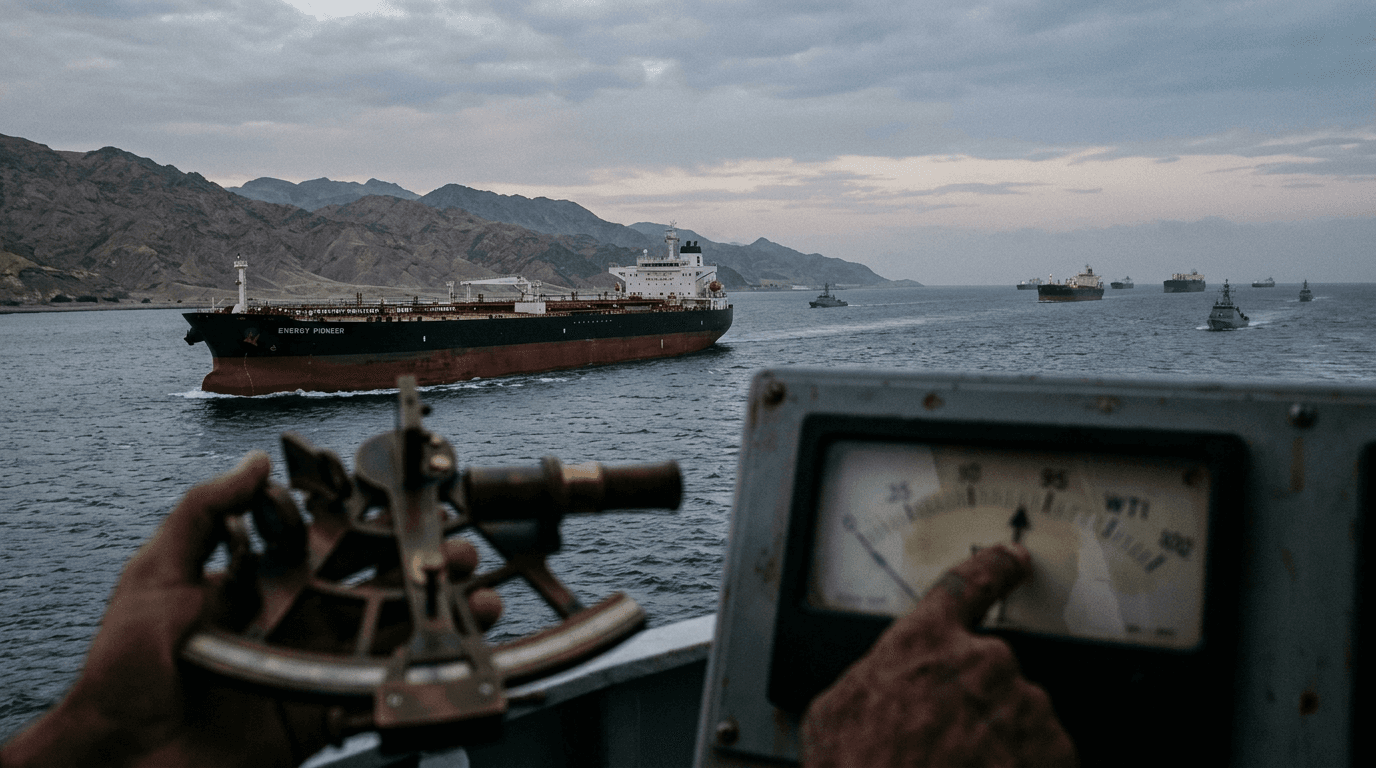
WTI Crude Oil's Ascent to $93: Navigating Tensions and Opportunities
WTI crude oil's climb toward $93 per barrel is more than a mere price fluctuation—it's a reflection of geopolitical tensions, supply constraints, and market volatility. As the Strait of Hormuz faces potential disruption amidst rising US-Iran conflict, crude prices have surged by approximately 42.58% over the past month, presenting both lucrative trading prospects and significant risks for portfolio managers.
The Strait of Hormuz, the world's most vital oil chokepoint, carries about one-third of all seaborne oil. The current situation is unprecedented; mine deployments and military escalations have nearly closed this critical artery, imposing real constraints on global oil supply. This disruption is not mere speculation but a tangible shift in risk dynamics for energy markets, warranting the substantial price premium seen in crude futures.
Geopolitical Pressure Unveiled
The spike in crude prices is a direct result of deteriorating conditions in the Persian Gulf. Rising military tensions between the US and Iran have placed energy infrastructure at risk, prompting traders to seek higher prices as compensation for these palpable threats to international trade routes.
Recent developments have further complicated this volatile landscape. US President Trump's de-escalation efforts, like suspended attacks on Iranian targets, initially led to price drops as markets anticipated potential resolutions. However, persistent Iranian demands and targeted strikes on oil infrastructure, such as the Kuwaiti tanker Al-Salmi, highlight that tensions remain high and could escalate at any moment.
Market Dynamics And Technical Landscape
Beyond geopolitical factors, several market dynamics are sustaining elevated crude prices. A weakening US dollar has boosted oil valuations, making petroleum priced in softer currency more appealing to international buyers. Additionally, uncertainty surrounding Russian crude oil sale waivers has complicated long-term supply dynamics, requiring traders to balance immediate supply concerns with geopolitical outcomes.
Technically, WTI crude oscillates within a trading range, with support at $86 and resistance near $104. This $18 band encapsulates market uncertainty over whether current tensions will escalate or resolve through negotiations. Recent price movements vividly illustrate this volatility, with crude surging from about $88 to highs near $107, before stabilizing in the $95-$97 range amid de-escalation rhetoric.
Analysts' Forecasts
Market analysts' price targets reflect the structural challenges to global oil flows. Consensus forecasts predict crude trading around $99.75 by the end of the current quarter, with estimates approaching $113.72 within a year. These projections assume gradual tension de-escalation but maintain a higher baseline than pre-crisis levels, indicating genuine constraints on Gulf oil supplies rather than speculative excess.
The distinction between structural price support and speculative bubbles is crucial for risk management. The current $93 level is seen as a baseline supported by actual supply disruptions, not irrational exuberance, offering comfort to long-term investors who differentiate between sustainable price levels and unsustainable rallies driven purely by panic.
Trading Implications And Risk Management
For active traders in the energy sector, the current environment offers distinct opportunities and risks. Short-term traders can capitalize on intraday volatility swings triggered by headlines about peace talks, mine-clearing efforts, or infrastructure attacks. However, long-term strategies necessitate careful consideration of geopolitical developments and genuine supply constraints.
Risk management is paramount. Traders should respect established technical levels, maintain disciplined position sizing amid extreme volatility, and stay alert to developments that could swiftly shift market expectations. The stakes are high—any confirmed attack on critical infrastructure could trigger sharp rallies, while successful peace negotiations could lead to dramatic declines.
Key Factors To Monitor
Several critical developments require constant attention from market participants. Any resolution regarding Strait of Hormuz access—whether through mine-clearing efforts, diplomatic breakthroughs, or further military escalation—could prompt significant price movements. Additionally, the outcome of US-Iran peace talks will likely dominate headlines and drive near-term volatility regardless of the ultimate resolution.
OPEC production decisions also hold significant weight, as member nations may capitalize on the supply-constrained environment to strategically manage output and maximize revenues. Global economic indicators will shape crude demand expectations, with signs of economic weakness potentially offsetting supply concerns through reduced demand.
Navigating Forward
WTI crude's approach to $93 underscores that genuine supply concerns now dominate the energy market, displacing speculative considerations. The Strait of Hormuz disruption presents a real constraint on global oil flows, and geopolitical risks remain elevated despite de-escalation attempts.
For traders and investors, success in this environment demands respect for technical levels, vigilant attention to geopolitical headlines, and disciplined risk management. Volatility will likely persist as long as Middle East tensions remain unresolved, making energy markets a domain where informed decision-making and current intelligence provide decisive competitive advantages.