
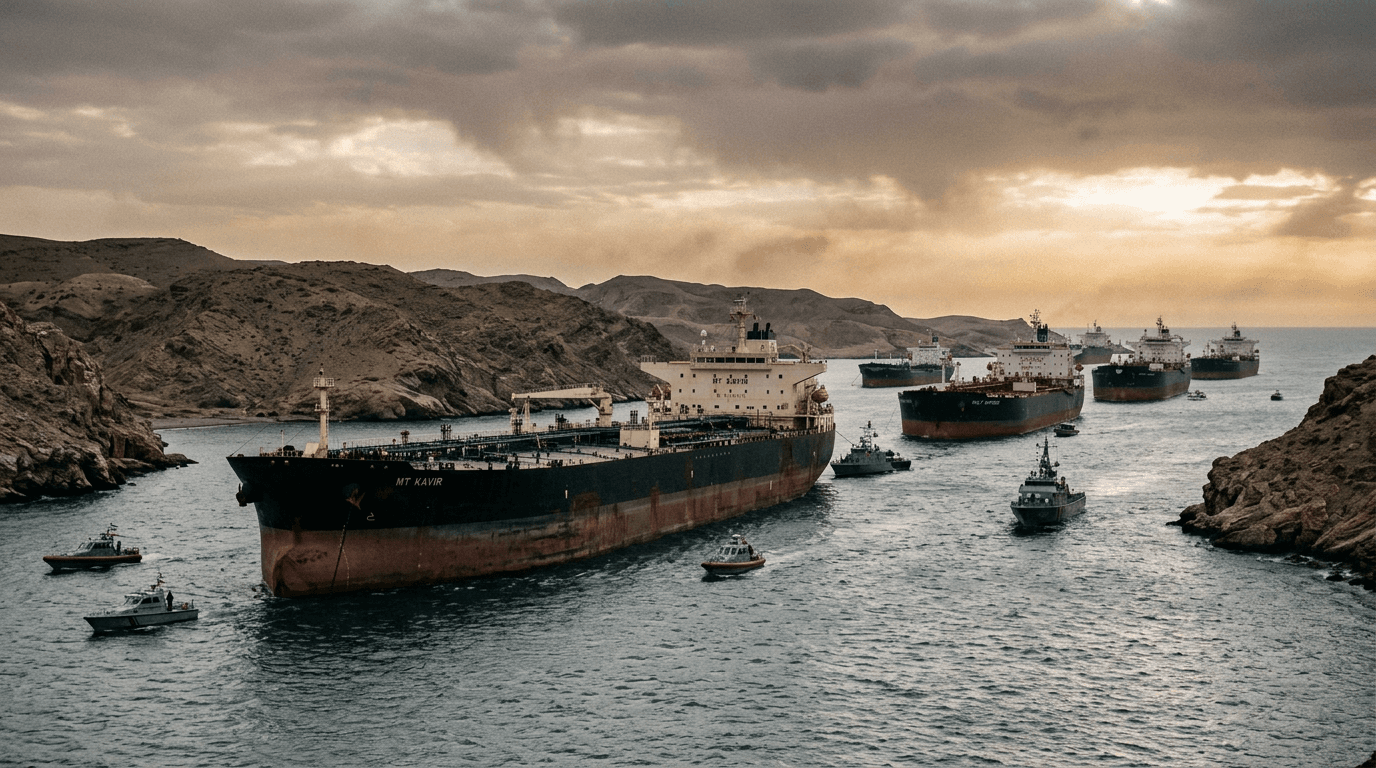
The energy markets are experiencing one of the most dramatic supply shocks in recent memory, as geopolitical tensions in the Middle East have sent crude oil prices soaring to levels not seen in six months. The blockade of the Strait of Hormuz, triggered by escalating US-Israel-Iran conflict, has created a perfect storm for oil traders: a de facto closure of the world's most critical maritime chokepoint, stranded tankers, and genuine fears of a prolonged supply deficit that could push prices even higher in the coming weeks.
Understanding The Current Market Surge
WTI crude oil has rallied approximately 20 percent over the past week alone, with prices bouncing aggressively between $80 and $84 per barrel as of early March 2026. The momentum behind this rally reflects something deeper than just typical geopolitical noise—it represents a fundamental shift in how markets are pricing energy supply risk. On March 5, WTI surged 8.5 percent to close at $81.01, while Brent crude climbed to $85.41. By March 6, crude oil had reached $91.27 per barrel, up 12.67 percent from the previous day. This isn't the gradual, muted response we sometimes see to international tensions. This is the market pricing in genuine scarcity.
The key driver is simple but severe: approximately 150 tankers are currently stranded outside the Strait of Hormuz, unable to pass through after Iranian naval forces deployed ultra-fast missile-launching vessels and drone swarms that have already struck commercial shipping. The Iranian Revolutionary Guard Corps has effectively declared that any vessel entering without authorization will be treated as a legitimate target. Technically, the strait remains open, but practically speaking, no shipping company is willing to risk their cargo and crew to find out if that warning is serious. When supply chains freeze due to fear, prices move sharply higher.
The Strait Of Hormuz: Why It Matters
Understanding the magnitude of this crisis requires grasping just how critical the Strait of Hormuz is to global energy markets. Approximately 20 percent of the world's daily oil consumption flows through this narrow waterway between Iran and Oman. That translates to roughly 21 million barrels per day in normal times. When that flow stops, global markets convulse.
The immediate consequences are already visible. Shipping costs from the US Gulf to Asia have skyrocketed to astronomical levels—roughly $14.50 per barrel, a dramatic premium that gets passed along the supply chain. The International Energy Agency has issued a stark warning: if the blockade persists, the market could flip from a projected 2026 surplus to a massive deficit. Qatar has already halted its largest LNG plant, and Saudi Arabia's Ras Tanura refining complex—one of the world's largest with 550,000 barrels per day capacity—was forced offline after a drone attack sparked a major fire. These aren't minor disruptions; they represent substantial loss of global production capacity.
Technical Analysis And Price Targets
From a technical perspective, WTI is displaying classic bull market behavior with concerning overbought signals. The Relative Strength Index (RSI) has climbed above 70, a level that typically suggests profit-taking is justified. Nevertheless, momentum remains aggressive, and traders are eyeing resistance levels at $84.79-$85.00. If prices break through this zone, the next targets become $87.09 and potentially $90.00. On the downside, critical support sits at $81.33, with the $78.24 level serving as the final defensive floor for bulls.
Market analysts are increasingly discussing scenarios where Brent crude approaches $90-$100 or even touches $120 depending on how long the disruption persists. Goldman Sachs raised its Q2 2026 oil price forecast specifically due to Strait of Hormuz closure concerns. However, some analysts project a spike-and-recovery pattern, expecting Brent to settle back toward the $70-80 range by end of week—though this forecast carries significant downside risk if Iranian retaliation escalates further.
Broader Market Implications
The impact extends well beyond crude oil futures. Currency pairs like USD/CAD and AUD/USD respond directly to oil price movements, with petro-currencies experiencing immediate repricing. Consumer gasoline prices are already rising; one report showed a 12-cent jump per gallon for regular unleaded—the largest single-day increase since March 2022. This could reignite inflationary pressures that central banks have spent years working to control.
The US government has attempted mitigation strategies, including granting a 30-day tariff waiver to Indian refiners to purchase Russian crude and exploring ways to influence the paper market. However, with the Strategic Petroleum Reserve only at 60 percent capacity, options for flooding the market are limited.
Takeaways For Traders
The current environment presents both risks and opportunities. WTI's 20 percent weekly rally and six-month highs reflect genuine supply concerns, not speculation. Traders should monitor the $84.79-$85.00 resistance level closely, as a breakout could accelerate moves toward $90. Simultaneously, watch for diplomatic breakthroughs—a swift resolution could trigger rapid price reversals. The RSI overbought condition suggests caution on long entries at current levels, but short positions carry their own risks in a supply-shock environment where bad news can accelerate rallies further.