
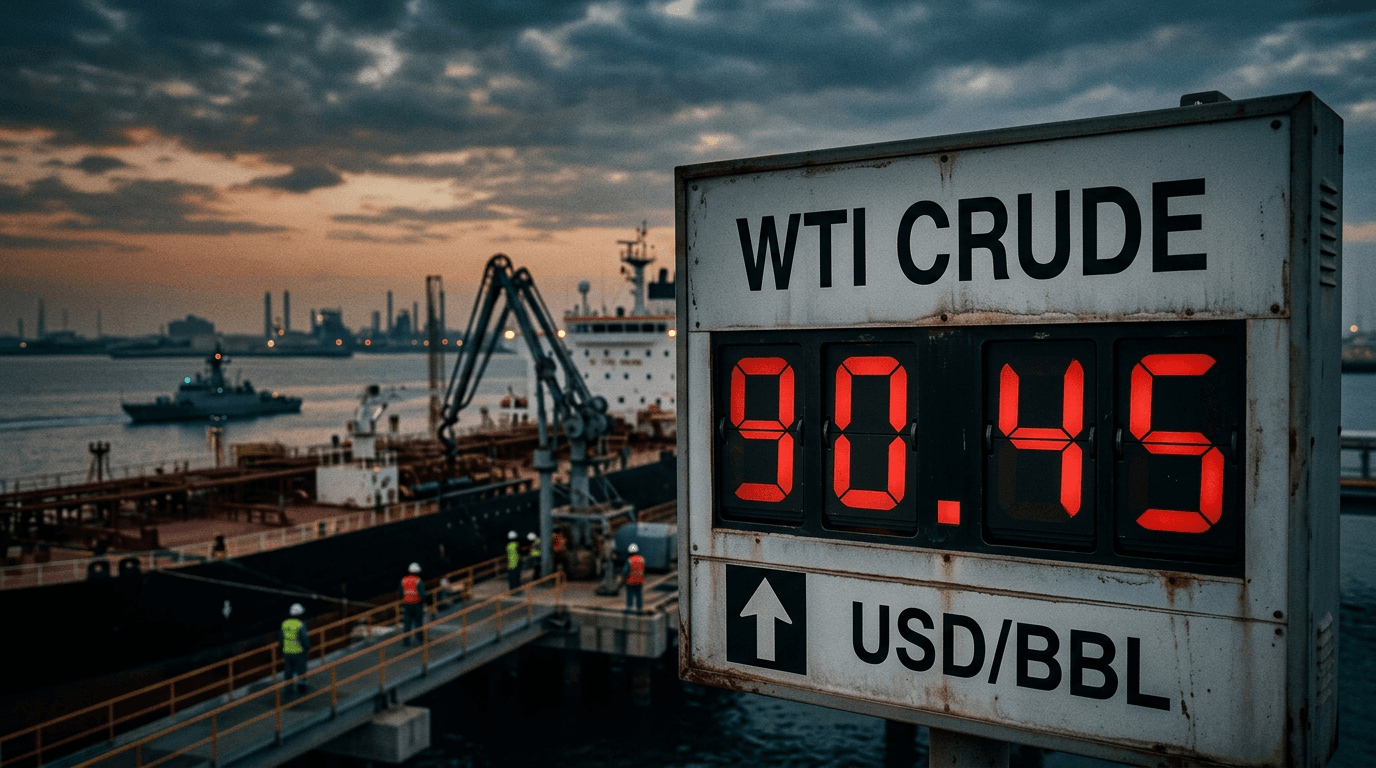
West Texas Intermediate crude oil has surged past the $90 per barrel mark for the first time in over a year, marking a dramatic shift in global energy markets. This spike, driven by escalating geopolitical tensions in the Middle East, represents one of the most significant moves in the oil market in recent memory. On a single day, WTI jumped over 12 percent, with the weekly gain reaching 35.63 percent—the largest weekly increase since oil futures data collection began in 1983. For traders and investors monitoring energy markets, this price action signals that the fundamentals supporting crude have shifted dramatically, and understanding these drivers is essential for navigating the volatility ahead.
The Middle East Conflict And Energy Disruption
The current oil price surge stems from intensifying geopolitical tensions centered on Iran and its strategic importance to global oil supply. These escalating conflicts have created immediate concerns about energy infrastructure and the ability of major oil-producing nations to maintain exports. The market is pricing in the possibility that the disruption could persist for weeks or even longer, fundamentally altering the supply-demand balance that has kept oil prices relatively moderate in recent months.
What makes this situation particularly acute is the involvement of key Gulf producers. Qatar's Energy Minister indicated that Gulf exporters would halt production within days if tankers cannot pass through critical shipping routes. This threat—credible given the current situation—has sent shockwaves through oil markets. When the world's largest oil-producing region signals production cuts, the market responds with sharp price movements as traders immediately reprrice risk and scarcity into their valuations.
The Strait Of Hormuz - Where Supply Meets Chokepoint Risk
At the heart of this energy crisis lies the Strait of Hormuz, one of the world's most critical chokepoints for global oil supply. Normally, this narrow waterway handles approximately 20 million barrels of oil and petroleum products per day—roughly one-fifth of all globally traded crude. Any disruption to traffic through the strait creates immediate supply anxiety, and when the disruption appears potentially significant or sustained, traders react with urgency.
Recent reports indicate that commercial traffic through the strait has significantly decreased as shipping companies reassess risks. Some producers have already begun slowing or halting production as a precautionary measure. From a market perspective, this is precisely the type of scenario that triggers rapid repricing. The market doesn't wait for confirmed supply losses; it prices in the risk immediately. As uncertainty persists around the strait, oil volatility is likely to remain elevated, with the $90 mark now firmly within reach and triple-digit pricing emerging in some global benchmarks.
Production Cuts And The Supply Tightening Effect
Beyond the threat of disruption, actual production cuts are already underway across Gulf producers. Kuwait, OPEC's fifth-largest producer, has announced precautionary production reductions. Saudi Arabia has raised oil prices for Asian buyers and has begun rerouting shipments through Red Sea ports to bypass the Hormuz chokepoint entirely. These moves reflect the serious nature of the situation and demonstrate that major producers are taking protective action now rather than waiting for further deterioration.
The combination of potential infrastructure disruptions, actual production cuts, and rerouting logistics creates a perfect storm for oil prices. Supply is tightening at precisely the moment when demand remains relatively robust. The market is also factoring in the possibility of even greater logistical challenges should tensions continue to escalate. This forward-looking pricing mechanism is what has driven the dramatic weekly gains and kept momentum firmly to the upside.
Technical Analysis Points To Higher Targets
From a technical perspective, oil's move above $90 represents a significant breakout that suggests further gains could unfold. WTI crude has rallied strongly from the middle of its long-term descending channel, and price action indicates an immediate target of $110. Should this resistance level break—which analysts consider likely given ongoing supply shortages—oil could move toward $125 to $130. A sustained break above $130 would open the door to prices approaching $150, levels not seen since the oil spike of 2008.
Brent crude, the international benchmark, has similarly broken through key technical levels. After clearing resistance around $80, Brent is targeting $100 initially, with potential for moves toward $125 to $135 if supply concerns persist. The technical setup across multiple crude benchmarks is decidedly bullish, reinforcing the fundamental narrative of supply tightness and demand resilience.
Key Takeaways For Traders
This oil rally reflects genuine supply concerns rather than speculative excess. With the Strait of Hormuz facing disruption, major producers announcing production cuts, and technical levels breaking to the upside, the risk-reward for oil prices remains tilted toward higher levels in the near term. Traders should monitor developments around the strait closely, watch for official statements from Gulf producers, and remain aware that geopolitical developments can shift market direction rapidly.
For energy-exposed sectors and commodity traders, this environment creates both risks and opportunities. Understanding the fundamental drivers—supply disruption, production cuts, and geopolitical risk—is essential for positioning appropriately in this volatile market.
---