
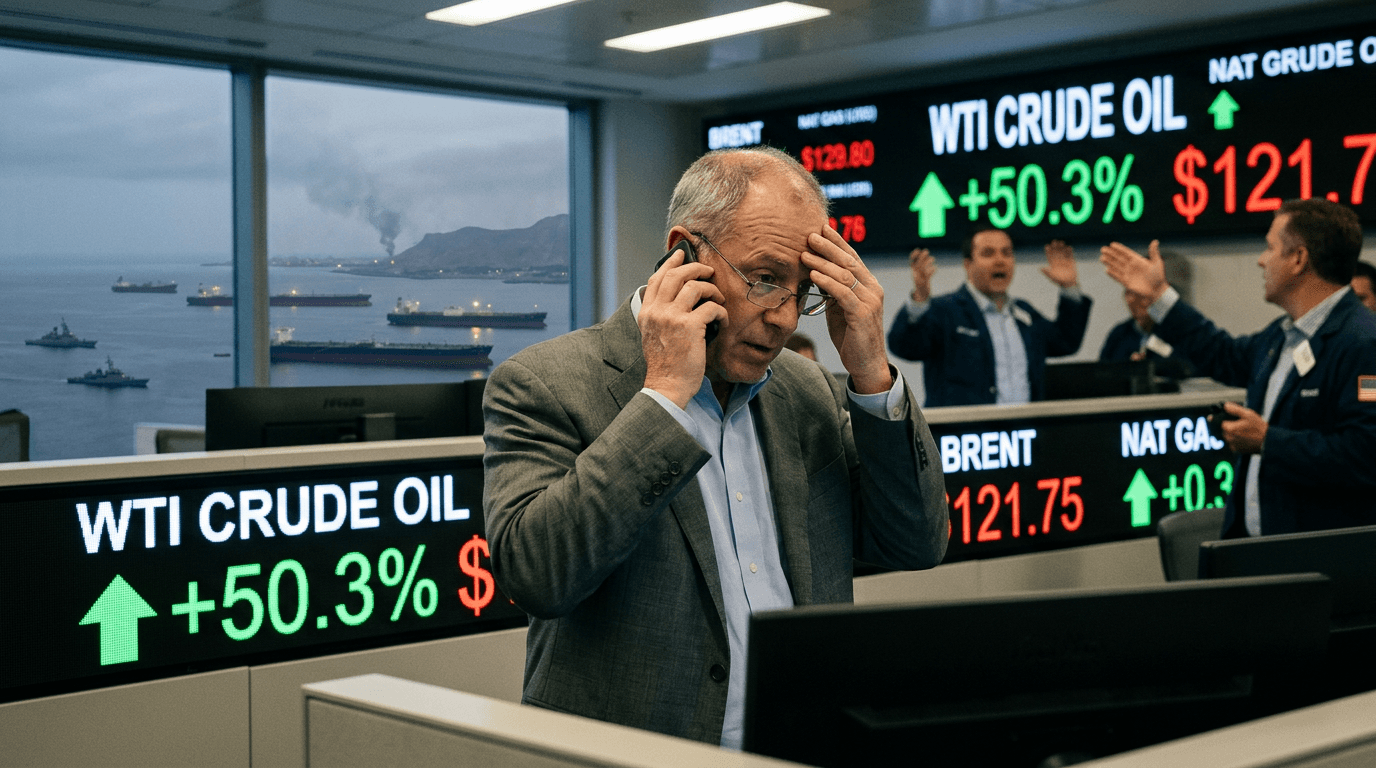
The global oil market is experiencing unprecedented volatility as crude prices surge past $90 per barrel following the effective closure of the Strait of Hormuz. This critical shipping chokepoint, through which approximately 20% of the world's daily oil supply flows, has been virtually shut down after recent US-Israeli military strikes on Iran, creating one of the most significant energy supply disruptions in modern history. For traders, investors, and energy consumers worldwide, the implications are far-reaching and multifaceted.
Understanding The Strait Of Hormuz Crisis
The Strait of Hormuz represents far more than just a geographical passage between Iran and Oman. It serves as the arterial system for global energy commerce, with roughly 20 million barrels of crude oil and 10.8 billion cubic feet of liquefied natural gas transiting daily under normal conditions. The recent escalation has effectively halted this flow, with tankers refusing to navigate the corridor due to security risks and energy infrastructure under attack. What makes this disruption particularly severe is that even with full utilization of available pipeline bypasses, approximately 16 million barrels per day of oil flows remain at risk from a complete closure. This is not a temporary inconvenience—it represents a systemic shock to global energy markets.
The Price Surge Explained
Brent crude oil surged to nearly $94 per barrel by March 9, representing roughly a 50% increase since the start of 2026 and marking the highest level since September 2023. Some sources indicate prices have pushed even closer to $120 per barrel as the full scope of the disruption becomes apparent. The US Energy Information Administration has dramatically revised its 2026 Brent forecast from $58 per barrel to $79 per barrel—a significant upward shift reflecting the severity of the supply shock. For WTI crude specifically, the surge past the $90 mark signals trader expectations of prolonged supply constraints and heightened geopolitical risk premiums.
This price movement is not speculative in nature. It reflects genuine supply constraints. Middle Eastern producers are shutting in output due to the inability to move barrels to market, while refineries globally struggle to manage incoming shipments. Storage tanks are filling up, creating a bottleneck that exacerbates pricing pressure. The market is pricing in uncertainty, and that uncertainty has a cost.
Ripple Effects Across The Global Economy
The Strait of Hormuz closure impacts far more than crude oil alone. Approximately 20% of global liquefied natural gas supply flows through these waters, and prices have responded dramatically. Northeast Asian LNG prices have more than doubled to $22.5 per million BTU, directly impacting heating and electricity costs across Asia. Additionally, the strait handles roughly 30% of global fertilizer exports and 84% of Middle Eastern polyethylene, a widely used plastic in packaging, bottles, and utilities. These cascading supply disruptions create what economists term a stagflation risk—the simultaneous occurrence of elevated inflation and economic stagnation.
The International Monetary Fund estimates that every 10% sustained increase in oil prices reduces global economic output by 0.1 to 0.2 percent while adding 0.4 percentage points to global inflation. With prices currently running approximately 30% above pre-conflict levels, the IMF's framework implies a potential 1.2 percentage point addition to global inflation before accounting for direct disruption to fertilizer supply chains. For the average American consumer, this translates into visible pain at the pump—gasoline prices have already climbed 17% since the conflict's onset, with analysts predicting diesel could reach $5 and gasoline $4 per gallon in many locations if the closure persists.
Market Implications And Duration Uncertainty
The central variable determining financial market stability is duration. While broader equity markets have declined modestly—the MSCI World index down 2.8% since the conflict began—futures markets suggest traders expect relatively near-term resolution. Front-month Brent futures trade near $87, the third-month at $82, and the sixth-month at $77, indicating expectations that supply will gradually normalize. However, this optimism carries substantial downside risk. Should Brent remain elevated at approximately 30% above pre-conflict levels for more than two months, the macroeconomic impact will register in hard economic data, forcing central banks into an adverse policy dilemma.
Strategic Positioning For Traders And Investors
For market participants, the current environment presents both challenges and opportunities. Energy importers such as India, Japan, and South Korea face heightened inflation pressures and current account deficits. India's current account deficit could expand significantly if oil prices sustain elevated levels. China and the United States, by contrast, are positioned to outperform regional peers—the US as a net energy exporter and China through its coal-heavy energy mix and substantial crude stockpiles.
The duration question dominates. If geopolitical tensions ease and shipping resumes within weeks, current elevated prices may prove temporary. If disruption persists, energy inflation will become entrenched, forcing difficult central bank policy choices between fighting imported inflation and supporting fragile domestic demand. For traders, monitoring shipping activity, geopolitical developments, and storage levels will be critical to navigating this volatile landscape.