
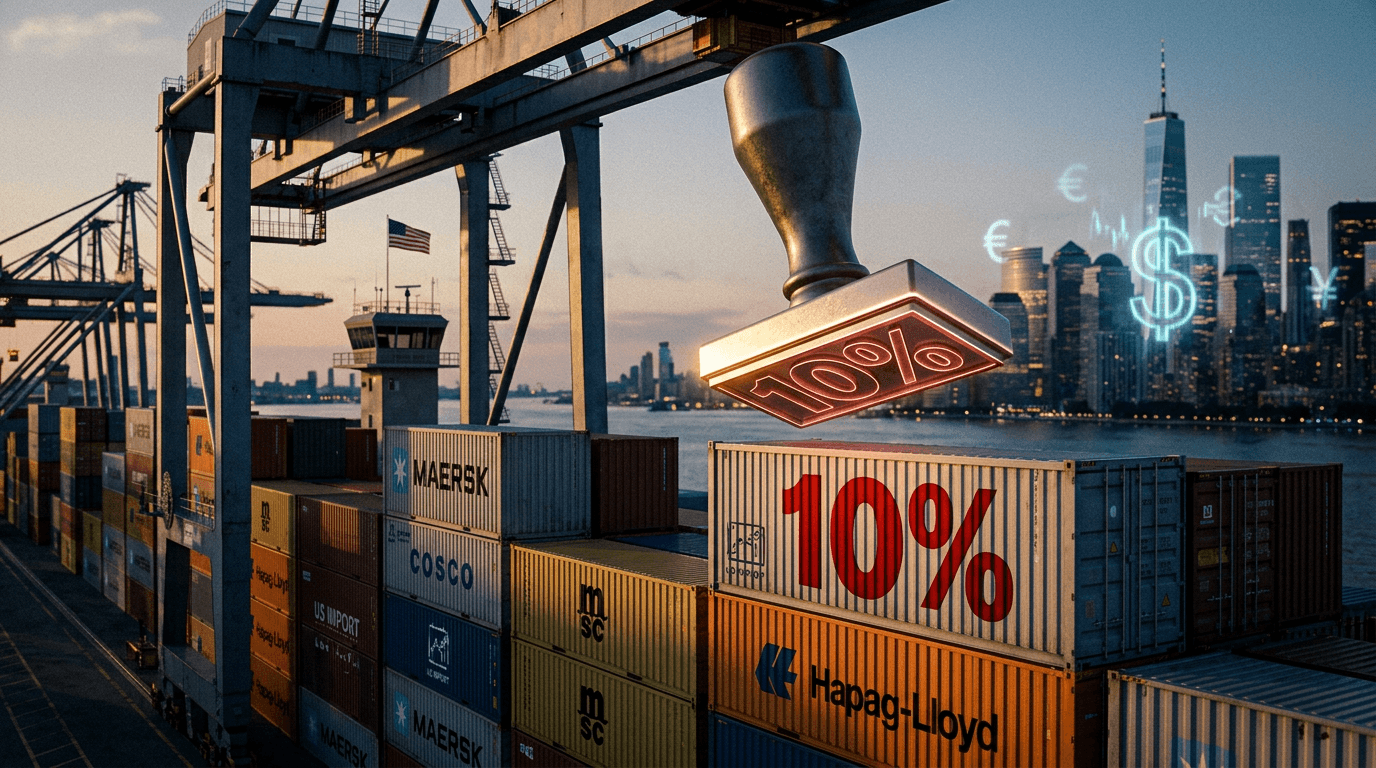
The United States trade landscape shifted significantly on February 20, 2026, when President Trump issued a proclamation imposing a 10% temporary import surcharge on goods entering the country. This measure, effective February 24, 2026, represents a major policy move designed to address what the administration characterizes as fundamental international payment imbalances. For traders, investors, and businesses monitoring global market dynamics, understanding the details, scope, and implications of this surcharge is essential to navigating the evolving trade environment.
Understanding The Temporary Import Surcharge
The proclamation invokes Section 122 of the Trade Act of 1974, which grants the President authority to implement import surcharges of up to 15% for periods not exceeding 150 days when the nation faces fundamental international payment problems. The Trump administration determined that large and serious balance-of-payments deficits constitute such a condition, warranting intervention through ad valorem duties—tariffs calculated as a percentage of the imported good's value rather than a flat fee per unit.
The 10% surcharge will remain in effect for exactly 150 days, concluding on July 24, 2026, unless Congress extends the measure. This temporary nature distinguishes the surcharge from permanent tariff structures and provides markets with a defined timeline for adjustment. The administration has already signaled further action, with Trump announcing on February 21 that the rate would increase to 15% pending additional legal documentation, though no official proclamation has yet been issued as of early February.
The Rationale: Addressing Payment Imbalances
The administration's justification centers on addressing what it views as structural trade imbalances. According to the proclamation, advisors determined that the United States faces a substantial goods trade deficit and current account imbalance that threatens economic stability and national interests. By increasing the cost of imported goods through the surcharge, policymakers aim to incentivize domestic consumption of American-made products, theoretically reducing the trade deficit and improving the overall balance-of-payments position.
This approach reflects a mercantilist perspective on trade, prioritizing the reduction of import volumes over the efficiency gains typically associated with free trade. The administration argues that without such measures, the U.S. currency faces depreciation risk in foreign exchange markets and that import restrictions represent necessary tools for protecting economic and national security interests.
Exemptions And Affected Sectors
Not all imports face the 10% surcharge. The proclamation explicitly excludes certain categories deemed critical to the U.S. economy or essential for the measure to function effectively. These exemptions include critical minerals and metals used in currency and bullion, energy products, pharmaceuticals, passenger vehicles and related parts, certain aerospace products, and information materials. Additionally, goods from Canada and Mexico complying with USMCA standards receive preferential treatment.
The exemptions reveal strategic priorities within the policy design. Excluding energy products suggests concern about domestic fuel prices and inflation, while pharmaceutical exemptions reflect reliance on international supply chains for medical inputs. Vehicle parts exemptions indicate an attempt to balance trade restrictions with the needs of American automotive manufacturing, which depends heavily on integrated North American supply chains.
Implications For Global Trade And Markets
The surcharge introduces significant friction into global trade flows and pricing mechanisms. Companies importing goods from outside the excluded categories face immediate cost increases that may be passed to consumers, potentially affecting inflation dynamics. The USD could strengthen as the surcharge makes foreign goods more expensive relative to domestic alternatives, shifting consumer and business purchasing patterns toward American products and reducing import demand.
Supply chain managers must reassess their sourcing strategies. Some businesses may accelerate plans to reshore production to the United States, while others explore whether products can be reclassified or routed through jurisdictions offering preferential treatment. The temporary nature of the surcharge creates additional complexity—companies must decide whether to make structural changes or implement temporary accommodations for the 150-day window.
What Traders And Investors Should Monitor
Several critical variables warrant close attention. First, the extent to which companies absorb costs versus passing them to consumers will influence inflation expectations and Federal Reserve policy responses. Second, the actual implementation of the promised 15% increase would substantially amplify economic disruption. Third, potential retaliatory measures from trading partners could trigger additional tariffs on American exports, affecting multiple sectors.
The stock market implications remain uncertain but broadly dependent on sector exposure to import cost increases and retaliation risk. Export-oriented companies face headwinds from potential foreign retaliation, while domestically-focused manufacturers may benefit from reduced import competition. Currency traders should monitor whether the surcharge achieves its stated goal of reducing the trade deficit and supporting the dollar.
Key Takeaway For Market Participants
This temporary import surcharge represents a decisive shift in U.S. trade policy with immediate and measurable consequences for cost structures, currency valuations, and capital allocation decisions. Understanding the exemptions, timeline, and potential escalation to 15% is essential for risk management and strategic planning. As markets adjust to this new policy regime over the coming weeks, traders should remain vigilant for implementation details, exemption clarifications, and signals regarding the potential 15% increase.