
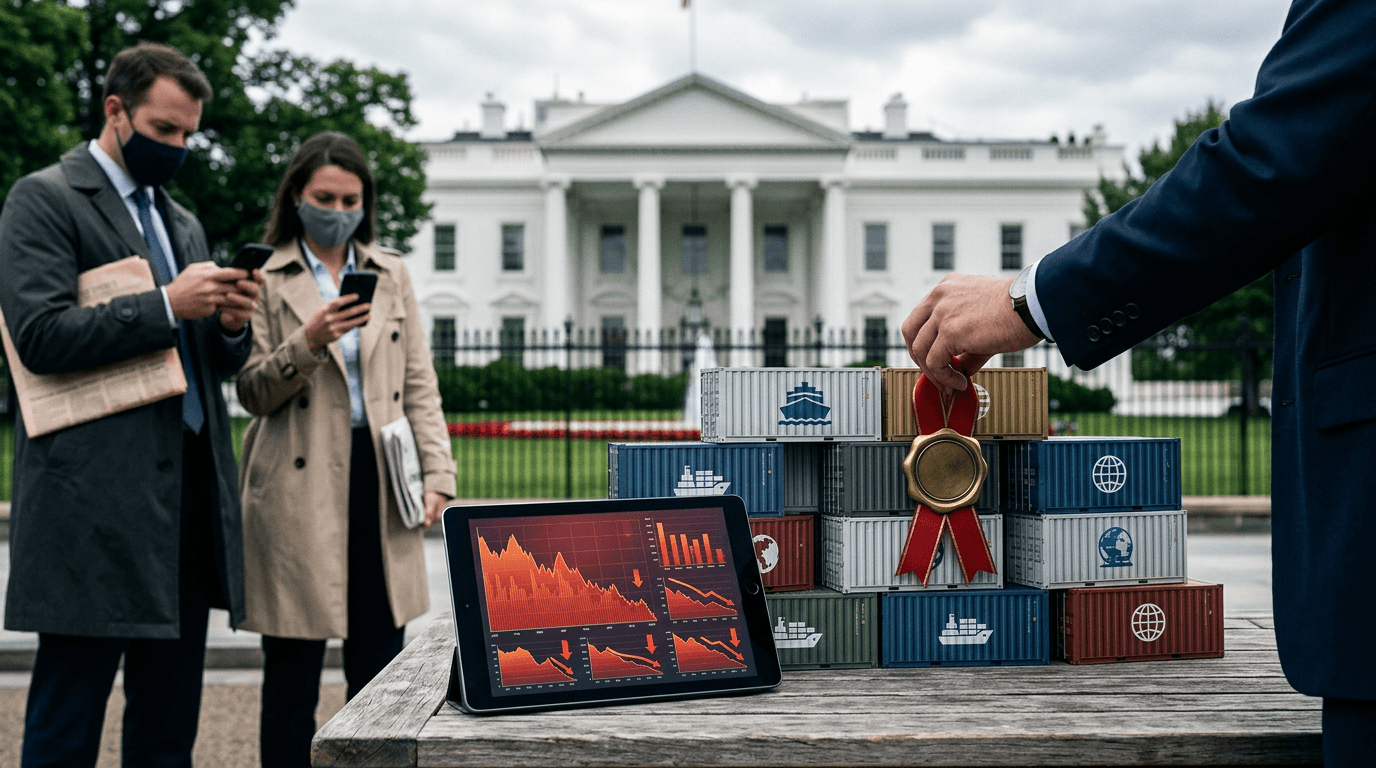
The United States is facing its most significant balance-of-payments crisis in decades, prompting the White House to invoke emergency trade authorities and impose sweeping import restrictions. On February 24, 2026, President Trump signed a proclamation imposing a 10 percent temporary import surcharge, citing fundamental international payments problems that threaten the nation's economic and national security interests. This action marks a watershed moment in trade policy and signals an aggressive pivot toward protectionism as officials grapple with deficits that have nearly doubled over the past decade.[3][4]
Understanding The Balance-of-payments Crisis
To understand why Washington is taking such dramatic action, it's essential to grasp what the balance-of-payments deficit actually measures. The current account deficit tracks three key ways money flows in and out of the United States: the trade balance of goods and services, returns on investments and labor income, and voluntary transfers like remittances.[4] In 2024, the United States recorded a current account deficit of negative 4.0 percent of gross domestic product—a troubling figure that's nearly double the approximately 2.0 percent deficit that prevailed between 2013 and 2019.[4]
More alarming to policymakers is the shift in the primary income balance. For the first time since 1960, the United States is experiencing a negative primary income balance, meaning the country is now transferring more money overseas through remittances and other income flows than it's receiving.[4] This represents a structural shift in America's economic position—one that officials argue threatens the nation's ability to finance its spending and could erode investor confidence in the long term.[3]
The Temporary Import Surcharge: Scope And Structure
The new import surcharge, authorized under Section 122 of the Trade Act of 1974, applies a 10 percent ad valorem duty on most articles imported into the United States for a 150-day period, taking effect February 24 at 12:01 a.m. Eastern Standard Time.[3][4] The proclamation emphasizes that this measure is temporary and designed to address what the administration characterizes as fundamental international payments problems that endanger U.S. economic and national security.[3]
However, the surcharge comes with significant exemptions, reflecting broader economic considerations. Goods excluded from the tariff include critical minerals, metals used in currency, energy and energy products, certain natural resources and fertilizers that cannot be produced domestically in sufficient quantities, and a range of agricultural products including beef, tomatoes, and oranges.[4] Pharmaceuticals, certain electronics, passenger vehicles and related parts, aerospace products, and informational materials also receive exemptions.[4] Additionally, goods already subject to Section 232 steel and aluminum tariffs, as well as USMCA-compliant goods from Canada and Mexico, remain untouched.[4]
Economic Rationale And Market Implications
The White House argues that the import surcharge will stem the outflow of U.S. dollars to foreign producers and incentivize the return of domestic production.[4] By restricting imports through higher tariffs, officials reason, the United States can correct its balance-of-payments deficit while simultaneously creating jobs and lowering consumer costs—though the last claim remains hotly debated among economists.[4]
For forex markets, the implications are significant. A 10 percent tariff on most imports is expected to boost demand for the U.S. dollar as foreign producers reduce shipments and domestic alternatives become more attractive. Export-dependent economies that rely heavily on access to American markets face considerable pressure, as the tariff effectively increases the cost of their goods to U.S. consumers and businesses.[4]
Industry Impact And Strategic Considerations
The exemptions built into the proclamation reveal the administration's acknowledgment that a blanket tariff would create economic damage in strategically important sectors. By carving out agriculture, pharmaceuticals, and automotive products, officials have prioritized sectors with significant political constituencies and economic importance. The aerospace exemption reflects national security considerations, while pharmaceutical exemptions acknowledge supply chain vulnerabilities that a broad tariff could exacerbate.[4]
Importers and manufacturers relying on foreign inputs now face a critical 150-day window to assess their supply chain strategies. Some may rush to bring inventory into the country before tariffs take effect, while others may accelerate efforts to source from domestic suppliers or USMCA partners exempt from the surcharge.[3][4]
Looking Ahead: Uncertainty And Evolution
The future trajectory of this policy remains uncertain. The proclamation's 150-day duration allows for potential extension by Congress, and the administration has indicated that tariffs will remain "a critical tool" in its trade strategy.[4] Meanwhile, legal challenges to the surcharge are anticipated, though Section 122 provides broader presidential authority than some alternative trade mechanisms recently challenged in court.[6]
For traders, businesses, and investors, the key takeaway is clear: the U.S. balance-of-payments crisis is reshaping trade policy in real time. Whether this temporary measure succeeds in rebalancing trade relationships or triggers retaliatory measures from trading partners will significantly influence markets, employment, and inflation over the coming months. The next 150 days will be critical in determining whether this emergency measure represents a turning point in American trade policy or merely a prelude to more aggressive interventions.