
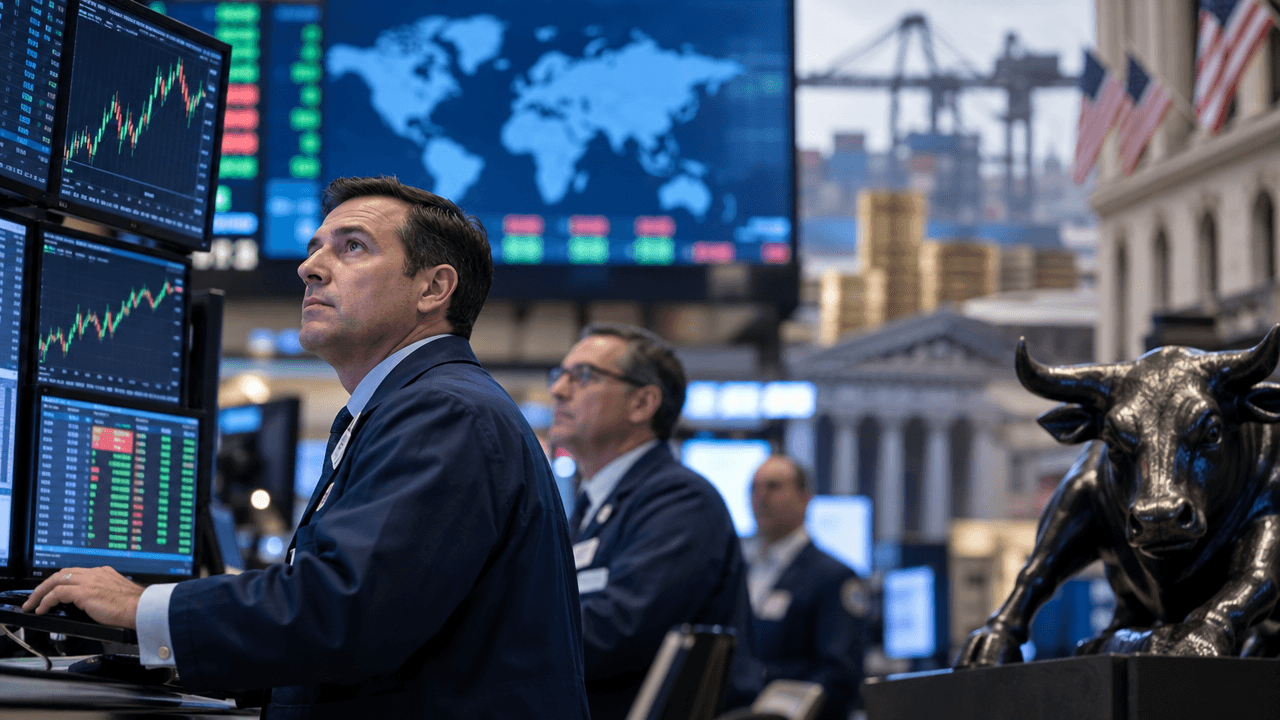
Asian and European equities staged a broad rebound on Thursday as investors returned to technology and cyclical stocks after Wall Street recovered from a sharp sell-off. The recovery was tentative rather than euphoric: markets remained focused on stretched artificial intelligence valuations, the cost of the global AI buildout, and the potential economic damage from a new round of U.S. tariffs. [1][4]
The bounce also benefited from unusually thin trading conditions. U.S. markets were closed for Thanksgiving, with a shortened session scheduled for Friday, limiting the amount of fresh price discovery available to global investors. That helped calm markets, but it also means the rebound will face a more meaningful test when regular U.S. trading resumes. [4][7]
What Drove The Rebound
Asian equities moved higher after Wall Street managed to recover from deep intraday losses. An MSCI gauge of Asian-Pacific shares gained about 0.9%, marking only its second daily advance in 11 sessions, while Europe’s Stoxx 600 rose approximately 1.7%. In early European trading, regional stocks were up around 1.6%, extending the positive tone established in Asia. [1][6]
Technology shares led much of the recovery. Semiconductor and other AI-linked companies, which had suffered some of the sharpest losses during the preceding sell-off, attracted dip buyers. Japanese chip-related stocks were particularly strong, while beaten-down technology shares in Seoul, Taipei, and other Asian markets also advanced. [3][7]
This pattern illustrates an important market dynamic. When investors remain confident in a long-term theme but become concerned about its price, they often sell aggressively before selectively buying the strongest companies at lower valuations. The result can be a sharp rebound even when the underlying debate has not been resolved.
Ai Optimism Meets A Valuation Test
The artificial intelligence investment cycle remains one of the most powerful forces influencing global equities. Demand for chips, data centers, cloud services, and related infrastructure has supported major technology companies and helped drive strong gains in several equity benchmarks.
However, investors are increasingly asking whether the enormous capital spending required to build AI capacity will generate sufficient returns. Concerns have also emerged around the financing structure of the industry, the potential for circular transactions between AI companies and suppliers, and the possibility that revenue growth may not justify current valuations. [2][14]
That does not mean the AI theme has ended. It means the market is becoming more selective. Companies with visible cash flow, durable customer demand, strong balance sheets, and a credible path to profits may continue to attract capital. Businesses whose valuations depend mainly on distant expectations could remain vulnerable to further volatility.
For traders, the lesson is straightforward: a one-day technology rebound is not the same as confirmation that the sector’s correction is over. Price action, earnings revisions, financing conditions, and guidance on capital expenditure all deserve attention.
Tariffs Add A Second Layer Of Uncertainty
The latest U.S. tariff proposals also shaped Thursday’s trading. The measures target major trading partners, including China, the European Union, India, Japan, and South Korea. Markets initially feared a new escalation in global trade tensions, but the proposed tariffs appeared less damaging than investors had expected, allowing risk appetite to recover. [3][8]
Tariffs can affect markets through several channels. Import duties may raise costs for businesses, reduce consumer purchasing power, disrupt supply chains, and encourage retaliatory action from affected countries. They can also complicate central-bank decisions by increasing inflation pressure while weakening economic growth.
For multinational companies, the impact depends on production locations, supplier relationships, pricing power, and exposure to international demand. A company able to pass higher costs to customers may be more resilient than one operating on thin margins. Investors should therefore look beyond headline tariff percentages and examine company-specific exposure.
Why The Rally May Remain Fragile
The rebound should be viewed as a stabilization attempt, not a definitive change in trend. Recent sessions have produced unusually large swings, particularly in Asian technology markets. Before Thursday’s recovery, Asian technology stocks had been hit hard by weakening confidence in the AI trade, while the Kospi and Taiex had each fallen about 6% and 5%, respectively, during the recent period of stress. [10][12]
Interest-rate expectations remain another risk. If tariffs lift inflation or economic data stays firm, investors may reduce expectations for monetary easing or price in a more restrictive policy stance. Higher bond yields can pressure growth stocks because they reduce the present value of future earnings.
The holiday schedule adds another complication. Thin volume can exaggerate both gains and losses, as relatively small orders move prices more than usual. Traders should be cautious about interpreting a holiday-session rally as proof of broad institutional conviction.
Practical Takeaways For Traders
First, distinguish relief rallies from trend reversals. A market recovering after a sharp decline may still be forming a lower high, especially when the original catalysts remain active.
Second, monitor leadership. A healthy rebound generally broadens beyond a narrow group of AI and semiconductor names. Strength in banks, industrials, consumer companies, and smaller stocks would provide stronger evidence that risk appetite is improving.
Third, manage position size around policy headlines. Tariff announcements can produce rapid moves across equities, currencies, commodities, and interest rates. Defined risk levels and smaller exposures can help traders avoid turning short-term volatility into outsized losses.
Finally, focus on evidence rather than narrative. Earnings growth, cash generation, valuation, credit conditions, and market breadth offer more useful signals than headlines alone.
Asian and European equities have shown that investors are willing to buy after a severe decline, but confidence remains conditional. The market is balancing faith in AI’s long-term potential against concerns about valuation, financing, tariffs, inflation, and interest rates. The rebound is encouraging, yet its durability will depend on whether corporate results and policy developments support the optimism. For now, disciplined risk management matters more than chasing the first green session after a sell-off.