
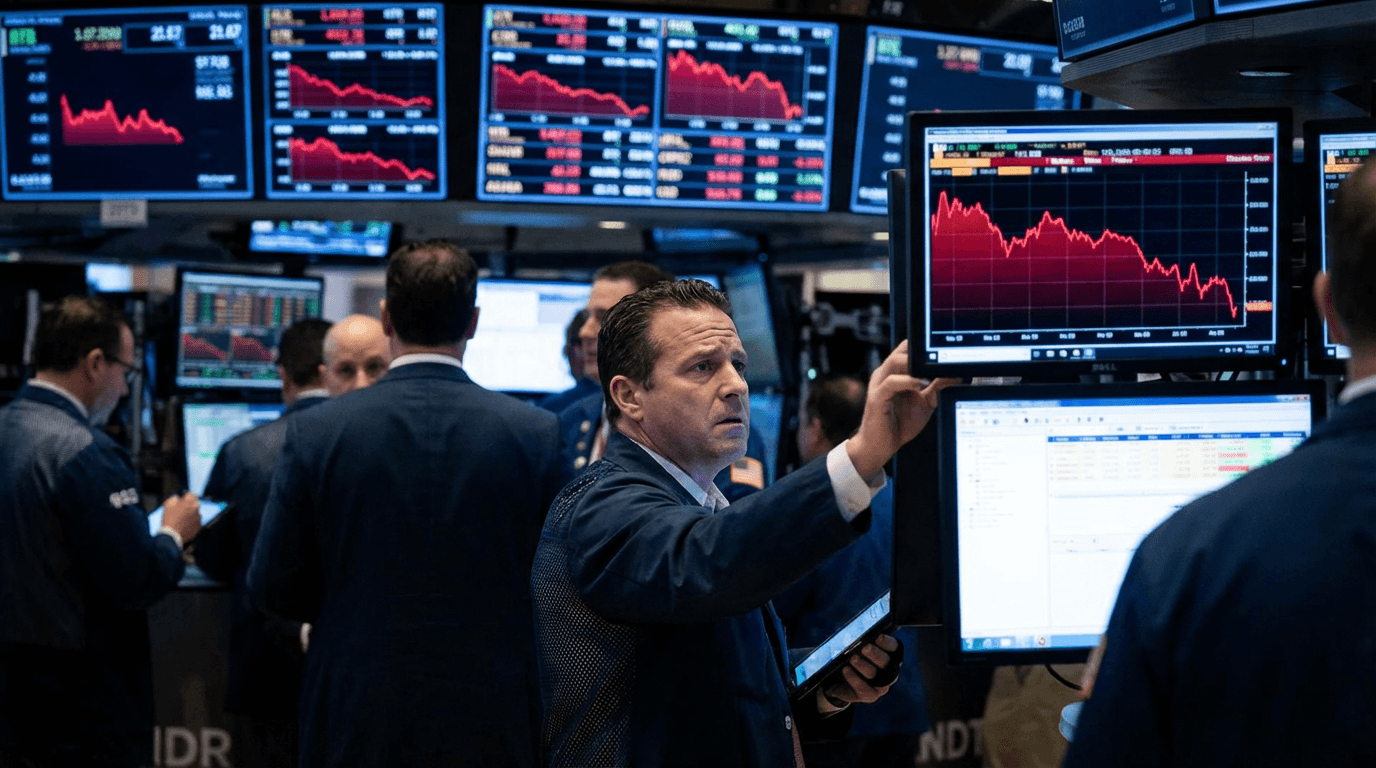
Bitcoin's recent tumble below the $65,000 mark represents a crucial moment for traders and investors watching the cryptocurrency markets. On February 23, 2026, the leading digital asset dropped approximately 5% in a sharp selloff that breached a critical support level, triggering a cascade of technical selling and renewed concern about the broader macroeconomic environment. The move reflects a complex interplay of tariff-related uncertainty, regulatory concerns, and forced liquidations that have shaken confidence in risk assets across the board.
The Perfect Storm: Multiple Catalysts Converge
The breakdown below $65,000 did not happen in isolation. Rather, it represents the convergence of several significant headwinds that have accumulated over recent weeks. The most immediate pressure came from US tariff policy uncertainty, which has dampened global risk sentiment and prompted investors to de-risk from speculative assets. As broader uncertainty surrounding tariff implementation spreads, cryptocurrency—which typically trades as a high-beta risk instrument—has become collateral damage in a wider flight to safety.
Compounding these macro concerns is the persistent specter of regulatory tightening. Recent discussions about cryptocurrency regulation and long-term security risks, including quantum computing threats to blockchain infrastructure, have re-entered market narratives. These headline risks, while not representing structural failures in crypto infrastructure, have nonetheless contributed to sentiment deterioration among institutional and retail traders alike. The combination of tariff fears and regulatory uncertainty has created a toxic cocktail for confidence in speculative assets.
The Technical Breakdown And Liquidity Crunch
From a technical perspective, the $65,000 level had been functioning as a visible support zone following a period of sideways consolidation. Once breached, this level triggered a cascade of stop-loss orders and short-term momentum selling that amplified downside pressure. In cryptocurrency markets, such technical breaks often create feedback loops where liquidity can thin rapidly, causing price action to accelerate through clustered positioning.
The velocity of the move has been striking. On February 5, Bitcoin registered a minus 6.05 sigma move on rate-of-change analysis, placing it among the fastest single-day crashes in cryptocurrency history. While this compares to the COVID crash of minus 9.15 sigma and the FTX collapse at minus 4.07 sigma, it underscores the extreme speed at which recent declines have unfolded. The rapid nature of these moves has left many traders unable to adjust positions gracefully, forcing institutional capitulation.
Large holder flows to exchanges have added significant supply pressure at a fragile moment. On-chain data indicates elevated inflows of Bitcoin to exchanges, often interpreted as a precursor to distribution. This marks a notable shift from prior weeks when accumulation patterns had helped underpin price stability. When whales move coins to exchanges, it typically signals distribution intentions, adding selling pressure precisely when market sentiment is already deteriorating.
Liquidations And The Leverage Unwind
One of the most significant drivers of recent selling has been forced liquidation activity. Risk managers at institutions have been required to sell assets at certain price levels to safeguard against further losses, triggering what amounts to a digital asset fire sale. On February 23 alone, approximately $2 billion worth of crypto was liquidated, with an estimated $2 to $2.5 billion concentrated in Bitcoin futures.
However, the VanEck analysis suggests that this process, while painful, represents orderly deleveraging rather than full capitulation. Over the past week, crypto markets experienced approximately $3 to $4 billion in total liquidations. This is meaningful but not climactic. Leverage has been reduced meaningfully while price action has remained orderly rather than disorderly. Bitcoin is currently trading minus 2.88 sigma below its 200-day moving average—a level not observed at any point in the past 10 years. While this suggests extreme deviation from trend, it also implies significant potential for mean reversion once selling pressure exhausts itself.
What Traders Should Watch Moving Forward
The immediate focus for traders should be on whether Bitcoin can stabilize below $65,000 or whether further weakness will expose lower support zones. The critical support level of $60,000 continues to serve as a key technical floor. Failure to hold this level could create additional forced selling, while a successful defense could signal the beginning of stabilization.
Institutional Bitcoin ETF flows also warrant close monitoring. Year-to-date outflows of $2.9 billion from spot Bitcoin ETFs indicate ongoing redemption pressure from institutional investors. If these outflows accelerate further, they could extend downside moves. Conversely, stabilization or reversal of ETF flows would suggest renewed institutional confidence.
Looking beyond the immediate technicals, traders should monitor developments on tariff policy and any meaningful regulatory announcements. Clarity on these fronts could help reduce the uncertainty premium currently being reflected in crypto valuations. Historically, Bitcoin has demonstrated the capacity to recover from drawdowns of 40 to 70 percent, suggesting the current price action may ultimately prove part of a cyclical correction rather than a secular bear market.
The current environment rewards patient traders who understand the distinction between structural damage and temporary market stress. While near-term volatility is likely to persist, the underlying infrastructure of cryptocurrency markets has functioned as designed throughout the selloff.