
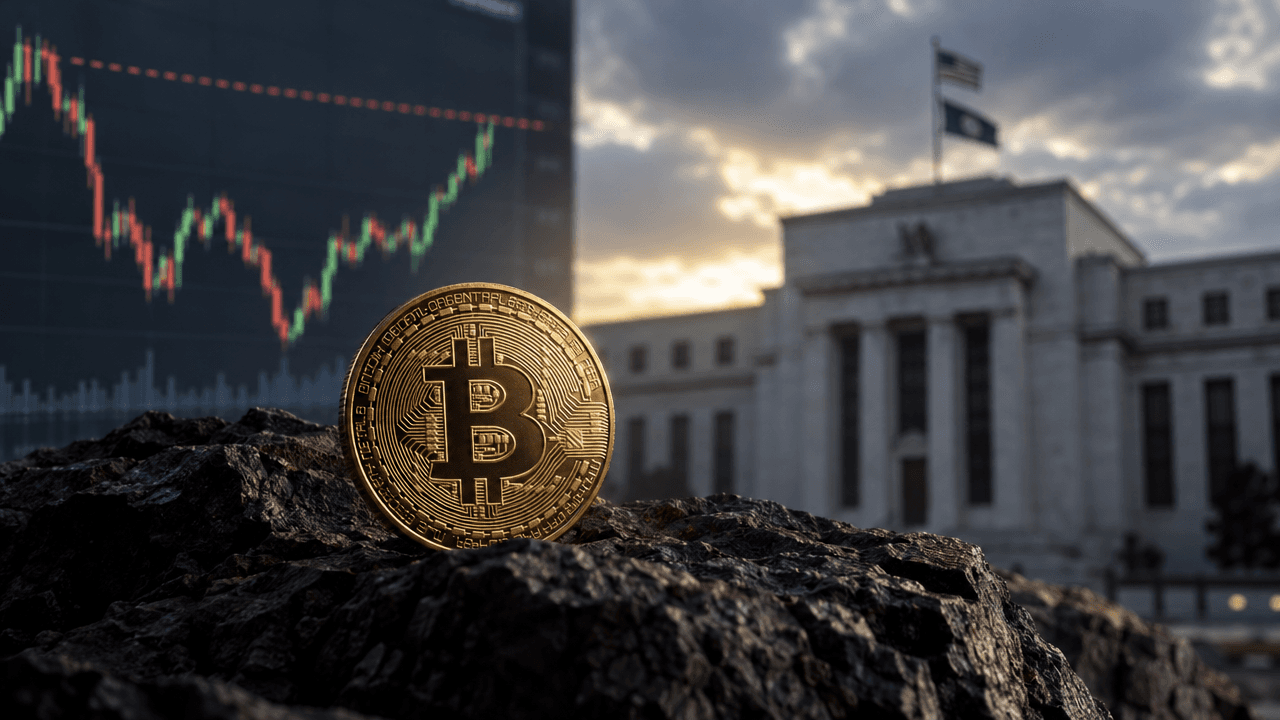
Bitcoin’s rebound has not kept pace with the recovery in equities. After falling to approximately $55,000, its lowest level in about two years, Bitcoin climbed back above $61,000. Yet the move has lost momentum, with the cryptocurrency trading near $61,000–$61,250 and showing limited 24-hour progress even as U.S. equity markets regained ground. [1][7]
The divergence matters because it challenges the idea that a recovery in risk assets automatically creates a stronger bid for crypto. Bitcoin remains highly sensitive to interest-rate expectations, liquidity conditions, institutional flows, and investor confidence. For now, those forces are restraining demand and making the latest bounce look more like stabilization than a confirmed trend reversal.
Why Equities Recovered Faster
The recent sell-off began as weakness in technology and artificial-intelligence stocks unsettled broader markets. Bitcoin followed equities lower, reinforcing its role as a risk-sensitive asset rather than an independent hedge. The cryptocurrency declined to roughly $55,130 during the weekend before rebounding as U.S. stock futures improved. [1]
Equity markets benefited from renewed buying in beaten-down technology shares and hopes that the sell-off had become excessive. Bitcoin also recovered, but its response was less durable. Reports indicate that the asset briefly moved above $61,000 before losing momentum, while persistent selling pressure and weak ETF flows limited follow-through. [12]
This distinction is important for traders. A market-wide relief rally can lift Bitcoin temporarily through short covering and improved sentiment, but a sustainable crypto recovery generally requires fresh capital. If equity investors return while crypto investors remain cautious, Bitcoin may continue to lag.
The Federal Reserve Remains The Key Variable
Expectations for a more restrictive Federal Reserve are placing pressure on speculative assets. A stronger dollar, higher real yields, and expectations of additional tightening have reduced the appeal of assets that do not generate traditional cash flows. Bitcoin is especially vulnerable when investors can earn more from cash and government securities without taking substantial price risk. [3][8]
Higher rates also affect leverage. Borrowing becomes more expensive, risk limits tighten, and portfolio managers often reduce exposure to volatile markets. This process can accelerate declines when leveraged positions are liquidated. During the recent sell-off, approximately $1.8 billion in leveraged crypto positions were reportedly liquidated, adding forced selling to an already fragile market. [14]
The rate outlook therefore matters as much as the headline Bitcoin price. A cooler inflation reading or softer central-bank guidance could ease pressure by lowering bond yields and weakening the dollar. Conversely, evidence that inflation remains persistent could renew expectations for tighter policy and make it harder for Bitcoin to sustain a recovery.
Why The Bitcoin Bounce Looks Fragile
A sharp move from $55,000 to above $61,000 may appear impressive, but percentage gains after a steep decline can be misleading. Such rebounds often reflect short covering, bargain hunting, and the unwinding of crowded bearish trades rather than a broad return of long-term buyers.
Bitcoin’s recovery also faces technical resistance between approximately $62,000 and $65,000, according to market commentary cited during the rebound. A sustained move through that region would provide stronger evidence that buyers are regaining control. Failure to clear resistance, followed by a break below the recent low, would suggest that the broader downtrend remains intact. [1]
Institutional flows are another test. Recent reports have highlighted continued pressure from exchange-traded fund outflows and the absence of sustained new demand. Without consistent ETF buying, Bitcoin may struggle to absorb profit-taking from traders who purchased near the lows. [7]
For SimFi traders, this is a useful reminder to distinguish between a price reaction and a market regime change. One strong daily candle does not establish a new uptrend. Confirmation requires improving breadth, stronger volume, calmer derivatives markets, and repeated higher highs and higher lows.
Practical Takeaways For Traders
First, monitor Bitcoin alongside the Nasdaq, S&P 500 futures, the U.S. dollar, and Treasury yields. Bitcoin’s recent behavior shows that macro relationships remain influential. If equities rally while yields and the dollar continue rising, the crypto rebound may remain limited.
Second, identify levels before entering a trade. The $61,000 area is psychologically important, but traders should also watch the recent low near $55,000 and the resistance zone around $62,000–$65,000. Planning around these areas can reduce impulsive decisions during volatile moves.
Third, manage leverage carefully. A market that can rebound several thousand dollars in a short period can also reverse just as quickly. Smaller position sizes, predetermined stops, and realistic risk-to-reward ratios are more valuable than attempting to predict every short-term fluctuation.
Finally, wait for confirmation if the objective is to trade a larger trend. Stabilizing technology stocks, lower rate volatility, and renewed institutional flows would strengthen the recovery case. Market analysts have similarly pointed to those conditions as necessary for a rebound to develop beyond a short-lived rally. [6]
Conclusion
Bitcoin’s recovery is real, but it is lagging the equity rebound and remains vulnerable to the same macro pressures that caused the initial decline. Trading near $61,000–$61,250 after a fall toward $55,000 shows that buyers are willing to defend lower levels, but limited follow-through signals caution rather than conviction.
The next phase will likely be determined by the interaction between equities, Federal Reserve expectations, dollar strength, and crypto fund flows. Until those conditions improve together, Bitcoin may continue to move in sharp relief rallies while struggling to establish a durable advance. For traders, patience and risk control may be more valuable than chasing the first bounce.