
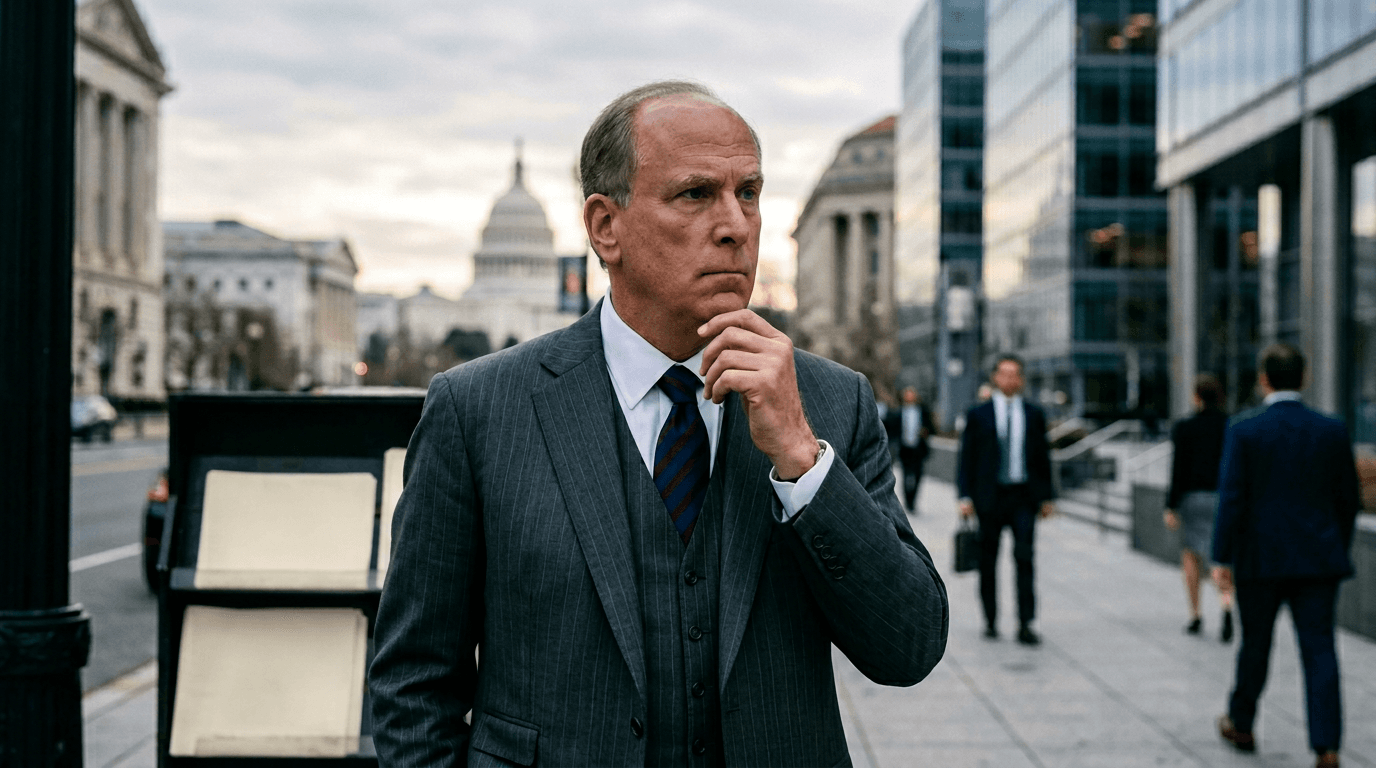
BlackRock CEO Larry Fink Raises the Alarm: Recession Concerns Among Industry Leaders
Larry Fink, the influential CEO of BlackRock, has issued a warning that should catch the eye of every market-watching investor. Speaking at the Economic Club of New York, Fink revealed that a significant number of the chief executives he interacts with are convinced that the United States is teetering on the brink of a recession, if not already in one. As the head of the world's largest asset management firm, Fink's insights are backed by a vast network of executive connections, lending considerable weight to his observations. His stark pronouncement—"The economy is deteriorating"—indicates that economic concerns are no longer the exclusive domain of economists and analysts. Now, they are being echoed by industry leaders who oversee trillions in capital and guide business strategies across numerous sectors.
The Recession Reality Check
Fink's assertion that "most CEOs I engage with would suggest we are probably in a recession at this moment" is not mere conjecture. It reflects the prevailing sentiment among America's corporate leadership. Unlike official recession declarations, which are based on retrospective GDP data and often lag behind real-time events, these insights from C-suite executives serve as a leading indicator of economic trouble. The importance of this cannot be overstated. CEOs base their daily decisions about hiring, investment, and expansion on their perceptions of economic conditions. If they perceive a recession as imminent, their subsequent actions—such as freezing hiring or postponing capital projects—could become self-fulfilling prophecies that hasten economic decline.
Trade Wars And Tariff Uncertainties
The economic landscape is further clouded by rising trade tensions and tariff threats. President Trump has hinted at a potential increase in tariffs on Chinese imports by 50 percent if Beijing does not remove its retaliatory tariffs. This kind of policy uncertainty can paralyze business confidence. Companies find it challenging to plan investments or pricing strategies when their supply chain costs could abruptly change. Fink has pointed out that the inflationary risks associated with the White House's trade policies could be far greater than current market expectations. A tariff-induced inflation spike, coupled with an already weakening economy, spells the worst-case scenario for both consumers and investors: stagflation, where economic growth stagnates while prices climb.
Geopolitical Risks And Energy Markets
Beyond trade conflicts, Fink has also highlighted a major economic threat stemming from geopolitical instability in the Middle East. He warned that ongoing tensions involving Iran could drive oil prices to unprecedented highs, possibly reaching $150 per barrel. At such levels, Fink stated, the world would face a global recession. The Strait of Hormuz, a crucial shipping chokepoint for much of the world's energy supply, is pivotal. Disruptions here lead to higher energy costs that ripple through the entire economy. Consumers face increased energy bills, businesses encounter rising operational costs, and inflation accelerates. Fink painted two extreme scenarios: oil prices could drop to $40 per barrel if Iran is reintegrated into the global community, or they could soar beyond $100 to $150 if tensions persist, creating a binary bet with significant economic consequences.
Market Signals And Investor Caution
Market dynamics have already started reflecting recession fears. Global financial markets have experienced notable downward pressure, with declining oil prices and falling government bond yields signaling that concerns about an economic slowdown are becoming mainstream. Economists from Goldman Sachs and JPMorgan have heightened their recession forecasts, although no major financial institution has yet officially declared a recession in progress. This gap between corporate sentiment and official declarations suggests we may be in an information lag period where the reality has shifted, but traditional measurement systems haven't caught up.
What This Means For Traders And Investors
For those engaged in both simulated finance platforms and real markets, Fink's warnings represent critical data points for portfolio strategy. The confluence of weakening economic growth, rising inflation expectations due to tariffs, geopolitical risks, and heightened energy market volatility creates a complex and challenging investment environment. Defensive positioning becomes more appealing. Safe-haven assets like gold and the Japanese yen have seen increased demand, reflecting growing risk aversion. The traditional balanced portfolio approach may prove inadequate in the coming months.
Investors should closely monitor several key indicators: corporate earnings reports for signs of margin pressure from tariffs and rising input costs, unemployment data to confirm if labor market weakness is intensifying, and energy prices to assess the geopolitical risk premium. Fink's assessment—coming from someone whose firm manages trillions globally and whose CEO connections span virtually every major corporation—suggests that what we are witnessing may be the early stages of a significant economic contraction. Whether the official recession declaration arrives next month or next year, the leading indicators are flashing red, and prudent investors are already taking notice.
---
NEWSIMPACTSCORE: 8