
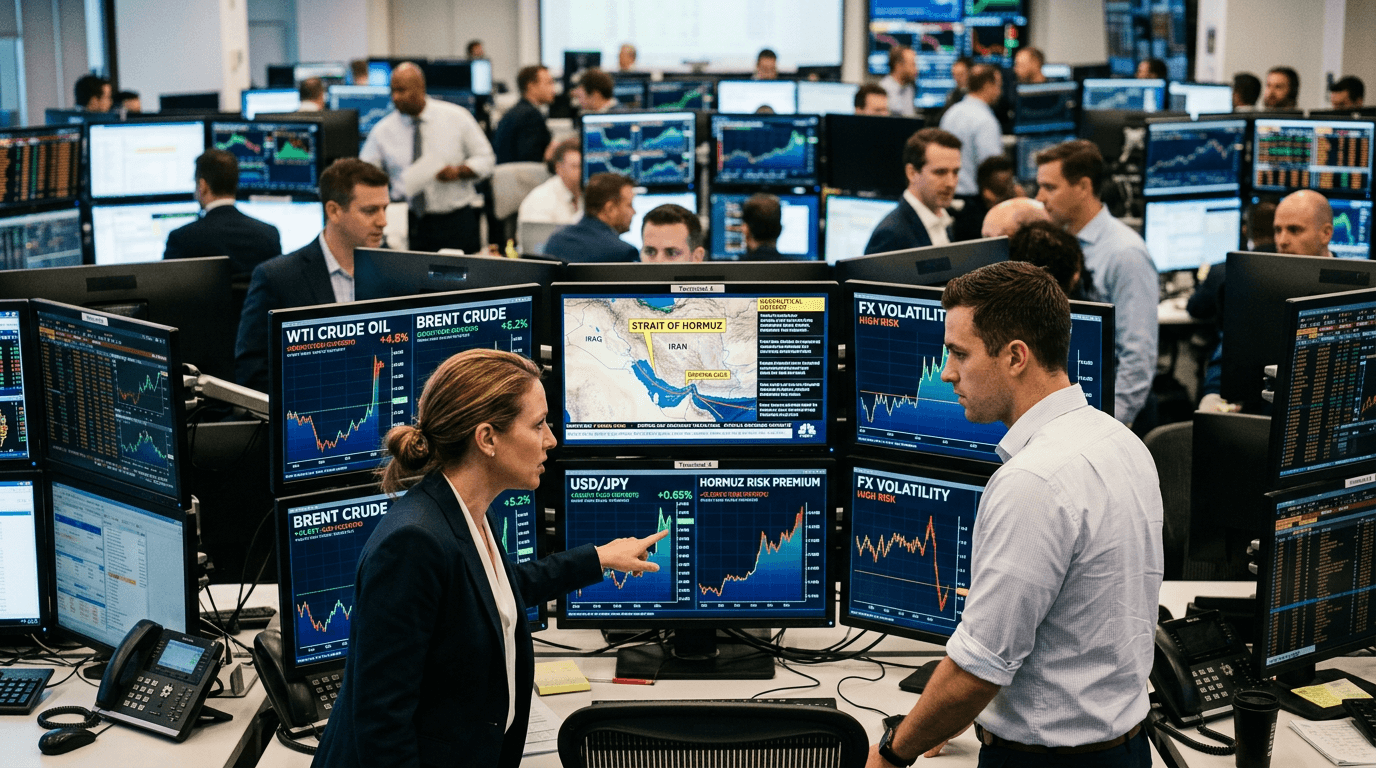
Geopolitical uncertainty is once again in the driver’s seat for global markets, as traders weigh the expiration of a 60‑day U.S.–Iran ceasefire alongside evolving Oman–Iran negotiations over navigation in the Strait of Hormuz[8][10][14]. Risk appetite is being tempered across macro and FX, with energy‑linked futures and currency pairs tied to European energy access especially sensitive to headlines from the Gulf[14][15]. For traders, this is a textbook case of how geopolitics can reshape market behavior in real time.
Geopolitical Backdrop: Ceasefire Clock Runs Out
The current bout of uncertainty stems from a ceasefire memorandum agreed in June between the U.S. and Iran, designed to pause hostilities and create space for a broader diplomatic framework[8][13][14]. That agreement, originally framed as a 60‑day arrangement, is now expiring without a clear follow‑on deal or extension, leaving markets to price the risk of renewed tensions[8][12]. With talks described as static or stalled in recent days, there is little visibility on whether hostilities will escalate, stabilize, or shift into a new diplomatic phase[1][8].
This ambiguity matters more than the ceasefire itself because markets hate binary cliff‑edges. A smooth extension could have supported risk assets and carried trades by reducing tail‑risk around shipping lanes and energy flows. Instead, traders are left with an overnight increase in event risk, which typically translates into reduced leverage, tighter stops, and preference for defensive exposures.
Strait Of Hormuz: Small Strait, Big Market Consequences
Parallel to the ceasefire story, Oman and Iran have been engaged in intensive discussions over how to manage navigation and transit routes through the Strait of Hormuz[2][5][13]. Negotiations are reported to be in their final stages, with the two sides agreeing on coordinates for new shipping routes and working toward a joint statement on future arrangements[7][10][14]. However, Iranian officials have signaled that any deal would not immediately restore the strait to its pre‑war status, and reopening remains conditional on broader issues, including third‑party actions such as U.S. naval activity[3][14][15].
The Strait of Hormuz is one of the world’s most critical chokepoints for crude oil and LNG flows, so any uncertainty around its governance can ripple through energy pricing, freight costs, and ultimately inflation expectations. Negotiations that are “close but not done” create a scenario where traders must constantly reassess probabilities: will the route be fully secured, partially constrained, or disrupted again by military or political events[3][7][14]? This shifting probability set is exactly what tends to suppress risk appetite, as investors prefer to under‑weight exposures that are highly path‑dependent on diplomacy.
Impact On Energy Futures And Fx Markets
The immediate transmission channel from Hormuz headlines to markets is energy futures. Concerns over shipping constraints or elevated geopolitical risk premia typically support crude and refined product prices, while also injecting volatility into front‑month contracts and calendar spreads. When traders fear supply disruptions, they often bid up near‑dated contracts relative to longer maturities, reflecting a higher short‑term risk premium.
For FX markets, energy‑linked currencies and pairs tied to European energy access become key barometers. Currencies of energy exporters can see support from higher price expectations, but that support is often offset by broader risk‑off flows into safe havens. Import‑dependent economies, particularly in Europe, face potential terms‑of‑trade shocks if energy inflows are threatened or repriced, which can weaken their currencies and complicate monetary policy. Even without an actual disruption, the mere possibility of tighter shipping conditions through Hormuz can justify a more cautious stance toward pro‑cyclical FX positions.
This environment also encourages rotation into classic defensive plays: higher‑quality sovereign bonds, reserve currencies, and possibly volatility hedges. Positioning data in similar episodes often shows reduced exposure to high‑beta equities and EM FX, even when the geopolitical risk is geographically concentrated, because investors treat energy‑related shocks as global rather than local.
Trading Implications In A Simulated Environment
For traders using a simulated finance environment, this episode offers a rich live case study in geopolitically driven market dynamics. The confluence of a ceasefire expiry and incomplete Hormuz negotiations provides several practical learning angles:
First, it illustrates how multiple geopolitical narratives can interact. The ceasefire affects expectations about military risk, while the Hormuz talks shape views on shipping and energy supply. Together, they can produce non‑linear responses in markets, where a seemingly small headline shift leads to outsized moves if it alters perceived probabilities of disruption.
Second, it highlights the importance of tracking event calendars and diplomatic milestones. Knowing the expiration date of the ceasefire, scheduled negotiation rounds, and expected joint statements allows traders to anticipate volatility windows rather than reacting purely on price action. This is particularly valuable in simulated trading, where you can test different strategies around known event dates: reducing exposure, hedging via options, or running mean‑reversion systems when volatility spikes.
Third, it underscores the need to distinguish between directional and volatility trades. When the underlying geopolitical outcome is highly uncertain, directional conviction may be low, but volatility conviction may be high. Simulated environments let you experiment with structures that are long volatility (such as straddles or corridor trades in FX) without the capital risk of live markets, helping you understand how geopolitical risk translates into implied volatility surfaces.
Practical Takeaways For Macro And Fx Traders
1) Anchor your narrative. Clearly define the two key drivers: ceasefire expiry and Hormuz negotiations. Map out how each one affects energy flows, risk sentiment, and specific asset classes.
2) Focus on transmission channels, not just headlines. Translate geopolitical developments into market mechanisms: shipping risk into energy futures term structures, energy price uncertainty into FX terms‑of‑trade, and rising event risk into funding and leverage decisions.
3) Treat dates as risk markers. Build a simple event calendar with ceasefire deadlines, negotiation updates, and expected statements. Use it to frame scenarios and prepare contingency plans rather than trading in a purely reactive mode.
4) Separate view on direction from view on volatility. In situations where the path of diplomacy is hard to forecast, structure trades to benefit from volatility rather than trying to pick a side on outcomes.
5) Use simulated trading to stress‑test strategy robustness. Run your usual setups—trend‑following, carry, mean‑reversion—through periods of headline‑driven volatility to see which styles are resilient and which need tighter risk controls in geopolitically sensitive regimes.
Conclusion
The expiration of the U.S.–Iran ceasefire and the unfinished nature of Oman–Iran Hormuz talks have created a classic “known unknown” for global markets: traders can see the risk, but not the resolution timeline[8][10][14]. In this type of environment, risk appetite rarely disappears, but it becomes more selective, favoring liquid, defensive assets and strategies that respect elevated event risk. For both new and experienced traders, especially in a simulated setting, the key lesson is to connect geopolitics to market structure: understanding how diplomatic uncertainty migrates into energy pricing, FX behavior, and volatility regimes. Those who can map that chain of transmission will be better positioned when the next headline hits the tape.