
China’s latest move in its trade confrontation with the United States has raised the stakes dramatically: Beijing has unveiled steep retaliatory tariffs on U.S.-origin goods that can now reach up to 125%, in response to Washington’s own hikes on Chinese exports that climbed as high as 145%.[2][4][5] By vowing to “ignore the US” if further duties are imposed and insisting the U.S. must bear responsibility for the economic fallout, China has signaled that this is not a symbolic gesture—it is a full-scale escalation with global market consequences.[2][4]
WHAT CHINA’S NEW TARIFFS ACTUALLY DO
China’s State Council Tariff Commission has progressively raised its retaliatory duties on U.S. goods through a series of measures, moving from targeted tariffs on sectors like agriculture, energy, and industrial machinery to broad-based additional levies on virtually all U.S.-origin imports.[2][4]
Earlier rounds included extra tariffs of 10–15% on products such as coal, LNG, crude oil, farm machinery, and large vehicles, layered on top of existing customs duties.[4] More recently, China imposed a 34% across-the-board surcharge on U.S. imports, later lifting the overall effective retaliatory rate to 84%.[4] After the U.S. responded by raising tariffs on Chinese goods to 145% under emergency trade authorities, Beijing matched and then escalated by increasing its own retaliatory rate on U.S. products to as high as 125%.[2][4][5]
These tariffs are designed to be broad and difficult to circumvent. Additional levies are typically not eligible for exemptions or relief programs, and transitional carve-outs (for goods shipped before a certain date) are tightly defined.[2][4] For many U.S. exporters—from agricultural producers to industrial manufacturers—the Chinese market is effectively being priced out, unless they accept substantially lower margins or reroute trade.
Crucially, tariffs are only one pillar of China’s response. Authorities have also:
- Added U.S. firms to an Export Control List, restricting the supply of dual-use and strategic goods to these entities.[4]
- Named additional American companies to an Unreliable Entity List, limiting their ability to trade or invest in China.[4]
- Imposed export restrictions on critical minerals and rare earths, which are key inputs for high-tech and defense applications.[2][4]
Taken together, these moves tighten the screws on both goods flows and corporate operations, turning a tariff skirmish into a more comprehensive economic confrontation.
Why Markets Reacted With Risk-off Sentiment
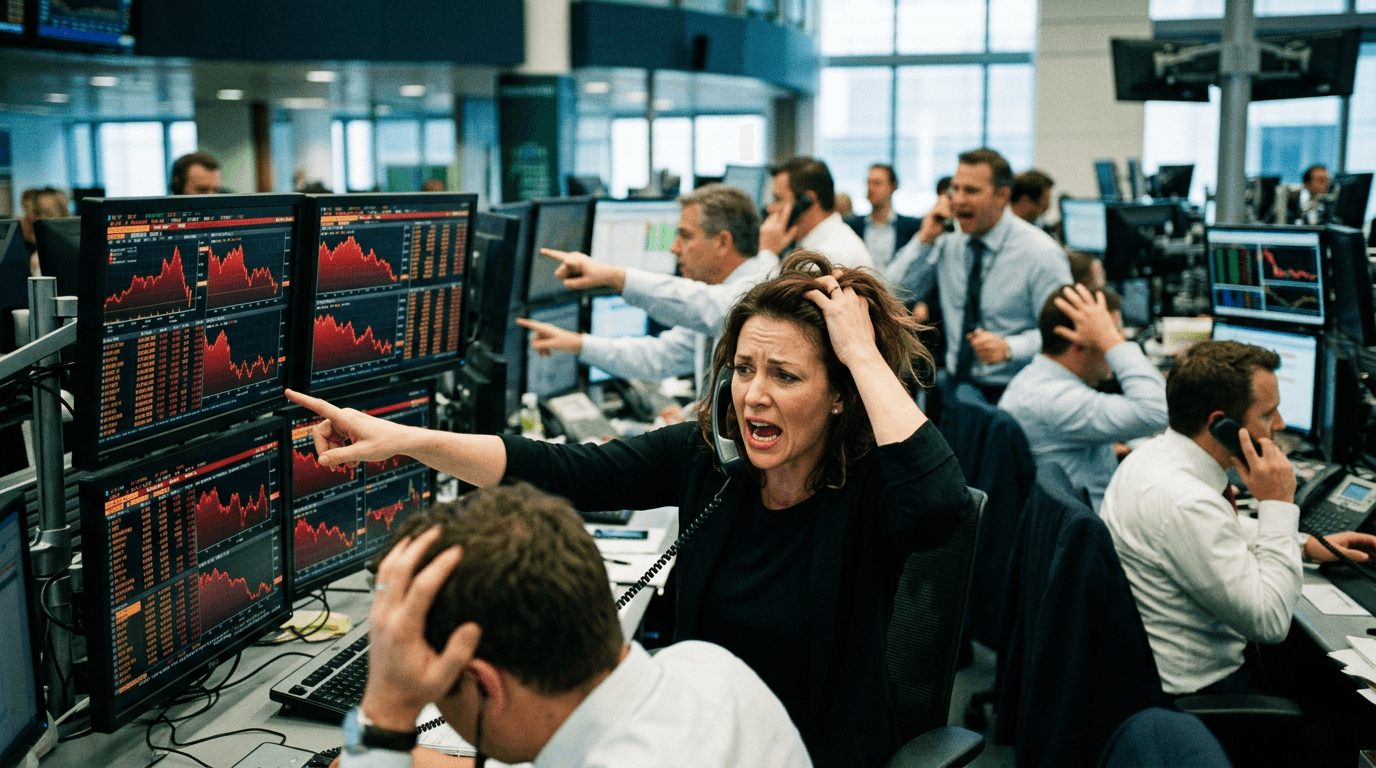
Markets quickly interpreted the latest tariffs as a sign that neither side is preparing to de-escalate, raising fears of a prolonged and damaging trade war. Analysts estimate that the current tariff structure could shave around 0.2% off global merchandise trade, a non-trivial drag in an already uneven global growth environment.[5]
In the immediate aftermath of the announcement, risk appetite deteriorated:
- In foreign exchange, demand rose for traditional safe-haven currencies, supporting the U.S. dollar (despite it being one of the protagonists in the dispute) and the Japanese yen.[2]
- In equities, China-sensitive sectors and markets—such as export-heavy Asian indices and multinational manufacturers with high China–U.S. exposure—came under pressure as investors reassessed earnings and supply-chain risk.[2]
- Volatility expectations, measured via implied volatility in equity index and FX futures linked to global trade, moved higher as traders priced in wider potential outcomes and the risk of further policy shocks.[2]
The logic behind this risk-off reaction is straightforward: higher tariffs raise costs, distort supply chains, and depress trade volumes. That, in turn, threatens corporate profits, investment decisions, and eventually employment and consumption. Even if the direct impact is concentrated in the U.S. and China, the indirect spillovers hit global exporters, commodity producers, and trade-dependent economies.
Impact On Fx, Commodities, And Equities
In FX, the combination of trade uncertainty and growth anxiety tends to produce a familiar pattern. The U.S. dollar often benefits from safe-haven flows and its central role in global funding markets, even when the U.S. is at the center of the shock. The Japanese yen, backed by Japan’s net creditor status and large current account surplus, usually strengthens in periods of stress.[2] By contrast, trade-sensitive currencies—such as those of export-oriented Asian economies or commodity producers—can come under pressure as investors mark down growth expectations.
China-sensitive commodities have also felt the impact. China is a major buyer of industrial commodities such as copper, iron ore, energy products, and agricultural goods, including soybeans and other grains targeted earlier in the tariff rounds.[2][4] Higher tariffs and the threat of demand disruptions can weigh on prices for:
- Industrial metals tied to construction and manufacturing.
- Energy exports, including LNG and certain grades of crude, where additional duties or non-tariff barriers raise landed costs.[4]
- Agricultural commodities from the U.S., which may need to be discounted or redirected to alternative markets when Chinese demand is constrained.[2][4]
Equity markets reflect these stresses asymmetrically. Companies with heavy China–U.S. revenue exposure, global supply chains, or reliance on cross-border capital investment are particularly vulnerable. Exporters of machinery, autos and parts, semiconductors, and industrial components can see valuation multiples compressed as investors price in lower growth, higher costs, and regulatory uncertainty. Meanwhile, domestically focused sectors with limited trade exposure may outperform on a relative basis.
What This Means For Traders And Simulated Trading
For traders—and especially those using simulated finance (SimFi) platforms—the latest escalation offers a live case study in how macro shocks ripple across asset classes. Several practical lessons stand out:
1. Watch cross-asset relationships Tariff shocks do not just move one market. They influence FX, commodities, equities, and volatility simultaneously. Simulated trading environments allow you to test how, for example, a stronger JPY, weaker Asian equities, and softer industrial metals can interact in a risk-off regime.
2. Stress-test correlation assumptions In stable conditions, correlations between assets can appear predictable. Trade war headlines often disrupt those patterns. Using a SimFi setup, traders can replay different tariff scenarios and see how correlations between EM FX, global indices, and commodities shift when policy risk intensifies.
3. Practice risk management around event risk Volatility tends to spike around policy announcements and press conferences. Index and FX futures often see wider bid–ask spreads and larger intraday swings in such periods.[2] Simulated trading is an ideal environment to rehearse position-sizing, stop-loss placement, and hedging strategies for event-driven markets without putting real capital at risk.
4. Think in scenarios, not forecasts Trade policy is inherently political and difficult to predict with precision. Instead of attempting to call the next headline, it is more robust to plan for multiple scenarios—further escalation, a negotiated truce, or targeted sectoral deals—and map out how each could affect your portfolio or strategy.
Key Things To Watch Next
Looking ahead, several signposts will determine whether this tariff shock is a passing squall or the start of a protracted trade storm:
- Policy responses and rhetoric Markets will be sensitive to any indication of further U.S. measures, Chinese countermeasures, or hints of negotiation channels reopening. Escalatory language without concrete steps can still affect sentiment and volatility.
- Corporate guidance and earnings As companies update investors on order books, supply chains, and capital expenditure plans, their commentary will help quantify the true cost of tariffs. Guidance cuts from trade-exposed sectors could reinforce risk-off trends.
- Trade data and growth indicators Over time, customs data, export orders, manufacturing PMIs, and shipping volumes will reveal how much the new tariff regime is reshaping real-world trade flows. Even a modest hit to global trade—as current estimates suggest—can matter when growth is already fragile.[5]
For traders, keeping a structured dashboard of these indicators, and testing their impact in a simulated environment, can turn headline volatility into an opportunity to improve skills, refine strategies, and better understand the complex links between politics, policy, and prices.