
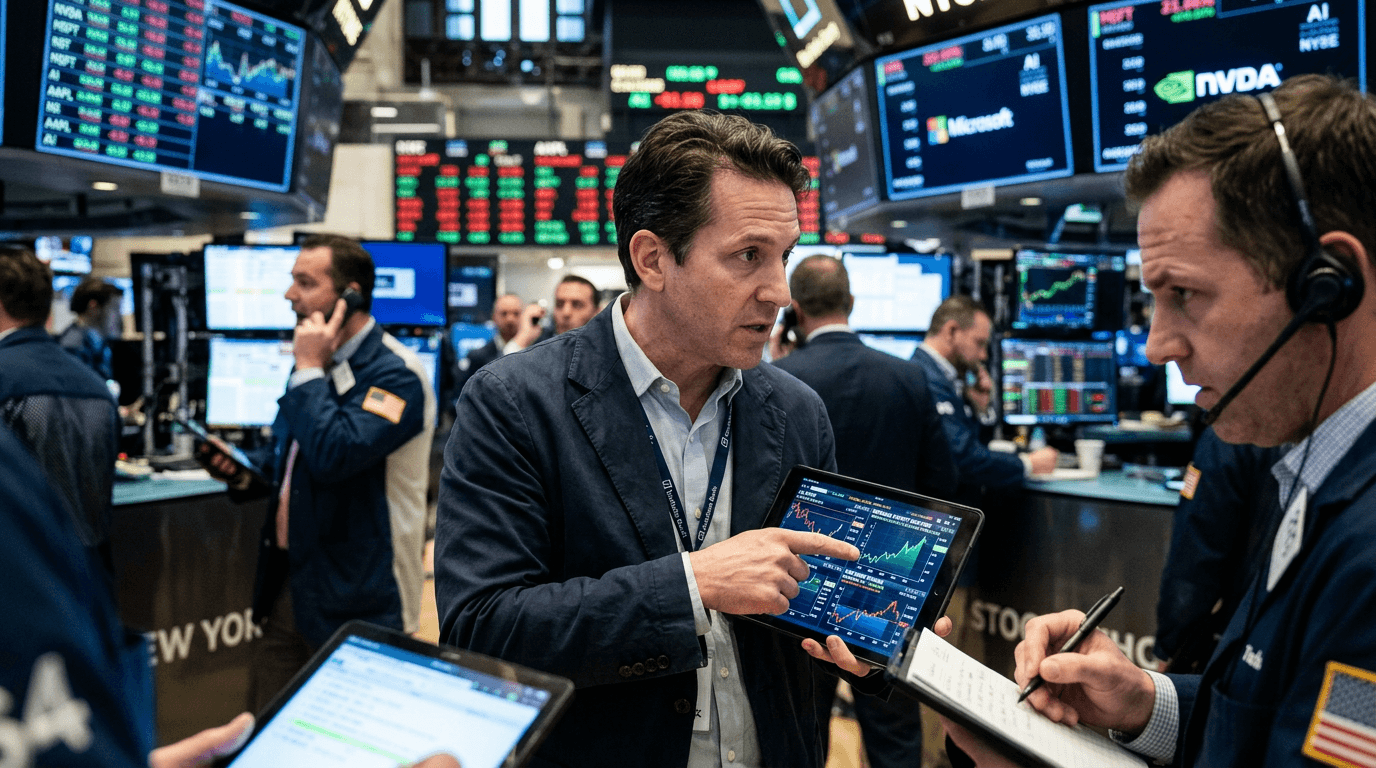
Foreign money has long been a quiet backbone of the U.S. dollar’s dominance, traditionally flowing into Treasuries and other debt securities that finance America’s external deficit in a relatively stable way.[1][2][3] Deutsche Bank now warns that this backbone is changing shape: instead of buying U.S. debt, foreign investors are increasingly buying U.S. stocks, especially in the tech and AI sectors, and that shift could make the dollar structurally more fragile.[1][2][3][7]
Global Capital Flows Are Changing
According to Deutsche Bank, the United States is relying more than ever on international inflows into its companies’ shares rather than into U.S. debt to fund itself.[2][3] Historically, foreign central banks, sovereign wealth funds, and long-term institutions would accumulate Treasuries as safe, liquid reserves, providing steady support for the dollar even when risk sentiment toward equities soured.[1][2]
Today, that pattern is being disrupted by two forces.[2][3] First, geopolitical tensions and ruptures are discouraging some investors from holding U.S. debt, prompting a reassessment of duration, sanctions risk, and concentration in dollar assets.[2][3] Second, the AI boom has turned U.S. equity markets—especially mega-cap technology stocks—into a global magnet for capital, pulling flows away from bonds and into higher-growth, higher-volatility assets.[1][2][3][7]
In effect, the U.S. external deficit—its need for foreign financing—is being covered more by equity inflows than by debt inflows, which fundamentally changes the nature of the capital that supports the dollar.[1][2][3][7]
From Bond Buyers To Stock Pickers
Deutsche Bank strategist Mallika Sachdeva highlights that the shift toward an equity-based funding model alters the dollar’s risk profile.[1][2][7] Demand for U.S. Treasuries has historically been countercyclical: in times of stress, investors sold stocks and bought bonds, reinforcing dollar strength when global risk appetite fell.[1][2] That behavior effectively provided a built-in stabilizer for the currency.
Equity inflows behave differently. Stock flows are more cyclical, more sensitive to risk sentiment, and increasingly driven by retail participation and thematic trends like AI and automation.[1][2][7] When global investors are excited about U.S. tech, capital pours into American equities and, by extension, into the dollar. But if enthusiasm for U.S. stocks cools—because valuations look stretched, regulation tightens, or a tech cycle matures—the same flows can reverse quickly.
Deutsche Bank’s note suggests that a funding structure leaning on cyclical, retail-driven equity flows makes the dollar “more risky and more leveraged to AI.”[2][7] In other words, the currency becomes tethered not just to the broad U.S. economy but to the life cycle of a volatile technology sector and the mood swings of global risk appetite.[2][3][7]
Why This Matters For The Dollar
For FX strategists and dollar bears, this structural shift raises several important concerns.[1][2][3][7]
First, if foreign investors are less willing to hold U.S. debt and more focused on equities, the traditional “safe-haven” bid for the dollar in times of stress could weaken.[1][2][3] Instead of buying Treasuries, investors might hedge or reduce dollar exposure even while holding U.S. stocks, especially if they can access currency-hedged products.[5] Deutsche Bank and other analysts highlight that foreign inflows into hedged U.S. asset ETFs now exceed unhedged ones, suggesting investors want U.S. market exposure without USD risk.[5]
Second, the dollar’s support base becomes more procyclical. If global risk sentiment turns and foreign investors sell U.S. equities, they withdraw funding for the U.S. external deficit at the same time, potentially amplifying downward pressure on the currency.[1][2][3][7] That makes dollar performance more tightly linked to equity cycles than in the past.
Third, AI and technology cycles are inherently uncertain. The current wave of AI-related investment has driven “unprecedented capital inflows into domestic markets,” supporting both U.S. stocks and the dollar after a prior year of weakness.[1] But if the AI narrative disappoints, earnings fail to keep pace with valuations, or competition intensifies globally, those inflows may slow or reverse, removing a key pillar of support.[1][2][3][7]
Implications For Traders And Investors
For traders and long-term investors, these dynamics translate into practical considerations across FX, equity, and macro strategies.
FX traders may need to pay closer attention to U.S. equity flows—particularly foreign participation in tech and AI names—as a leading indicator for dollar performance.[1][2][3][7] Strong overseas buying of U.S. stocks can underpin the currency, but a sudden drop in foreign equity inflows could signal vulnerability, especially if it coincides with continued reluctance to hold U.S. debt.[2][3][5]
Macro and multi-asset investors should recognize that U.S. assets and the dollar are no longer a single, inseparable bet.[5] The rise of currency-hedged equity vehicles means foreign investors can own U.S. equities while systematically stripping out dollar risk.[5] That decoupling may reduce the historical tendency for strong U.S. markets to automatically translate into a strong dollar.
Risk managers and asset allocators may want to stress-test portfolios against scenarios where U.S. equities correct while demand for Treasuries fails to fully offset the risk-off move. In such a world, the dollar could weaken even during periods of market stress—an inversion of traditional relationships that many models still implicitly assume.
How Simulated Finance Can Help You Prepare
For SimFi traders and users of platforms like E8 Markets, this evolving backdrop offers a rich environment to practice cross-asset thinking and scenario analysis.
In a simulated setting, traders can design and test strategies that explicitly link FX positions in USD pairs to foreign flows into U.S. equity indices and large-cap tech names.[1][2][3][7] For example, you might explore:
– Long USD positions when foreign equity inflows and AI optimism are accelerating
– Hedged or short USD exposure when indicators suggest foreign investors are rotating out of U.S. stocks or increasing currency hedging
Simulated environments also allow you to experiment with regime shifts. How does your strategy behave if Treasuries no longer rally as strongly in risk-off episodes, or if the dollar reacts more to changes in equity sentiment than to yield differentials? Testing those possibilities before they occur in live markets can sharpen your readiness for real-world volatility.
Finally, because SimFi platforms can track both macro news and price behavior, they provide a practical laboratory for connecting headlines—like a major bank warning about dollar risks—to measurable changes in flows, volatility, and correlations.
Conclusion
Deutsche Bank’s warning is not about the day-to-day noise of FX trading; it is about a structural evolution in how the U.S. is funded and what that means for the dollar’s long-term risk profile.[1][2][3][7] As foreign capital shifts from bonds to stocks and increasingly uses hedges to strip out currency exposure, the dollar becomes more exposed to equity cycles, AI narratives, and swings in global risk appetite.[1][2][3][5][7]
For traders, investors, and SimFi participants, the key takeaway is clear: understanding the dollar now requires understanding how and why foreign investors buy U.S. equities, how they manage currency risk, and how those choices interact with geopolitics and technology trends. The more equity-dependent the dollar becomes, the more important it will be to think in integrated, cross-asset terms—and to be prepared for a world where the traditional “safe-haven” playbook may no longer apply in the same way.